
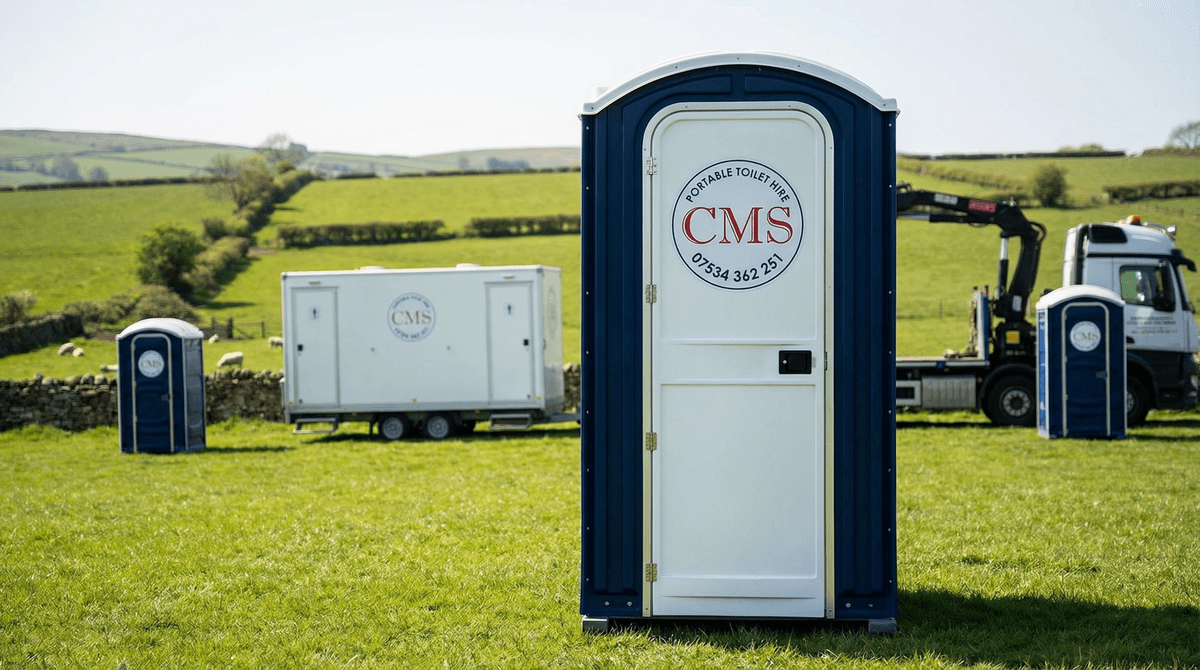
Local Knowledge That Makes a Difference
Cheshire is a county of contrasts when it comes to event planning. You have grand country estates with manicured lawns and perfect vehicle access. You have village greens where the approach lane is barely wide enough for a car. You have show grounds that have hosted events for decades and farmers' fields that have never seen a portable toilet in their lives.
We have delivered to all of them. This guide shares what we have learned about event toilet hire across Cheshire — the venues, the access challenges, and the local knowledge that helps events run smoothly.
Understanding Cheshire's Event Landscape
Cheshire hosts hundreds of events each year, from village fetes and parish shows to major agricultural events, food festivals, charity runs, and private celebrations. The county's mix of rural and semi-urban landscapes creates diverse site conditions that affect toilet hire in practical ways.
Rural venues
Most Cheshire events take place on agricultural land, estate grounds, or village greens. These sites share common characteristics:
- Soft ground: Cheshire soil is predominantly clay-based, which means fields that are firm in June can be ankle-deep in mud by October — or after two days of rain at any time of year
- Narrow access lanes: B-roads, farm tracks, and lanes with passing places are the norm. Delivery vehicles need to navigate these routes, sometimes in the dark
- No mains services: Most rural event sites have no mains water, electricity, or drainage. Everything must be self-contained or supplied via bowsers and generators
- Gates and field entrances: Width and height restrictions at field gates can prevent access for larger delivery vehicles
Semi-urban venues
Town parks, recreation grounds, school fields, and car parks in Cheshire's market towns offer different challenges:
- Restricted access hours: Council-managed sites may restrict vehicle access to specific hours, requiring early-morning or late-evening deliveries
- Noise sensitivity: Residential neighbours may object to early deliveries or generator noise
- Parking constraints: Delivery vehicles may need to compete with public parking or navigate one-way systems
- Better services: Mains water and electricity may be available, simplifying handwash and luxury trailer provision
Venue-Specific Considerations
Country estates and stately homes
Cheshire has an abundance of country houses and estates that host weddings, corporate events, and seasonal fairs. These venues are often beautiful but operationally challenging:
- Access routes may cross ornamental bridges with weight limits
- Groundskeepers may restrict where units can be placed to protect lawns
- Luxury toilet trailers are often preferred to match the aesthetic of the venue
- Power supplies may be limited, requiring generators for trailer operation
- The distance from the car park to the event area can be significant — consider positioning toilets at both locations
Village greens and community spaces
Village events are the backbone of the Cheshire social calendar. Practical considerations:
- Space is often limited — the green serves as the event space, car park, and everything else
- Positioning must balance visibility (so people can find the facilities) with discretion (nobody wants to queue for the toilet in full view of the tea tent)
- Access may be across the green itself, which can cause damage in wet conditions
- Community expectations are high — a well-maintained unit reflects on the organising committee
Agricultural show grounds
Established show grounds in Cheshire generally have good infrastructure — hard tracks, designated service areas, and experienced ground staff. But:
- Large events require substantial toilet provision, often including blocks, urinals, and luxury trailers as well as standard units
- Servicing during multi-day shows requires clear access routes and agreed schedules
- Livestock areas create additional welfare requirements for exhibitors and handlers
Private land and farms
Farmers and landowners hosting events on their own land need to plan carefully:
- Ground conditions vary hugely — assess the specific field, not the farm in general
- Access routes across farmland may be adequate for a tractor but not for a toilet delivery vehicle
- Water supply may be available from agricultural supplies but may need filtering for handwash stations
- Waste disposal from the event must comply with environmental regulations regardless of land ownership
Access: The Single Most Common Problem
In our experience, access is the most frequent issue with event toilet hire in Cheshire. The county's beautiful lanes and historic field entrances were not designed for modern commercial vehicles.
What we need
Our standard delivery vehicle requires:
- Width: Minimum 2.5 metres clear width through gates and along lanes
- Height: Minimum 3.5 metres clear height under bridges and overhanging trees
- Surface: A surface that will support the vehicle weight — typically 3.5 to 7.5 tonnes depending on the load
- Turning: Enough space to turn the vehicle at the delivery point, or a route that allows through-access
What to check before booking
Walk the access route before you book. Check:
- Gate widths (measure them — estimates are unreliable)
- Bridge heights and weight limits
- Overhanging trees or hedgerows that narrow the route
- Soft ground that may not support the vehicle, especially after rain
- Parked vehicles that may block the route on delivery day
If access is tight, tell us when you book. We can often use a smaller vehicle or arrange delivery during quieter periods to avoid congestion.
Ground Conditions and the Cheshire Climate
Cheshire is not the driest county in England. Rain is a realistic possibility at any outdoor event, and the clay-based soils do not drain quickly. This has practical implications for toilet provision:
- Place units on the firmest available ground — ideally hard standing, otherwise the driest and flattest section of the field
- Consider trackway or matting around toilet entrances to prevent the approach area becoming a mud bath
- Allow extra space between units in wet conditions — users need room to approach and queue without standing in mud
- Position units away from natural drainage channels — rainwater running downhill will pool around the lowest point, and you do not want that to be your toilet area
Seasonal Patterns
Spring and early summer (April to June)
The peak booking season begins. Ground is usually firm but can be wet after spring rain. Book early — popular weekends fill quickly.
High summer (July and August)
The busiest period. Heat brings odour management challenges — request shaded positions if possible. Event density is high, and unit availability can be tight. Book well in advance.
Autumn (September to October)
Agricultural shows, harvest festivals, and community events continue. Ground conditions deteriorate as rain increases. Expect soft ground and plan accordingly.
Winter (November to March)
Fewer events, but construction site and long-term hires continue. Frost and freezing conditions affect unit performance. We adjust chemicals and check for frost damage during winter servicing.
What We Bring to Cheshire Events
We are based in Chelford, in the heart of Cheshire. We have delivered to events across the county for years, and we know the roads, the venues, the ground conditions, and the seasonal patterns. When you book with us, you get:
- Practical advice on unit numbers, types, and positioning based on genuine local knowledge
- Delivery by drivers who know the lanes and can navigate Cheshire's access challenges
- Servicing schedules that account for local conditions and seasonal factors
- A phone call away if anything changes on the day
If you are planning an event in Cheshire, talk to us. We will give you honest, practical advice based on experience — not a generic calculator and a terms-and-conditions email.