Portable Toilet Hire During Power Cuts and Water Outages
When the mains water supply fails or the power goes out, flushing toilets stop working. It is that simple. Burst water mains, severe weather, flooding, and infrastructure failures can leave homes, businesses, and entire communities without working sanitation for hours or days. Portable toilets provide an immediate, self-contained solution that does not depend on mains water or electricity.
This guide covers when and how to arrange emergency portable toilet hire during utility outages, and what to do to prepare before the next one hits.
Why Mains Toilets Stop Working
Water Outages
Modern toilets need water to flush. No water supply means no flushing. A single flush uses 6 to 9 litres of water. Even if you have some stored water, it runs out quickly in a household with multiple occupants.
Common causes of water outages:
- Burst mains pipes
- Planned maintenance by the water company
- Severe frost causing pipe bursts across a network
- Flooding contaminating the water supply
- Drought restrictions (rare in the UK, but not impossible)
Power Outages
Most domestic toilets do not need electricity directly, but many modern systems do. If your water supply relies on an electric pump — common in rural properties, flats with boosted supply, or properties on private water supplies — a power cut means no water pressure and no flushing.
Properties with electric macerator toilets (Saniflo-type systems) cannot flush at all without power.
Businesses and public buildings with electrically operated sanitation systems, automatic flushes, and powered hand dryers are similarly affected.
When to Consider Emergency Portable Toilet Hire
Short Outages (Under 6 Hours)
Most people can manage a few hours without flushing toilets. Stored water in the cistern provides one or two flushes. For brief outages, portable toilet hire is usually unnecessary unless you are running a business, care home, or event.
Medium Outages (6 to 48 Hours)
This is where portable toilets become practical. A household of four will generate enough waste in 24 hours to create a significant hygiene problem without flushing. Businesses with employees on site have a legal obligation to provide adequate welfare facilities — you cannot tell staff to go home because the toilets do not work (though some employers do exactly this).
Extended Outages (48 Hours+)
Anything beyond two days requires a proper sanitation solution. Extended water outages following severe weather or infrastructure damage can last a week or more. In these situations, portable toilets are not a convenience — they are a necessity.
Who Arranges Emergency Hire?
Water Companies
During major water outages, water companies have a statutory obligation to provide alternative supplies. Some also arrange portable toilet provision for affected communities, though this varies by company and by the scale of the incident. Contact your water company to ask what provision they are making.
Local Authorities
District and county councils coordinate emergency response. During major incidents, they may arrange portable toilets at community centres, schools, and public buildings. If you are a parish councillor or community leader, contact your local authority's emergency planning team.
Businesses
If your business premises lose water or power, it is your responsibility as an employer to provide welfare facilities. Portable toilet hire is the fastest and most practical solution. Most providers offer next-day delivery for emergency orders, and some can deliver within hours.
Households
Individual households can hire portable toilets directly. A single standard unit delivered to your driveway or garden provides a functional toilet for the duration of the outage.
What Type of Unit Do You Need?
Standard Chemical Toilets
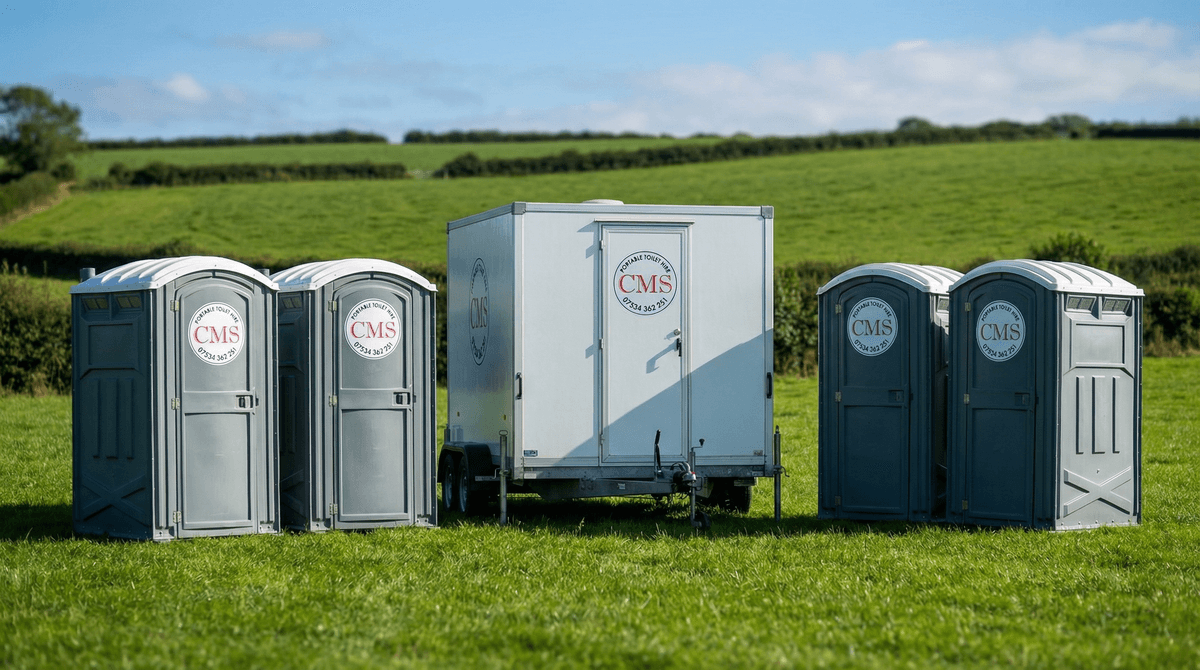
The default choice for emergency hire. Self-contained, requiring no water, power, or drainage. A chemical flush, hand sanitiser, and ventilation are built in. These can be placed on any firm, level surface — a driveway, patio, or car park.
Accessible Units
Care homes, schools, community centres, and any location serving vulnerable people or people with disabilities need accessible units. These are larger, with grab rails and wheelchair access.
Welfare Units
For businesses needing to maintain operations, a welfare unit provides a toilet, hand-wash facilities, and a small kitchen area. These require a power supply (mains or generator).
How Quickly Can Units Be Delivered?
Most reputable providers keep emergency stock available for exactly this type of situation. Delivery times depend on your location and the scale of the outage.
- Individual hire: Next-day delivery is standard. Same-day delivery may be possible for an additional charge.
- Major outages affecting a wide area: Demand spikes. Multiple customers compete for the same stock. If you anticipate a problem, call early rather than waiting.
- Pre-positioned stock: Some water companies and emergency services pre-position portable toilets during severe weather warnings, before the outage actually occurs.
Costs
Emergency hire is typically charged at weekend or event rates rather than long-term weekly rates, reflecting the urgency and short notice.
- Standard unit, emergency weekend hire: £100 to £200 including delivery and collection
- Standard unit, weekly hire: £40 to £60 including servicing
- Accessible unit, emergency hire: £150 to £250
- Delivery and collection: £50 to £100 per trip
If the outage is caused by a utility company's failure, you may be able to recover costs. Water companies have compensation schemes for prolonged outages. Check your water company's Guaranteed Standards Scheme for details.
Positioning During an Emergency
- Firm, level ground. Driveways, patios, car parks, and hardstanding are ideal.
- Close to the property but not blocking access. Keep doorways, paths, and vehicle access clear.
- Privacy. If the unit is in a front garden or visible from the road, consider a temporary screen.
- Lighting. If the power is also out, a battery-powered or solar lantern near the unit is essential for night-time use.
Preparing for Future Outages
Household Preparedness
- Keep a list of local portable toilet hire providers with emergency contact numbers.
- Maintain an emergency supply of bottled water (for drinking and hand washing — not for flushing).
- Consider a camping toilet as an immediate stopgap while you arrange professional hire.
- If you are on a private water supply or electric pump, a power cut will affect your water. Plan accordingly.
Business Preparedness
- Include sanitation in your business continuity plan.
- Identify a portable toilet provider and establish a relationship before you need them.
- Consider a standing arrangement where the provider holds stock for you during severe weather warnings.
- Ensure your insurance covers business interruption resulting from utility failure.
Community Preparedness
- Parish councils and community emergency plans should include sanitation provision.
- Identify locations where portable toilets could be deployed — community halls, schools, village greens.
- Establish contact with a provider and agree an emergency response protocol.
Summary
Power cuts and water outages are not rare events. The UK experiences thousands each year. Most are brief and manageable, but extended outages create a genuine sanitation crisis. Portable toilets are the fastest, most practical solution — for households, businesses, and communities. Have a plan, know who to call, and do not wait until the problem is already acute before picking up the phone.