
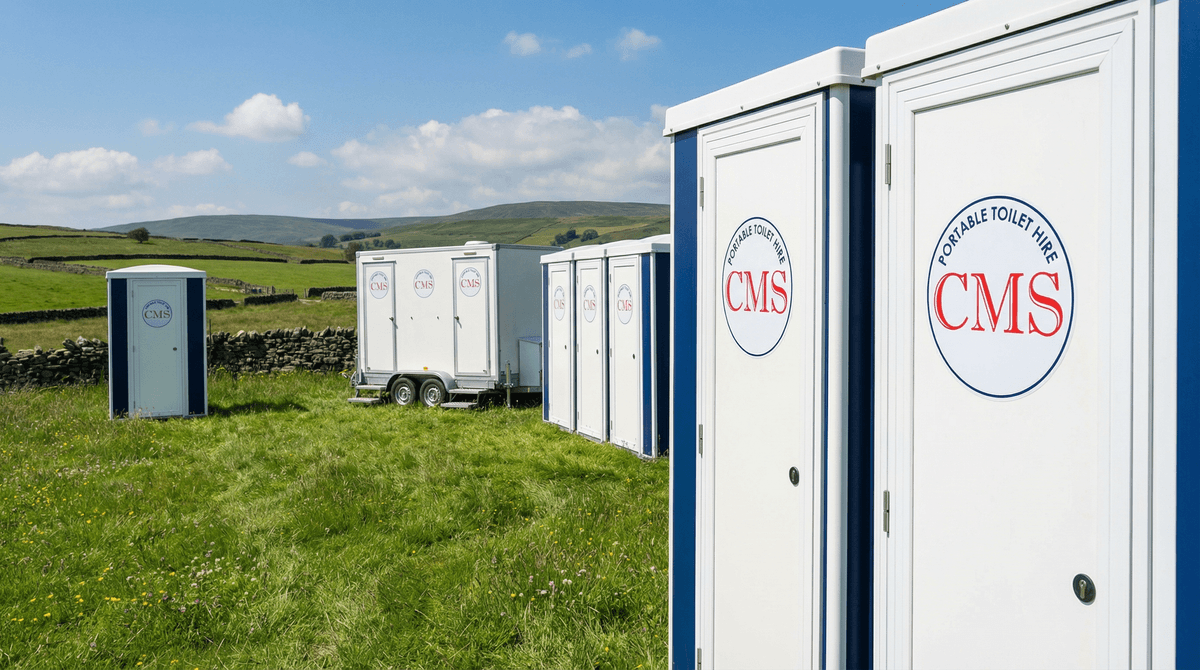
Portable Toilet Hire Across Staffordshire and Greater Manchester
Staffordshire and Greater Manchester represent two very different operating environments for portable toilet hire. Staffordshire combines urban centres like Stoke-on-Trent and Stafford with extensive rural areas including Cannock Chase and the Staffordshire Moorlands. Greater Manchester is densely urban, with a population exceeding 2.8 million spread across ten metropolitan boroughs.
Both regions have significant demand for portable sanitation — events, construction, emergencies, and private celebrations. This guide covers the specific considerations for each area.
Staffordshire: Events and Construction
Event Types
Staffordshire hosts a broad range of events requiring portable toilets:
- Agricultural shows. The Staffordshire County Show and local agricultural fairs on farmland and showgrounds.
- Weddings. Country house venues, barns, tipi sites, and private estates — many needing luxury toilet trailers or additional facilities.
- Community events. Village fetes, charity events, bonfire nights, and Remembrance Sunday services.
- Sporting events. Cricket matches, football tournaments, and running events across the county.
- Music events. From small community music festivals to larger ticketed events.
Construction in Staffordshire
Major development corridors along the A50, A500, and M6 generate consistent demand for construction site welfare facilities. The county also sees significant residential development, commercial building, and agricultural construction.
CDM Regulations 2015 require:
- 1 toilet per 7 workers
- Washing facilities with running water, soap, and towels
- Heating in cold weather
Rural Delivery Considerations
The Staffordshire Moorlands and areas around Cannock Chase present similar challenges to any rural delivery — narrow lanes, soft ground after rain, and longer journey times from depot. Confirm access conditions when booking.
Greater Manchester: Urban Challenges
High-Density Events
Greater Manchester hosts major events throughout the year:
- Manchester International Festival and associated fringe events
- Football match days generating demand around stadiums
- Pride festivals and parades
- Parklife and other music festivals at Heaton Park
- Runs and marathons including the Great Manchester Run
- Christmas markets in Manchester city centre
- Corporate events across the city's conference and exhibition venues
Large-scale events in Manchester require careful sanitation planning. Attendance figures can reach tens of thousands, and the urban setting creates unique positioning challenges.
Construction in Greater Manchester
The Greater Manchester construction market is one of the largest in the North West. Major projects include:
- Residential tower developments across Manchester and Salford
- Commercial office and retail schemes
- Infrastructure projects including transport and utilities
- University and hospital expansions
Urban construction sites in Greater Manchester often have constrained space. Compact portable toilet configurations, rooftop welfare units (craned into position), and shared site facilities are common solutions.
Positioning in Urban Settings
Street events and parades:
- Units must be positioned with permission from the local authority
- Traffic management orders may be needed
- Consider the impact on pedestrian flow
- Delivery and collection must be timed to avoid peak traffic hours
Construction sites:
- Space is at a premium on urban sites
- Units may need to be positioned within the hoarding line
- Access for servicing vehicles must be maintained throughout the build programme
- Welfare units may need to be stacked or craned into elevated positions
Parks and open spaces:
- Vehicle access routes across parkland need agreement from the park authority
- Ground protection is essential to prevent damage
- Units must be removed promptly after events to restore the space
Regulations in Greater Manchester
Each of the ten boroughs (Manchester, Salford, Bolton, Bury, Oldham, Rochdale, Stockport, Tameside, Trafford, Wigan) has its own events licensing and planning requirements. Check the specific requirements of the borough where your event is taking place.
The Safety Advisory Group (SAG) in each borough reviews larger events and may specify minimum sanitation standards as a condition of the event licence.
Choosing a Provider Across Both Regions
Coverage
Look for a provider that covers both Staffordshire and Greater Manchester if your needs span both areas. A single provider simplifies logistics and may offer better rates for multiple-site contracts.
Fleet Size
Major events and large construction contracts require providers with substantial fleets. Ask about total stock levels — a provider with 50 units may struggle to supply a festival needing 30 units while maintaining their other contracts.
Response Times
For construction sites, breakdown or damage to a portable toilet needs a fast response. A provider with a depot within the region can typically respond within 24 hours. For providers based further afield, response times may be longer.
Credentials
Non-negotiable requirements:
- Waste carrier licence (verify with the Environment Agency)
- Public liability insurance (minimum £5 million)
- Employers' liability insurance
- Written quotes with full cost breakdowns
- References from comparable clients
Cost Comparison
Prices are broadly similar across both regions, with slight variations:
| Item | Staffordshire | Greater Manchester |
|------|--------------|-------------------|
| Standard unit (weekly hire) | £40–£55 | £40–£60 |
| Accessible unit (weekly hire) | £55–£75 | £55–£80 |
| Luxury trailer (weekend hire) | £400–£700 | £450–£800 |
| Delivery and collection | £50–£100 | £40–£80 |
| Event hire (standard unit, weekend) | £80–£150 | £80–£150 |
Greater Manchester delivery charges tend to be slightly lower due to shorter distances from depots, but urban access constraints (traffic, parking, time-restricted loading) can offset this.
Servicing
Staffordshire
Rural servicing rounds are well established. Weekly servicing is standard for construction sites. Event servicing is arranged on a per-event basis. Remote sites in the Moorlands may attract higher servicing charges.
Greater Manchester
Urban servicing is efficient but needs to account for traffic. Early morning servicing (before 7am) is standard for city centre sites. Servicing vehicles need to comply with Clean Air Zone requirements in Manchester city centre — check that your provider's fleet meets current emissions standards.
Seasonal Demand
Peak Season (May to September)
Both regions experience high demand. Greater Manchester's festival and event calendar peaks in June and July. Staffordshire's agricultural show season runs from May to September. Book well in advance for both areas.
Winter
Construction demand continues year-round in both regions. Winter events are less common but include Christmas markets, bonfire nights, and New Year celebrations. Cold weather requires antifreeze additives in chemical toilets.
Bank Holidays
Major bank holidays see peak demand across both regions. The August bank holiday is consistently the busiest single weekend of the year. Book 6 to 8 weeks in advance minimum.
Summary
Staffordshire and Greater Manchester present different but complementary challenges for portable toilet hire. Staffordshire's rural sites demand careful access planning and may attract delivery premiums. Greater Manchester's urban density requires compact solutions, regulatory awareness, and providers whose fleet meets Clean Air Zone standards. In both regions, the fundamentals are the same: book early, communicate access requirements clearly, choose a credentialed provider, and plan your numbers based on realistic attendance figures.