
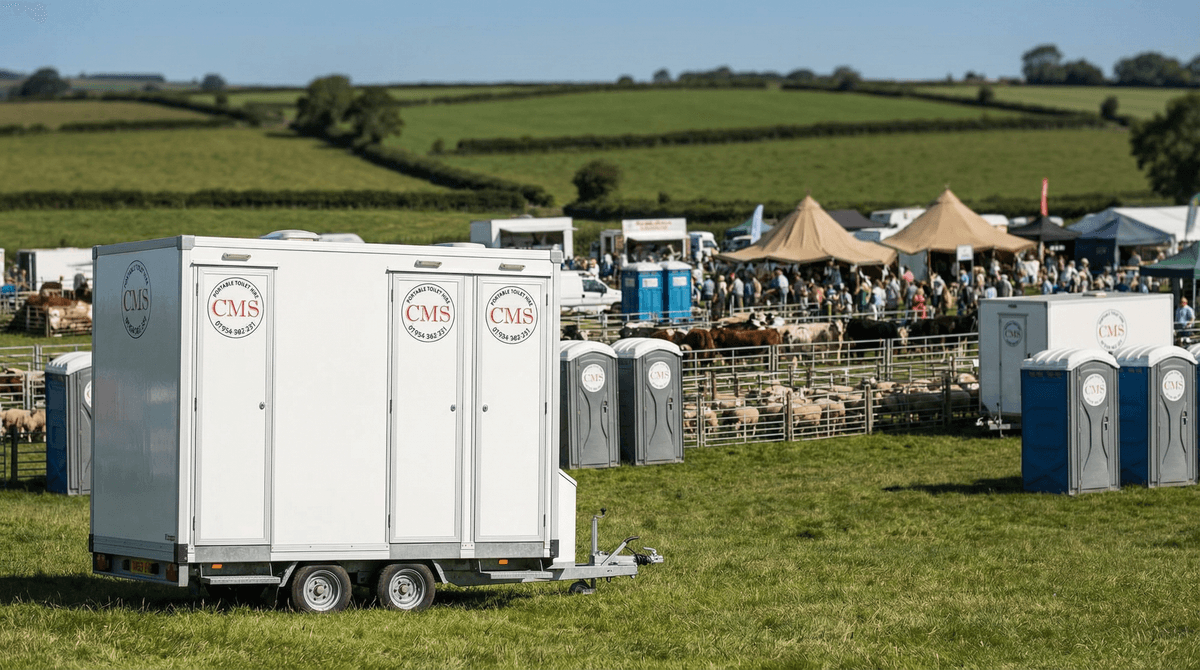
A mobile shower trailer is a towable unit containing multiple individual shower cubicles, complete with hot and cold running water, temperature controls, changing areas, and drainage. It arrives on site behind a tow vehicle, connects to a water supply and power source, and provides proper shower facilities for events where no permanent showers exist.
If you are organising a multi-day outdoor event — a festival, a scout camp, a sporting tournament with overnight stays, or a corporate retreat — shower provision is increasingly expected by participants and, in some cases, required by the licensing authority.
This guide covers what a shower trailer is, how it works, what it costs, and how to plan for one.
How a Shower Trailer Works
The Basics
A shower trailer is a purpose-built unit mounted on a road-legal chassis. It is delivered by being towed to your site, levelled using adjustable legs, and connected to three things:
1. Water supply — mains water via a hose connection, or a static water tank (bowser) with a pump.
2. Power supply — 240V mains electricity or a diesel generator. This powers the boiler, internal lighting, and any extraction fans.
3. Drainage — grey water (used shower water) needs to go somewhere. Options include mains drainage, a grey water holding tank, or a licensed soakaway.
Inside the Trailer
Each cubicle typically contains:
- A shower head with thermostatic temperature control
- A changing area with a bench, hooks, and sometimes a mirror
- A lockable door for privacy
- Non-slip flooring
- Internal lighting
- Adequate ventilation
Trailers come in various sizes, commonly 3 to 8 cubicles. Larger units may have separate male and female sections with individual entrances.
Hot Water
An onboard boiler (gas or electric) heats water to a usable temperature. Thermostatic mixing valves blend hot and cold water to prevent scalding. The boiler's capacity determines how many consecutive showers the trailer can deliver before the water temperature drops — a critical specification for busy events.
Types of Shower Trailer
Standard Shower Trailers
Functional, well-built units with individual cubicles, hot water, and basic finishes. These are the workhorse of the industry — suitable for scout camps, sports events, camping festivals, and construction sites.
Luxury Shower Trailers
Higher-specification units with premium finishes — better lighting, larger cubicles, tiled or laminate interiors, underfloor heating, hairdryer points, and sometimes music. These are appropriate for glamping sites, VIP festival areas, and corporate events where the standard of facilities reflects the brand.
Container-Based Shower Units
Converted shipping containers fitted with shower cubicles. These are more robust than trailers, suitable for longer-term installations, and can be stacked. Delivery requires a crane or a HIAB vehicle rather than towing.
Who Uses Shower Trailers?
Festival Organisers
Multi-day music festivals are the largest market for shower trailer hire. Campers at festivals increasingly expect shower access, and glamping ticket holders require it. Showers can be free (included in the ticket price) or paid (typically £3 to £5 per shower).
Scout and Guide Camps
Youth organisations running residential camps need individual lockable shower cubicles to meet safeguarding requirements. Shower trailers provide exactly this — properly separated, lockable cubicles with the privacy that shared open-plan facilities cannot offer.
Sporting Events
Multi-day sporting tournaments — cricket festivals, rugby sevens, equestrian events — with overnight camping benefit from shower provision. Competitors who have been physically active for several days need proper washing facilities.
Corporate Events
Outdoor corporate retreats, team-building events, and corporate hospitality with overnight accommodation increasingly include shower provision. A luxury shower trailer near the accommodation area sets the right tone.
Construction Sites
For longer-term construction projects where workers need to shower before leaving site (particularly on contaminated land or demolition projects), shower trailers provide compliant washing facilities.
Emergency and Disaster Relief
Following flooding, major incidents, or extended power outages, shower trailers provide washing facilities for affected communities. Local authorities and emergency services deploy them as part of the humanitarian response.
What You Need on Site
Water Supply
This is the single most important requirement. Without adequate water, a shower trailer cannot function.
- Mains water: Ideal. Connect via a standard hose fitting. Check the flow rate — most trailers need 15 to 20 litres per minute minimum.
- Bowser (static water tank): If mains water is unavailable, a water bowser provides a static supply. Bowsers range from 1,000 to 10,000 litres. A 5-day camp with 60 people showering daily needs approximately 10,000 to 15,000 litres.
- Natural water sources: Abstraction from rivers or boreholes requires an abstraction licence from the Environment Agency. This is not a quick solution.
Power Supply
- Mains electricity: A dedicated circuit, typically 32A or 63A depending on the trailer specification. Check with your provider.
- Generator: A diesel generator rated to handle the trailer's peak electrical load. Typically 15 to 30 kVA for a standard shower trailer.
- Fuel: Generator fuel consumption is significant. Budget for 3 to 5 litres per hour under load.
Drainage
- Mains drain: Connect the trailer's grey water outlet to a suitable drain.
- Holding tank: An onboard or external holding tank collects used water for removal by tanker.
- Soakaway: In some rural locations, grey water can be discharged to a soakaway. Check with the landowner and the Environment Agency.
Ground
The trailer must sit on firm, level ground. A car park, concrete pad, or compacted aggregate surface is ideal. Soft ground risks the trailer sinking or the tow vehicle becoming stuck.
Costs
| Item | Typical Cost |
|------|-------------|
| Standard shower trailer, 4 cubicles (weekly hire) | £400–£700 |
| Standard shower trailer, 6 cubicles (weekly hire) | £600–£1,000 |
| Luxury shower trailer (weekly hire) | £1,000–£2,000 |
| Delivery and collection | £100–£250 |
| Generator hire (weekly) | £150–£300 |
| Generator fuel | £50–£100 per day |
| Water bowser (delivered, 10,000 litres) | £200–£400 |
| Grey water removal (per tanker load) | £150–£300 |
For a 5-day camp with 60 participants, total shower provision costs typically range from £600 to £1,200 — approximately £10 to £20 per head.
Planning Checklist
- [ ] Confirm the number of people who will need showers
- [ ] Calculate the number of cubicles required (4–6 showers per cubicle per hour)
- [ ] Confirm the event dates and duration
- [ ] Assess the site: water supply, power supply, drainage, ground conditions
- [ ] Contact providers and obtain written quotes
- [ ] Book the shower trailer and any ancillary equipment (generator, bowser)
- [ ] Confirm delivery date and access arrangements
- [ ] Plan the position: firm ground, near accommodation, with privacy screening
- [ ] Arrange lighting for the shower area if the event runs after dark
- [ ] Plan operating hours and communicate them to participants
- [ ] Assign someone to monitor the facilities during the event
- [ ] Confirm collection date
Questions to Ask Your Provider
- How many cubicles does the trailer have?
- What is the hot water capacity (how many consecutive showers before the water goes cold)?
- What power supply do I need?
- What water flow rate and pressure do you require?
- How is grey water handled?
- Do you deliver and set up, or do I need to arrange my own tow vehicle?
- What is included in the hire price?
- Do you offer generator and bowser hire as part of a package?
Summary
A mobile shower trailer is a self-contained, towable unit that provides hot showers for events and sites without permanent facilities. It needs water, power, and drainage — but given those three things, it delivers a comfortable, hygienic shower experience that transforms multi-day outdoor events. Plan the infrastructure, book early, and choose a provider who supplies everything you need in a single package.