A Decade of Progress in Portable Sanitation
Portable toilets have a reputation problem. Most people's mental image is stuck somewhere around 2005 — a battered plastic box with a dodgy lock and a lingering smell. The reality of modern portable sanitation is dramatically different. The industry has invested heavily in materials, chemicals, design, and servicing practices over the past decade, and the improvements are genuine.
Here are ten specific ways portable toilets have improved in the last ten years.
1. Chemical Treatment Has Gone Green
The single biggest improvement in the last decade has been the shift from formaldehyde-based chemicals to bio-enzymatic and quaternary ammonium-based formulations. Older chemicals contained formaldehyde — effective at controlling odour but toxic, environmentally persistent, and increasingly restricted by regulation.
Modern chemical treatments are formaldehyde-free, biodegradable, and significantly better for the environment. They break down waste using biological processes rather than brute-force chemical sterilisation. The result is effective odour control with a fraction of the environmental impact. Waste treated with modern chemicals is easier to process at treatment facilities and safer for the watercourses it eventually enters.
2. Ventilation Systems Actually Work Now
Older portable toilets had minimal ventilation — a vent pipe on the roof and perhaps a small opening near the base. This was theoretically sufficient but practically inadequate, especially in warm weather.
Modern units have engineered ventilation systems with solar-assisted fans, carefully positioned air intakes, and vent designs that create genuine airflow through the unit. The difference is noticeable within seconds of stepping inside. A well-ventilated modern unit in summer is a fundamentally different experience from the stifling boxes of ten years ago.
3. Interior Design Has Improved Dramatically
The interior of a modern portable toilet bears little resemblance to its predecessors. Translucent roof panels allow natural light into the cabin, reducing the claustrophobic feel of older units. Smooth, non-porous interior surfaces are easier to clean and resist staining. Coat hooks, shelves, and mirrors are standard rather than premium features.
Some manufacturers now use interior colour schemes and textures that deliberately reduce the clinical, industrial feel. The goal is a unit that feels clean and comfortable rather than merely functional. It works.
4. Door Locks and Indicators Are Reliable
Few things are more anxiety-inducing than a portable toilet with a dodgy lock. Older units used simple slide bolts that wore out, jammed, or — worst case — failed to indicate whether the unit was occupied.
Modern units use robust, intuitive locking mechanisms with clear occupied/vacant indicators visible from outside. Many use colour-coded systems — green for vacant, red for occupied — that work without batteries or electronics. The mechanisms are designed for thousands of cycles and are field-replaceable when they eventually wear out.
5. Units Are Lighter and Stronger
Advances in polyethylene manufacturing have produced units that are simultaneously lighter and more durable than their predecessors. Modern rotational moulding techniques create seamless, stress-resistant shells that withstand years of transport, deployment, and cleaning without cracking or warping.
Lighter units mean easier handling, lower fuel costs for transport, and less damage to the ground surface when placed on grass. Stronger units mean a longer working life and better resistance to the rough treatment that is sometimes inevitable on construction sites.
6. Accessibility Has Moved From Afterthought to Standard
Ten years ago, accessible portable toilets were an expensive specialty item that many hire companies did not stock. Today, accessible provision is a standard part of every reputable hire company's fleet.
Modern accessible units are designed properly — wide enough for wheelchair access, with grab rails positioned by occupational therapists, non-slip flooring, and sufficient internal space for a carer to assist if needed. They are not simply larger versions of standard units with a ramp bolted on. The design reflects genuine consultation with disabled users and accessibility professionals.
7. Hand Hygiene Has Been Transformed
Pre-pandemic portable toilets offered a hand sanitiser dispenser and, in better units, a small foot-pump handwash basin. The COVID-19 pandemic accelerated a shift toward proper handwashing provision as standard.
Modern units increasingly include integrated handwash stations with running water, soap dispensers, and paper towels. Standalone handwash stations that can be placed alongside standard units are now affordable and widely available. The expectation of hand hygiene has permanently increased, and the industry has responded.
8. Waste Disposal Tracking Is Now Digital
Environmental compliance has tightened significantly over the past decade. Modern portable toilet companies use digital tracking systems to document every stage of the waste disposal chain — from the service visit to the waste transfer station to the treatment facility.
This documentation is not just a regulatory requirement; it provides confidence that waste is being handled responsibly. Customers can request waste transfer notes and service records, and good companies provide them proactively. The days of waste disappearing into an undocumented void are largely over — at least among legitimate operators.
9. Servicing Has Become More Systematic
A decade ago, servicing was often reactive — the hire company would visit when they remembered or when the customer complained. Modern operators use route-planning software, scheduled service visits, and digital logging to ensure every unit receives consistent, thorough attention.
A standard service visit now follows a documented checklist: empty the waste tank, clean all interior surfaces, restock consumables, check the lock and ventilation, inspect for damage, treat the tank with fresh chemical, and log the visit electronically. This systematic approach produces consistently cleaner units and fewer customer complaints.
10. Luxury Options Have Become Genuinely Luxurious
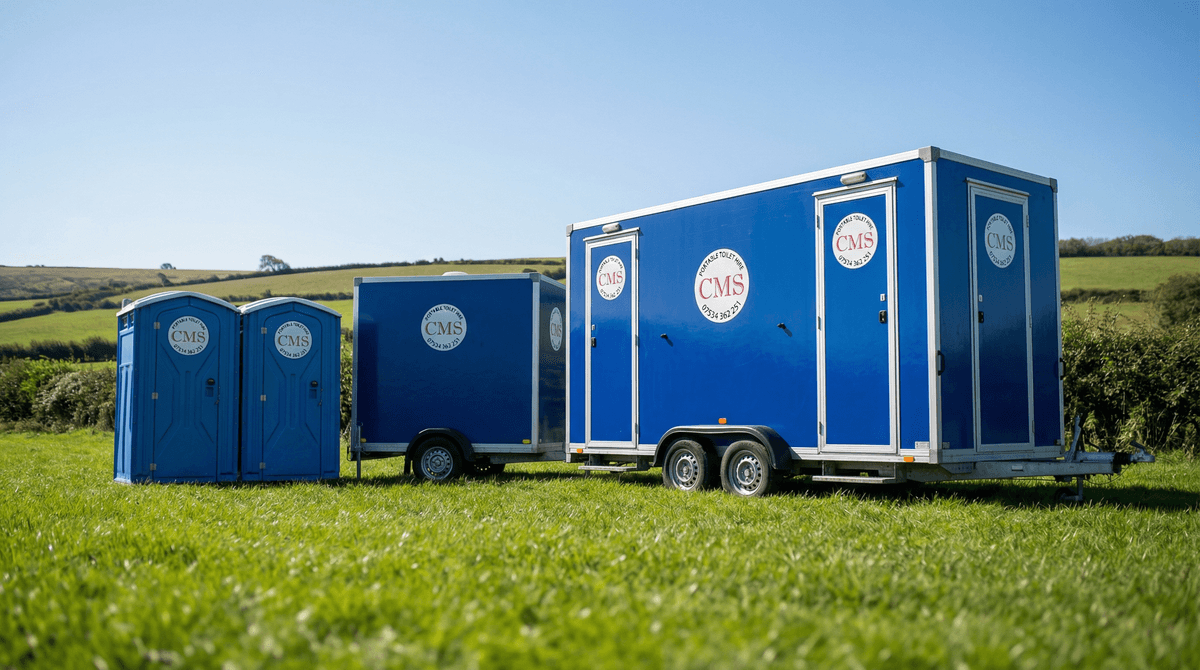
The top end of the market has transformed. Luxury toilet trailers now feature flushing porcelain toilets, hot and cold running water, underfloor heating, ambient lighting, Bluetooth speakers, and full-length mirrors. They are, by any reasonable measure, nicer than the toilets in many pubs and restaurants.
This matters because it has expanded the market. Events that would previously have compromised on facilities — weddings, corporate functions, garden parties — can now provide toilet provision that guests genuinely do not mind using. The existence of a premium tier has also raised expectations across the entire market, pushing even standard units toward higher standards.
What Has Not Changed
The fundamental principle is the same: a self-contained unit with a waste holding tank, positioned where it is needed and serviced regularly. That simplicity is part of what makes portable toilets so effective.
What has changed is everything around that principle — the materials, the chemicals, the design, the servicing, the regulation, and the expectations. A modern portable toilet is a better product in every measurable way than its predecessor of a decade ago. If your last experience of a portable toilet was at a festival in 2010, you would be genuinely surprised by what a well-maintained modern unit looks and feels like.