
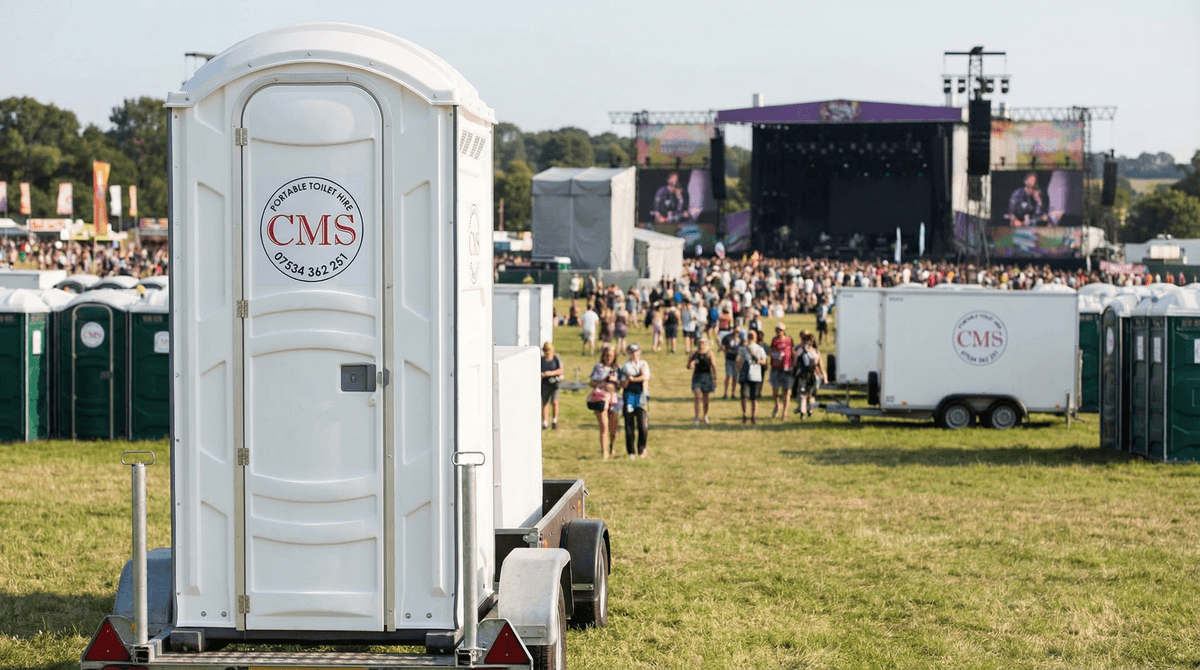
Getting Sanitation Right at Your Festival or Outdoor Event
Sanitation is one of those aspects of event planning that nobody wants to think about until it goes wrong. When it goes wrong, it dominates the conversation — on the day, in the feedback, and on social media for weeks afterwards. The goal is simple: provide enough clean, accessible facilities that your attendees barely notice them.
This guide covers the planning process from initial calculations through to event-day management.
How Many Units Do You Need?
The Event Industry Forum and the Purple Guide recommend the following as a starting point:
- 1 toilet per 100 female attendees
- 1 toilet or urinal per 150 male attendees
- At least 1 accessible unit per event (minimum 2 for events over 1,000 people)
These figures assume a daytime event of six to eight hours with no alcohol service. Adjust them for your specific circumstances:
Alcohol adjustment
If alcohol is served, increase the ratios by 25 percent. Alcohol is a diuretic. People drink more fluid and use the toilet more frequently. This adjustment is not optional — it is based on consistent data from events across the UK.
Duration adjustment
For events longer than six hours, increase by 20 to 30 percent. Longer events mean more total uses per attendee.
Multi-day adjustment
For camping festivals and multi-day events, calculate based on peak concurrent attendance, not total attendance over the whole event. Morning toilet demand at camping events is intense and concentrated — plan for it.
Gender split
If you know your event attracts a particular gender split (some sporting events, for example), adjust the unit allocation accordingly. If you do not know, assume 50/50.
Worked example
A summer festival with 500 attendees, a licensed bar, and a 12-hour programme:
- Assuming 50/50 gender split: 250 female, 250 male
- Female: 250 ÷ 100 = 2.5 → 3 units, plus 25% alcohol → 3.75, plus 25% duration → 4.7 → 5 female toilets
- Male: 250 ÷ 150 = 1.67 → 2 units, plus 25% alcohol → 2.5, plus 25% duration → 3.1 → 3 male toilets plus 1 urinal
- Accessible: 2 accessible units
- Total: approximately 11 units
Round up, not down. One extra unit is cheap. The complaints from having one too few are not.
Choosing the Right Mix of Units
Standard single portable toilets
The workhorse of event sanitation. Self-contained, lockable, one person at a time. Reliable, proven, and cost-effective.
Portable urinals
Higher throughput for male attendees. A single urinal serves the same volume as two to three standard units for male urination. Essential at any event over 200 people with a licensed bar. Reduces queues at standard units significantly and improves the experience for everyone.
Toilet blocks
Multiple cubicles in a single unit. More efficient use of ground space and easier to manage. Suitable for larger events where positioning a row of individual units is impractical or aesthetically undesirable.
Accessible toilets
Wider doorways, grab rails, ramp access, and sufficient internal space for wheelchair users. Required at every public event under the Equality Act 2010. Position these on the firmest, flattest ground, closest to the main event area.
Luxury toilet trailers
Flushing toilets, running water, heating, mirrors, and ambient lighting. Appropriate for premium events, VIP areas, and situations where the standard of facilities must match the standard of the event. Require power (generator or mains) and a water supply.
Handwash stations
Standalone handwashing units with running water and soap. Position these adjacent to every group of toilets. Hand sanitiser dispensers inside each unit provide a backup, but proper handwashing with soap and water is the standard to aim for.
Positioning Your Toilets
Where you put the toilets affects how well they work almost as much as how many you provide.
Distance from the main area
Place toilets within reasonable walking distance of the main activity — 100 to 200 metres maximum. Too far and people will not bother. Too close and queues, odour, and servicing vehicle traffic interfere with the event.
Ground conditions
Choose the firmest, flattest ground available. Avoid slopes, hollows, and areas prone to waterlogging. If the only option is grass and rain is likely, lay matting or boards around the entrance area to prevent a mud bath developing.
Vehicle access for servicing
If the event runs longer than one day, servicing vehicles need to reach the toilets. Plan an access route that does not cross the main event area or conflict with audience movements. Discuss this with your hire company during the planning stage.
Lighting
If the event runs past dusk, the toilet area needs lighting. Solar-powered stake lights along the approach path, plus a floodlight or festoon lighting at the toilet row, make the facilities findable and safe. Unlit toilets at night deter use and create safety concerns.
Accessible positioning
Position accessible units on the best ground, with the most direct and obstacle-free approach from the main area. Do not put accessible units at the far end of the row as an afterthought. They should be the closest units to the event.
Wind direction
If possible, position toilets downwind of the main event area. This is a minor detail, but on a warm day with a steady breeze, it makes a noticeable difference.
Servicing During the Event
Single-day events
For events up to eight hours, units delivered clean and fully stocked in the morning should last the day if you have provided the correct number. Assign someone to check units every two hours and restock toilet paper if needed.
Multi-day events
For festivals and multi-day events, professional servicing is essential. Arrange with your hire company for daily servicing — ideally early morning, before the main activity begins. The service visit includes emptying waste tanks, cleaning interiors, restocking consumables, and recharging chemical treatment.
Mid-event servicing for high-volume days may also be necessary. Discuss your attendance pattern with the hire company so they can plan appropriate service visits.
Your team's role between services
Professional servicing happens once or twice a day. Between visits, your team is responsible for basic maintenance:
- Check units every one to two hours
- Restock toilet paper and hand sanitiser from your reserve supplies
- Mop floors if muddy
- Wipe seats if needed
- Report any damage or issues to the hire company
Common Mistakes
The mistakes we see repeatedly:
- Underestimating numbers: The ratios above are starting points, not generous provision. If in doubt, add a unit.
- Poor positioning: Too far away, on a slope, or in a corner that nobody can find.
- No lighting at night: Attendees cannot find the facilities or feel unsafe using them.
- Forgetting accessible provision: This is a legal requirement, not an optional extra.
- No handwashing: Hand sanitiser is a minimum. Handwash stations with running water are the proper standard.
- No on-site monitoring: Leaving toilets unattended for twelve hours and hoping for the best is not a plan.
- Booking too late: Popular weekends in summer fill quickly. Book four to eight weeks in advance for the best availability and pricing.
Contingency Planning
Discuss contingency arrangements with your hire company before the event:
- Can additional units be delivered at short notice if attendance exceeds expectations?
- What happens if a unit is damaged or goes out of service during the event?
- Is emergency servicing available if units deteriorate faster than expected?
Having a contingency plan — even if you never use it — provides peace of mind and demonstrates professional event management.
The Non-Negotiable Standard
Throughout your event, every toilet unit should have:
- Toilet paper
- Hand hygiene provision (sanitiser or handwashing facilities)
- A clean seat
- A working lock
- Adequate ventilation
If any unit falls below this standard, address it immediately or take it out of service. One bad toilet drags down the perception of all your facilities.
Get in Touch
If you are planning a festival or outdoor event in Cheshire or Shropshire, we can help with the sanitation planning from the start. We will advise on numbers, types, positioning, and servicing — and deliver clean, well-maintained units on time. Call us early in your planning process and we will work through the details with you.