
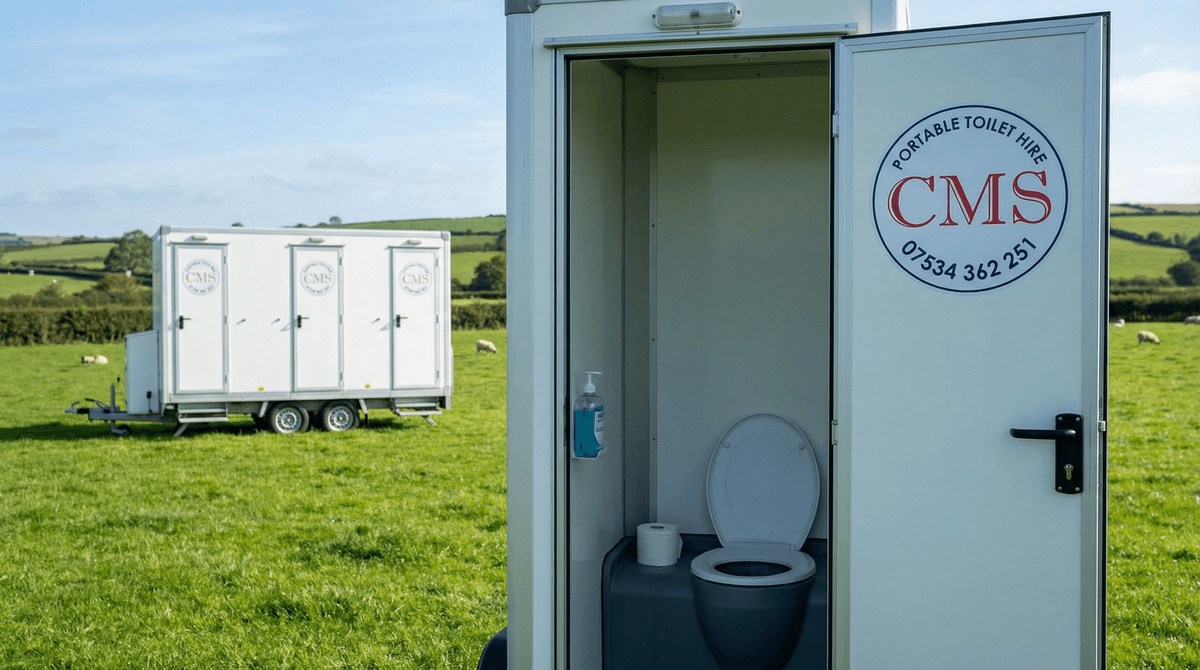
What Happens When We Service a Portable Toilet
Servicing is the difference between a portable toilet that works and one that does not. A new unit straight from the factory will become unusable within a week or two of moderate use without proper servicing. The chemical runs out, the waste tank fills, consumables are depleted, and odour takes over.
This guide explains exactly what happens during a professional service visit — step by step — so you know what to expect and can hold your hire company to account.
The Servicing Schedule
For most applications, portable toilets are serviced weekly. This frequency suits construction sites with five to ten workers and long-term domestic or seasonal hires. For higher-use situations — busy construction sites, multi-day events — more frequent servicing may be needed.
The schedule should be agreed when you book and confirmed in writing. If your hire company does not proactively discuss servicing frequency, ask. A company that is vague about servicing is a company that does not take it seriously.
Step-by-Step: A Standard Service Visit
1. Arrival and external inspection
The service technician arrives at the site and begins with a visual inspection of the exterior. They check for:
- Physical damage (dents, cracks, vandalism)
- Whether the unit has been moved from its original position
- Ground conditions around the unit (waterlogging, sinking)
- Whether access to the service hatch is clear
Any external issues are noted and photographed if necessary.
2. Waste tank emptying
The technician connects a vacuum hose from the service vehicle to the unit's waste tank outlet. The entire contents of the tank — liquid waste, chemical residue, and any solids — are extracted into the service vehicle's sealed holding tank.
This is done using a powerful vacuum pump that can empty a standard 200-litre waste tank in a few minutes. The hose and connection are designed to prevent spillage during the transfer.
The waste does not go into the ground, a ditch, or a drain. It goes into a sealed tank on the service vehicle for transport to a licensed waste treatment facility. This is a legal requirement under UK environmental law.
3. Interior cleaning
Once the waste tank is empty, the technician opens the cabin door and cleans the entire interior. This includes:
- Toilet seat: Cleaned and sanitised with antibacterial solution
- Toilet bowl: Scrubbed and rinsed
- Walls: Wiped down with disinfectant
- Floor: Mopped and sanitised
- Door handle and lock: Cleaned (these are high-touch surfaces)
- Shelves and hooks: Wiped clean
The cleaning is thorough. The goal is to return the interior to the condition it was in when the unit was first delivered. Not perfect — use creates wear — but clean, sanitised, and presentable.
4. Component check
The technician inspects all mechanical and structural components:
- Door lock: Working correctly? Does the occupied/vacant indicator function?
- Door hinges: Secure and operating smoothly?
- Ventilation: Vent pipe clear and unblocked? Low-level vents unobstructed?
- Flush mechanism (if fitted): Operating correctly?
- Structural integrity: Any cracks, warping, or damage to the cabin?
Minor repairs — a loose hinge, a stiff lock, a displaced vent cap — are carried out on site. If a significant repair is needed, the technician reports it and arranges a replacement unit if the current one is no longer fit for use.
5. Restocking consumables
The technician restocks:
- Toilet paper: A fresh roll or rolls, depending on the holder type
- Hand sanitiser: Refilled or replaced
- Deodoriser block: Replaced if fitted
Consumables should last until the next scheduled service visit under normal use. If they are running out faster — because usage is higher than expected — the servicing frequency may need adjusting.
6. Chemical treatment
With the waste tank empty and the interior clean, the technician adds a measured dose of fresh chemical to the waste tank. The dose is calculated based on:
- The tank capacity
- The expected usage before the next service visit
- The ambient temperature (higher temperatures require stronger concentrations)
- The season (winter formulations may include antifreeze properties)
The chemical charge is the engine of the portable toilet's odour control system. Under-dosing leads to odour and poor conditions. Over-dosing wastes chemical and money. A good technician gets it right.
7. Logging the visit
The service visit is logged — increasingly via a digital system on a tablet or smartphone. The log records:
- Date and time of the visit
- The unit's location and identification number
- Work carried out (emptying, cleaning, restocking, repairs)
- Any issues identified
- The name of the technician
This log creates an auditable record of servicing. If there is ever a dispute about whether servicing was carried out, the log provides evidence. Good hire companies can provide service records to customers on request.
8. Waste transport and disposal
The waste collected from the service vehicle's holding tank is transported to a licensed waste treatment facility. At the facility, it is processed — typically through biological treatment — and the treated effluent is discharged to the sewer system or watercourse under permit.
The hire company must hold a waste carrier licence to transport portable toilet waste. The treatment facility must hold an environmental permit to process it. The entire chain is regulated and documented through waste transfer notes.
What Bad Servicing Looks Like
Not all hire companies service to this standard. Signs that servicing is inadequate include:
- The unit smells between services: The chemical charge is insufficient or the tank is not being emptied fully
- Consumables run out before the next visit: The technician is not restocking properly
- The interior is not clean after servicing: The cleaning step is being skipped or rushed
- No service records: The company cannot demonstrate when the unit was last serviced
- The technician does not enter the cabin: Some operators simply empty the tank and leave — no cleaning, no restocking, no inspection
If you experience any of these issues, raise them with your hire company immediately. If the response is unsatisfactory, change companies. Life is too short for a badly serviced portable toilet.
How Often Does Servicing Need to Happen?
Weekly (standard)
Suitable for:
- Construction sites with up to 10 workers
- Long-term domestic hires
- Seasonal hires (allotments, marinas, caravan sites)
Twice weekly
Suitable for:
- Busy construction sites with 10 to 20 workers
- Small events over multiple days
- Hires during hot weather when chemical degrades faster
Daily or more frequent
Suitable for:
- Large events
- Very high-usage sites
- Hires in extreme heat
Event servicing
For multi-day events, servicing is typically arranged during quiet periods — early morning before the event opens. The frequency depends on attendance and unit numbers. A festival with 1,000 attendees and 15 units may need daily servicing; a village fete with 200 attendees and 3 units may not need servicing at all during a single-day event.
Our Approach
We service every unit we hire to the standard described in this guide. Every tank is fully emptied. Every interior is properly cleaned. Every consumable is restocked. Every visit is logged. Our waste goes to a licensed treatment facility, and we hold all the necessary licences and permits.
We do this because it is the right way to operate a portable toilet hire company. A clean toilet is not a luxury — it is the basic standard that every customer has a right to expect.