Parish councils, town councils, and local authorities are responsible for a wide range of community facilities and events — from playing fields and allotments to civic ceremonies and public celebrations. Many of these require temporary sanitation, whether because permanent facilities do not exist, are insufficient, or are closed for maintenance.
This guide covers the practical and regulatory considerations for councils hiring portable toilets.
When Do Councils Need Portable Toilets?
Community Events
Fireworks displays, Christmas light switch-ons, summer fetes, Remembrance Sunday parades, coronation celebrations, and jubilee parties. Any event that draws members of the public to a location without adequate permanent toilets requires temporary provision.
Playing Fields and Recreation Grounds
Council-owned playing fields used for football, cricket, and other sports often lack permanent changing rooms or toilet facilities. Portable toilets provide basic welfare provision for players and spectators.
Allotments
Council-managed allotment sites rarely have mains drainage. A portable toilet improves accessibility and encourages use by a wider range of plot holders.
Public Toilet Closures
When permanent public toilets are closed for renovation, deep cleaning, or emergency repair, portable units provide temporary cover.
Construction and Maintenance Projects
Council-employed or contracted workers carrying out grounds maintenance, road repairs, or building work need welfare facilities. The Construction (Design and Management) Regulations 2015 apply.
Procurement Considerations
Parish councils and local authorities operate under public spending rules. Even for relatively small expenditure, there are principles to follow.
Obtaining Quotes
- For routine hires under the council's delegated spending threshold (often £500 to £1,000), the clerk or responsible officer can typically obtain quotes and place the order directly.
- For larger expenditure, most councils require at least three written quotes.
- Some county and district councils have framework agreements with portable sanitation providers. Check whether your council can access these — they often provide pre-negotiated rates and pre-vetted suppliers.
Standing Orders
Check your council's standing orders and financial regulations. These govern purchasing procedures, spending limits for delegated decisions, and requirements for competitive quotation or formal tender.
VAT
Parish councils can reclaim VAT on goods and services purchased for council business through the VAT Section 33 scheme. Ensure invoices show VAT separately and keep records for your annual VAT reclaim.
Insurance
Confirm that the hire company carries public liability insurance of at least £5 million. The council's own public liability insurance should also cover events and temporary facilities on council-managed land.
Legal and Regulatory Requirements
The Equality Act 2010
Any public event or facility provided by a council must be accessible to people with disabilities. This means providing at least one accessible portable toilet at any public event. Failure to do so is a breach of the Act and exposes the council to legal action and reputational damage.
Health and Safety
The council has a duty of care to anyone using facilities it provides. This includes:
- Ensuring units are positioned safely on level ground
- Providing adequate lighting around the facilities
- Maintaining clear, safe paths to the units
- Ensuring units are serviced and clean
Waste Carrier Licence
The hire company must hold a waste carrier licence from the Environment Agency (or Natural Resources Wales). This is a legal requirement for the transportation and disposal of portable toilet waste. Ask for the licence number and verify it.
Environmental Considerations
If the event or site is near a watercourse, in a flood zone, or on an environmentally sensitive area (SSSI, conservation area), check whether any additional permissions are needed for the temporary placement of portable units.
Types of Unit
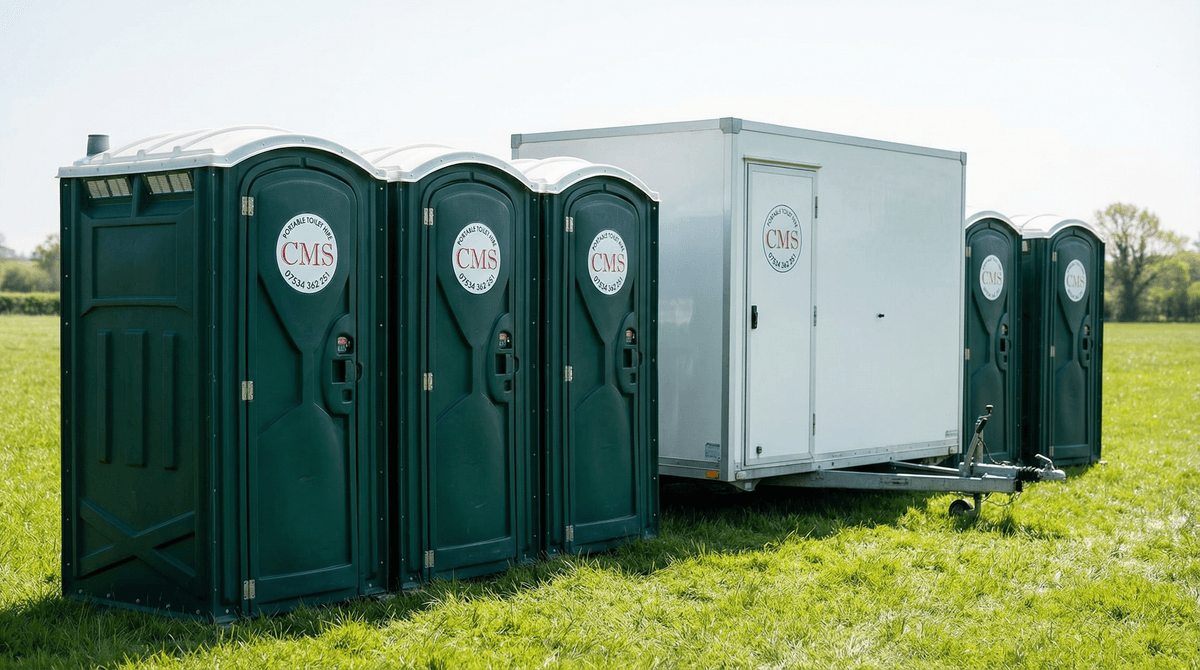
Standard Chemical Toilets
Suitable for most council events and sites. Low cost, no mains connections required, weekly servicing included.
Accessible Units
Essential for any public event. Larger footprint with grab rails, wider door, and low threshold.
Luxury Toilet Trailers
Appropriate for civic events, mayoral functions, and higher-profile occasions. Require a power supply.
Urinal Blocks
For larger events (200+ attendees), urinal blocks significantly reduce queuing and are cost-effective.
Welfare Units
For council workers on site for extended periods. Combine toilet, sink, kitchen, and seating.
How Many Units?
Public Events
- Under 200 attendees: 2 standard units + 1 accessible unit
- 200 to 500 attendees: 4 to 6 standard units + 1 accessible unit + urinal block
- 500 to 1,000 attendees: 8 to 12 standard units + 2 accessible units + 2 urinal blocks
- Over 1,000 attendees: Seek specific advice from the hire company based on event type and duration
Sports Facilities
- 1 unit per pitch in use, plus 1 accessible unit at the main entrance or car park
Allotments
- 1 standard unit + 1 accessible unit for sites with regular daily use
Positioning and Site Preparation
Level Ground
Units must stand on firm, level ground. On playing fields and recreation grounds, identify an area with good drainage and hard-wearing surface.
Vehicle Access
Delivery and servicing vehicles need access throughout the hire period. Do not allow event infrastructure (stalls, barriers, parking) to block the route.
Signage
Clear, prominent signage directing the public to the facilities. Include signage for accessible units.
Lighting
For events running after dark, the toilet area must be well lit. This is both a safety issue and a safeguarding consideration — poorly lit toilet areas at community events are a recognised risk.
Distance from Food Stalls
Position portable toilets at least 20 metres from food preparation and serving areas. This is both a hygiene requirement and common sense.
Managing the Hire
Point of Contact
Appoint a named person (often the parish clerk or an events committee member) as the contact for the hire company. This person handles delivery arrangements, reports problems, and confirms collection.
Event-Day Monitoring
For public events, assign a volunteer or steward to check the facilities regularly — ideally every hour. Top up supplies, deal with minor issues, and report anything that needs urgent attention.
Post-Event Review
After each event, review the sanitation provision. Were there enough units? Were they in the right positions? Did the servicing meet expectations? Feed this information into planning for the next event.
Budgeting
Typical costs for council portable toilet hire:
- Standard unit (weekend event hire): £80 to £150
- Accessible unit (weekend event hire): £120 to £200
- Urinal block (weekend event hire): £100 to £200
- Luxury trailer (weekend event hire): £400 to £800
- Delivery and collection: £50 to £100 per trip
- Long-term hire (standard unit, per week): £40 to £60 including servicing
For annual budgeting, list all events and sites requiring portable toilets throughout the year. Obtain indicative quotes to build a realistic facilities budget.
Summary
Parish councils and local authorities have a clear responsibility to provide adequate, accessible, and safe sanitation at public events and on council-managed land. Portable toilet hire meets this obligation efficiently and affordably. Follow procurement procedures, check supplier credentials, plan quantities based on attendance, and assign responsibility for monitoring on the day. The investment is modest. The consequences of failing to provide are not.