
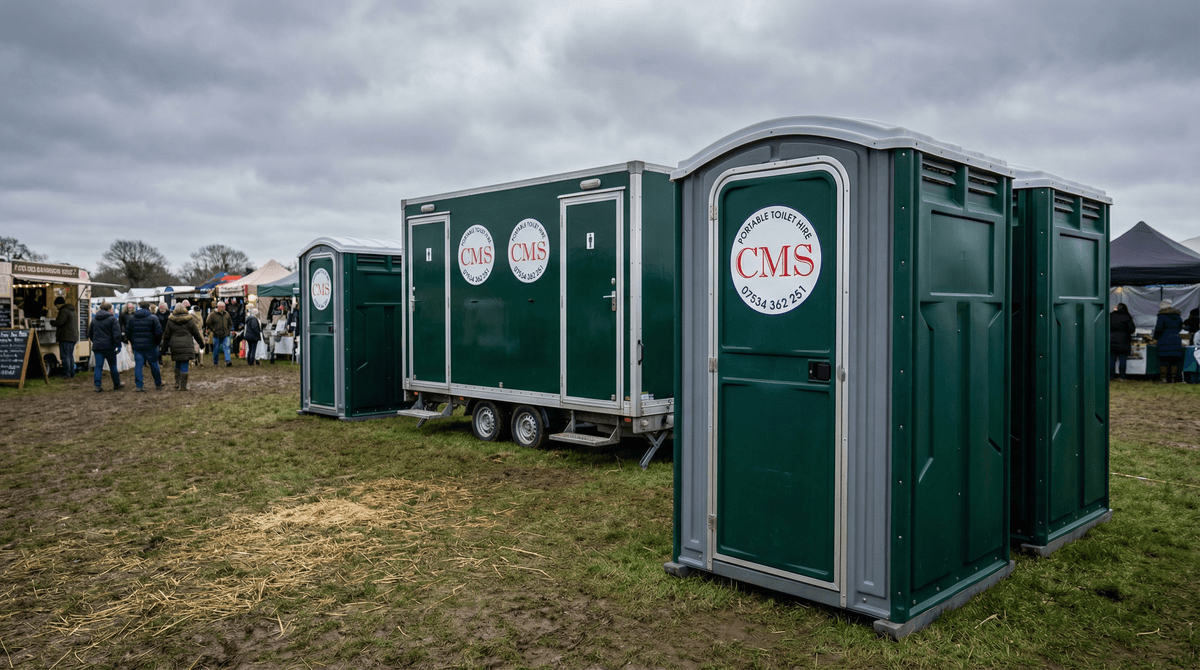
Winter does not stop construction. It does not cancel every outdoor event. And it certainly does not remove the need for sanitation. But cold weather — specifically freezing temperatures — creates genuine problems for portable toilets that do not arise during the rest of the year. Chemical fluids can freeze, pipes can crack, and plastic components become brittle in sustained cold.
This guide explains what happens to portable toilets in winter, how providers manage the risks, and what you need to do as a hirer to keep things working.
What Freezing Does to a Portable Toilet
The Waste Tank
Standard chemical toilets use a mix of water and chemical fluid in the waste tank. At temperatures below 0°C, this fluid can begin to freeze. A fully frozen waste tank renders the unit unusable — the flush mechanism fails, and waste cannot enter the tank.
The freezing point depends on the concentration of the chemical fluid. Standard blue fluid freezes at roughly the same temperature as water (0°C). Antifreeze-enhanced fluids lower this to approximately -15°C to -20°C, depending on the formulation.
The Flush Mechanism
The foot-pump or bellows flush on a standard chemical toilet pushes fluid from a reservoir up through the bowl. If the fluid in the reservoir freezes, the pump cannot operate. Forcing a frozen pump damages the mechanism.
The Hand Sanitiser
Alcohol-based hand sanitiser does not freeze under normal UK winter conditions (its freezing point is well below -20°C). This is one component that winter does not affect.
The Structure
Polyethylene — the material most portable toilets are made from — becomes more brittle at low temperatures. In sustained cold, impacts that would cause a minor scuff in summer can cause cracks in winter. Doors can become stiff, and hinges may need additional lubrication.
How Providers Manage Winter Conditions
Antifreeze Additives
Professional providers switch to antifreeze-enhanced chemical fluid during the winter months. This is the single most effective measure. The antifreeze component lowers the freezing point to a level that handles typical UK winter temperatures.
Most of the UK rarely sees sustained temperatures below -10°C. Antifreeze-treated fluid with a protection level of -15°C to -20°C is sufficient for the vast majority of situations.
Increased Fluid Concentration
Stronger concentrations of chemical fluid provide better freeze protection. Providers adjust the mix during servicing based on the forecast and the location — a site on an exposed hilltop in Northumberland needs a different concentration from a sheltered construction site in Surrey.
Pre-Winter Checks
Before winter sets in, responsible providers inspect their fleet for:
- Cracked or damaged panels that could worsen in cold weather
- Worn door seals and hinges that cold makes stiffer
- Flush mechanisms that need servicing
- Ventilation openings that could allow driving rain or snow inside
Winter Servicing Adjustments
Servicing schedules may need adjusting in winter. If a severe cold snap is forecast, some providers will carry out an additional check to ensure antifreeze levels are adequate and units are functioning.
What You Can Do as the Hirer
Positioning
Where you place the unit matters more in winter than at any other time of year.
- Sheltered positions reduce wind chill and the severity of freezing. Against a south-facing wall, in the lee of a building, or sheltered by a hedge or fence all help.
- Avoid exposed, elevated positions. Hilltops, open fields, and north-facing slopes experience lower temperatures than sheltered valley positions.
- Avoid waterlogged ground. Frozen waterlogged ground is uneven and dangerous. Water pooling around the base of a unit will freeze and can block the door.
Access Maintenance
- Keep the path to the unit clear of ice. Grit or salt the path daily during freezing conditions. A slip on ice near a portable toilet is both predictable and preventable.
- Clear snow from around the unit. Heavy snow can block doors, obscure the unit, and prevent servicing access.
- Maintain vehicle access for servicing. If the servicing vehicle cannot reach the unit, it cannot be serviced. Keep the access route passable.
Daily Checks
During freezing weather, check the unit each morning:
- Does the flush work? If not, the fluid may have frozen. Contact your provider.
- Is the door operating freely? Cold can stiffen hinges and seals.
- Is there ice around the base? Clear it.
- Is toilet roll and hand sanitiser stocked? Cold weather increases usage as people spend less time in the unit.
Heating
Some hirers place a small, safe heat source near (not inside) portable toilets to prevent freezing. This is effective but carries fire risks. If you do this:
- Use only low-wattage electric heaters with tip-over protection
- Never use gas heaters, candles, or open flames inside or near a polyethylene unit
- Do not leave heaters unattended
- Ensure adequate ventilation
Frankly, antifreeze-treated fluid is a safer and more reliable approach than heating.
Luxury Toilet Trailers in Winter
Luxury toilet trailers with flushing toilets and running water are more vulnerable to winter conditions than standard chemical units because they have water pipes that can freeze.
Pipe Lagging
Exposed pipes under the trailer should be lagged (insulated) before winter. Most providers do this as standard.
Trace Heating
Some higher-specification trailers have electric trace heating on vulnerable pipes. This keeps water flowing even in freezing conditions but requires a continuous power supply.
Draining Down
If a luxury trailer is not in use during a cold snap, draining the water system completely prevents freeze damage. This is standard winter maintenance procedure.
Generator Considerations
Generators powering luxury trailers in winter consume more fuel (cold starting, heating loads, longer running hours). Budget for increased fuel costs during winter events.
Construction Sites in Winter
Construction site portable toilets are the most likely to face sustained winter conditions, since construction continues regardless of weather.
- Request antifreeze-treated fluid from October onwards. Do not wait for the first frost.
- Position units in the most sheltered location available. Against a building or within a partially enclosed area.
- Ensure lighting. Winter daylight hours are short. A battery-powered interior light or head torch keeps the unit usable during early starts and late finishes.
- Check units regularly. Site managers should include portable toilet condition in their daily site safety checks during winter.
- Report problems promptly. A frozen unit that is reported early can be treated and returned to service the same day. One that is left for a week may suffer damage.
Winter Events
Outdoor events in winter — Christmas markets, bonfire nights, New Year celebrations, winter running events — need portable toilets that work in the cold.
- Discuss winter provision specifically with your provider when booking. Do not assume they will automatically supply antifreeze-treated units.
- Over-provide slightly. If a unit does freeze and become unusable, having a spare means continuity for your guests.
- Light the area well. Winter events are dark events. The toilet area needs lighting for safety and security.
- Position on hard surfaces. Frozen grass is slippery. Gravel, tarmac, or concrete provides safer footing.
Temperature Thresholds
| Temperature | Risk Level | Action Required |
|-------------|-----------|-----------------|
| Above 5°C | None | Standard operation |
| 0°C to 5°C | Low | Monitor. Ensure antifreeze fluid is in use. |
| -5°C to 0°C | Moderate | Check units daily. Clear ice around bases. Grit paths. |
| -10°C to -5°C | High | Increase antifreeze concentration. Consider sheltered repositioning. Daily checks essential. |
| Below -10°C | Very high | Contact provider for emergency antifreeze treatment. Consider temporary suspension of luxury trailers. |
Summary
Winter portable toilet hire requires more attention than summer hire, but the problems are well understood and manageable. Antifreeze-treated chemical fluid handles the vast majority of UK winter conditions. Sensible positioning, daily checks, and clear communication with your provider prevent most issues before they start. Do not cancel a winter event or reduce welfare provision because of the cold — just prepare for it properly.