Everything You Need to Know About Hiring a Portable Toilet
The portable toilet is one of those things everyone has used but few have thought about in detail. Whether you call it a site toilet, a chemical toilet, or a mobile loo, the principle is the same: a self-contained, standalone unit that provides a flushing toilet without any mains connections. It can be delivered to virtually any site, used for days or months, serviced regularly, and collected when you are done.
This guide covers everything a first-time hirer needs to know.
What Is a Portable Toilet?
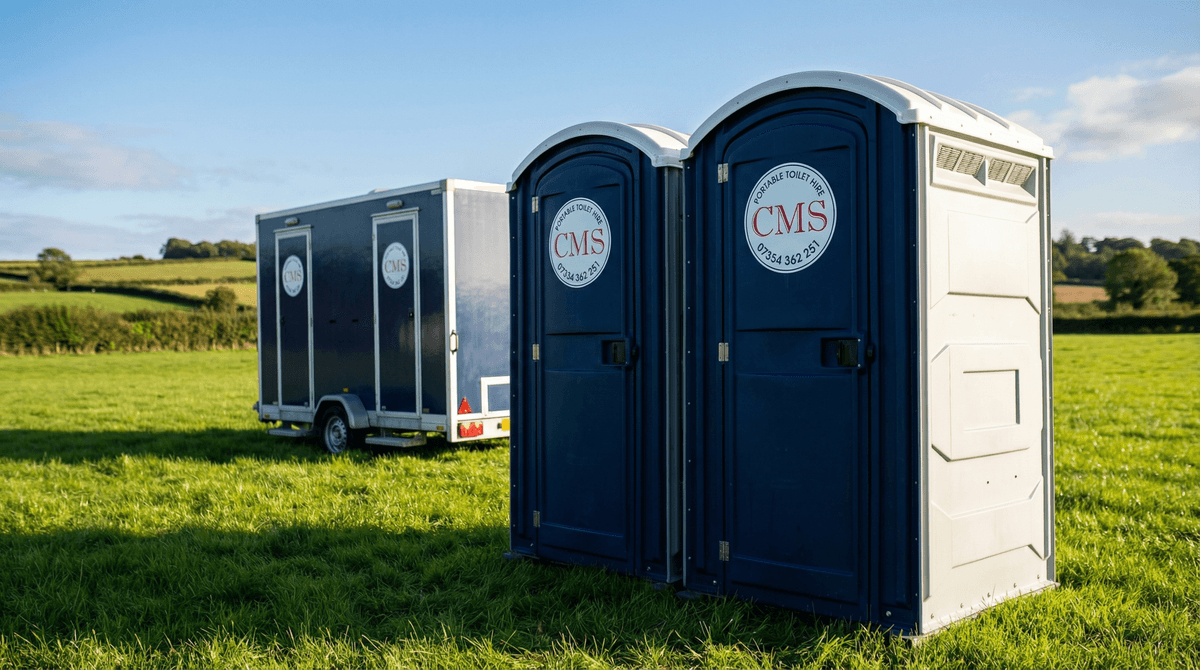
A portable toilet is a single-occupancy unit with a chemical flush, a lockable door, internal hand sanitiser, and ventilation. It stands on its own, requires no plumbing or drainage, and can be placed on any reasonably level surface.
Modern units are made from durable polyethylene, are straightforward to clean, and weigh around 75kg empty. They arrive on the back of a flatbed vehicle and are lifted into position by the delivery crew.
Inside, you will find a toilet seat over a waste holding tank, a flush mechanism (usually foot-operated), a toilet roll holder, a hand sanitiser dispenser, and a coat hook. Some units also have a small mirror and interior lighting.
What Does the Hire Include?
A standard hire from a reputable company includes:
- Delivery to your site or venue. The unit is transported on a flatbed vehicle and positioned by the delivery crew.
- A clean, fully stocked unit. Toilet roll, hand sanitiser, and chemical fluid are provided.
- Collection after the hire period. The unit is collected, and all waste is removed.
- Servicing (for longer hires). Construction site hires typically include weekly servicing at no extra cost — emptying the waste tank, cleaning the interior, and restocking consumables.
VAT is additional. There should be no hidden charges if you hire from a transparent provider. Ask for a written quote before committing.
How Much Does It Cost?
Portable toilet hire is genuinely affordable. Typical costs:
- Weekly hire (construction or long-term): £40 to £60 per week, including servicing
- Weekend event hire: £80 to £150 per unit, including delivery and collection
- Delivery and collection: £50 to £80 depending on distance (sometimes included in the hire rate)
- Accessible unit (weekly hire): £55 to £80 per week
- Luxury toilet trailer (weekend event hire): £400 to £800 depending on specification
For a single weekend event, the total cost for one standard unit is comparable to a decent restaurant meal. For construction sites on a long-term hire, it works out at less than a pound per worker per day.
How Many Do I Need?
The number depends on how many people will use the facilities, how long they will be on site, and whether alcohol is involved.
Construction Sites
- 1 unit per 7 workers (the minimum under CDM Regulations 2015)
- For 15 workers: 2 units
- For 30 workers: 4 to 5 units
- Add 1 accessible unit if any worker has a disability
Events Without Alcohol
- 1 unit per 100 attendees for events up to 6 hours
- 1 unit per 75 attendees for events over 6 hours
- Add 1 accessible unit for any public event
Events With Alcohol
- 1 unit per 50 to 75 attendees
- Add urinal blocks for events over 200 people
- Add 1 accessible unit
Private Parties
- 30 to 50 guests: 1 unit
- 50 to 100 guests: 2 units
- 100+ guests: 3 units or consider a luxury toilet trailer
Types of Portable Toilet
Standard Chemical Toilet
The most common unit. Self-contained, no connections needed, suitable for construction sites, events, and domestic use. This is what most people picture when they think of a portable toilet.
Accessible Unit
A larger unit designed for wheelchair users and people with limited mobility. Features include grab rails, a wider door, a lower threshold, and additional interior space. Required at any public event under the Equality Act 2010.
Luxury Toilet Trailer
A trailer-mounted unit with flushing toilets, running water, mirrors, interior lighting, and sometimes heating or air conditioning. Requires a 240V mains power supply or a generator. Used for weddings, corporate events, and premium hospitality.
Urinal Block
A multi-bay urinal unit for high-throughput male provision at events. Dramatically reduces queuing. Available in 4-bay, 6-bay, and 8-bay configurations.
Welfare Unit
A combined facility with a toilet, hand-wash basin, kitchen area, and seating. Used on construction sites where the regulations require a full welfare setup. Requires a power supply.
How Does the Waste Get Dealt With?
Waste from portable toilets is collected during servicing by a tanker vehicle. The waste is transported to a licensed treatment facility — typically a sewage treatment works — where it is processed in the same way as domestic sewage.
The hire company must hold a waste carrier licence from the Environment Agency. This is a legal requirement. The waste is tracked from collection to disposal under the duty of care system, with paperwork at each stage.
Nothing is dumped illegally. Nothing goes into watercourses. The system is regulated, documented, and inspected.
Delivery and Collection
What to Expect
- The delivery vehicle is a flatbed lorry or a large van. It needs access to your site — check gate widths, turning space, and surface condition.
- Units are lifted off the vehicle by the driver, usually with a tail lift. No crane or special equipment is needed for standard units.
- You should have someone on site to direct the driver to the correct position.
- Delivery typically takes 15 to 30 minutes per unit.
Positioning
- Place units on firm, level ground. Concrete, tarmac, compacted gravel, or hard-packed earth.
- Avoid soft grass, slopes, or waterlogged areas.
- Keep units at least 10 metres from watercourses and food preparation areas.
- Ensure easy access for servicing vehicles — the unit needs to be reached by a vacuum tanker for emptying.
Access Requirements
If your site has locked gates, narrow access, height barriers, or time-restricted access, tell your provider when booking. Surprises on delivery day waste time and cost money.
Servicing
What Is Included?
A standard service visit covers:
- Emptying the waste tank using a vacuum tanker
- Cleaning and disinfecting the interior
- Restocking toilet roll and hand sanitiser
- Topping up chemical fluid
- Checking the door lock, hinges, and ventilation
- Reporting any damage
How Often?
- Construction sites: Weekly servicing is standard, included in the hire rate.
- Events: Pre-event preparation is standard. Multi-day events need daily servicing.
- Private domestic hire: Servicing as needed, usually weekly.
What If Something Goes Wrong?
If a unit is blocked, damaged, or runs out of supplies between services, contact your provider. Most offer emergency call-outs, typically with a next-day response for non-urgent issues and same-day for genuine emergencies.
Booking Process
1. Contact the provider with your requirements: location, dates, number of people, and type of event or project.
2. Receive a written quote with a full breakdown of costs.
3. Confirm the booking and agree delivery and collection dates.
4. Prepare the site — level ground, clear access, someone to meet the driver.
5. Receive delivery and check each unit.
6. Use, monitor, and maintain during the hire period.
7. Collection at the end of the hire period.
Summary
Portable toilet hire is straightforward, affordable, and well-suited to a huge range of situations. Whether you need one unit for a garden party or fifty for a festival, the process is the same: contact a reputable provider, get a written quote, prepare the site, and let them handle the logistics. The industry exists to make sanitation easy — take advantage of it.