
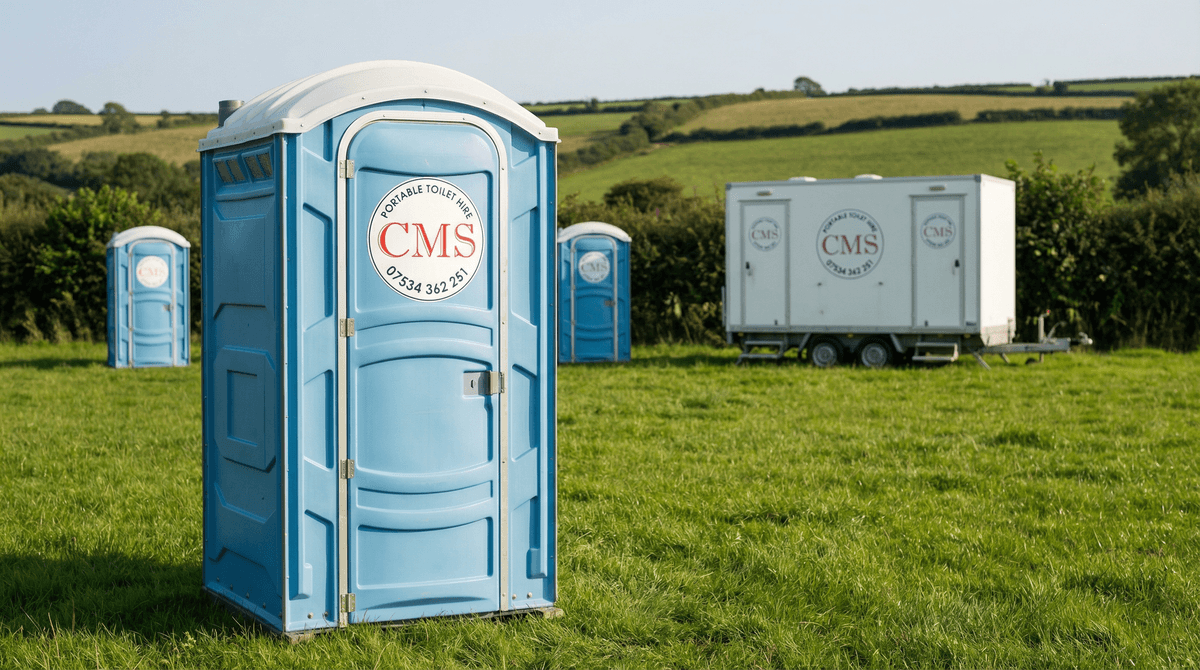
It is a fair question. Millions of portable toilet visits happen in the UK every year — at construction sites, festivals, private events, and emergency deployments. The waste has to go somewhere. The answer is reassuringly dull: it goes to the same place as your domestic sewage, via a regulated, documented process.
This guide explains the full journey from portable toilet to treatment plant, including the legal framework that governs every step.
The Collection Process
Scheduled Servicing
For portable toilets on long-term hire (construction sites, allotments, caravan parks), waste is collected during scheduled servicing visits — typically weekly. The service technician arrives in a specialist vehicle equipped with a vacuum tanker.
The process:
1. The technician connects a vacuum hose to the portable toilet's waste tank.
2. The contents are pumped into the tanker vehicle.
3. The toilet's waste tank is cleaned with high-pressure water.
4. Fresh chemical fluid is added.
5. The interior is cleaned and restocked with consumables.
6. The technician records the service on a job sheet or digital system.
Event Collection
After a single-day event, units are collected whole — waste and all — loaded onto a flatbed vehicle, and returned to the depot. The waste is then emptied from each unit at the depot before the units are cleaned and stored.
For multi-day events, waste is collected from units in situ using a vacuum tanker during daily servicing visits. The units remain on site.
The Tanker Vehicle
Vacuum tankers are purpose-built vehicles designed to safely transport liquid waste on public roads. They are sealed, pressurised systems that prevent spillage during transit.
Key features:
- Vacuum pump to draw waste from the portable toilet into the tanker
- Sealed tank with baffles to prevent sloshing during transport
- Hose connections compatible with all standard portable toilet waste outlets
- Capacity typically ranges from 1,000 to 10,000 litres, depending on the vehicle
The vehicles are inspected and maintained to legal standards. They must display hazard warning signs during transit if carrying certain volumes.
Where Does the Waste Go?
Sewage Treatment Works
The vast majority of portable toilet waste is taken to a licensed sewage treatment works — the same facilities that process domestic sewage from the mains sewer network. The waste is offloaded into a designated reception point at the treatment works.
Once at the treatment plant, portable toilet waste is processed through the same stages as domestic sewage:
1. Screening. Large solids (rags, debris, non-flushable items) are removed by mechanical screens.
2. Primary settlement. The waste sits in large tanks, allowing heavier solids to settle to the bottom as sludge. Oils and grease float to the surface and are skimmed off.
3. Biological treatment. The liquid passes through biological treatment beds or activated sludge systems, where bacteria break down organic matter.
4. Secondary settlement. Further settlement removes remaining suspended solids.
5. Tertiary treatment (where required). Additional filtration or UV treatment to meet discharge standards for sensitive watercourses.
6. Discharge. The treated water (now called effluent) is discharged into a river or watercourse under a permit from the Environment Agency.
Sludge Treatment
The solids settled during treatment are processed separately:
- Digestion. Anaerobic digestion breaks down the sludge in sealed tanks, producing biogas (methane) that can be used to generate electricity.
- Dewatering. The digested sludge is pressed or centrifuged to remove excess water.
- Land application. Treated biosolids (the end product) are often applied to agricultural land as a soil conditioner and fertiliser, subject to strict quality controls and regulations.
The Chemical Fluid
Standard portable toilet chemical fluid (the blue liquid) contains biocides to suppress bacterial activity, fragrance to mask odour, and surfactants to assist cleaning. Common active ingredients include formaldehyde-free biocides (formaldehyde was phased out of most products due to environmental concerns) and quaternary ammonium compounds.
The chemical fluid is designed to be compatible with sewage treatment processes. It breaks down during treatment and does not interfere with the biological stages of the process.
Some older or cheaper formulations still contain chemicals that are harmful to the treatment process. Reputable providers use formulations that are compliant with treatment works requirements.
The Legal Framework
Portable toilet waste disposal in the UK is governed by several pieces of legislation:
Duty of Care (Environmental Protection Act 1990)
Anyone who produces, carries, or disposes of waste has a legal duty of care to ensure it is handled safely and lawfully. This creates a chain of responsibility from the portable toilet on your site to the treatment works.
Waste Carrier Licence
Any company that transports controlled waste — which includes portable toilet waste — must hold a waste carrier licence issued by the Environment Agency (or the equivalent body in Scotland and Wales). This is a legal requirement, not an optional credential.
You can verify a company's waste carrier licence online through the Environment Agency's public register.
Waste Transfer Notes
Every time waste changes hands (from the hirer's site to the tanker, from the tanker to the treatment works), a waste transfer note must be completed. This documents:
- A description of the waste
- The quantity
- The date of transfer
- The licence details of the carrier
- The destination
Waste transfer notes must be kept for at least two years. Reputable providers handle all of this as a standard part of their service.
Trade Effluent Consent
Portable toilet waste companies need a trade effluent consent from the water company to discharge waste at the treatment works. This consent specifies the volume and composition of waste that can be received.
What You Should Check as a Hirer
You have a legal duty of care, even as the person hiring the portable toilet. In practice, this means:
- Confirm your provider holds a waste carrier licence. Ask for the licence number and verify it.
- Ask where the waste is taken. A reputable provider will tell you the name of the treatment works without hesitation.
- Keep documentation. The hire agreement, servicing records, and any waste transfer notes should be retained for at least two years.
- Do not accept unregulated disposal. If a provider offers to "just empty it in the field" or seems vague about disposal arrangements, hire from someone else. Illegal dumping of portable toilet waste is a criminal offence.
Illegal Disposal: The Risks
Illegal dumping of portable toilet waste does happen, usually by unlicensed operators trying to cut costs. The consequences are serious:
- Environmental damage. Untreated sewage entering watercourses causes pollution, kills fish, and contaminates water supplies.
- Criminal prosecution. Illegal waste disposal is a criminal offence under the Environmental Protection Act 1990. Fines can reach £50,000 in the Magistrates' Court, and unlimited in the Crown Court.
- Civil liability. If you hired the provider who dumped the waste illegally, you may share liability under the duty of care provisions.
- Reputational damage. An event or business linked to illegal waste dumping faces significant reputational harm.
Environmental Credentials
The portable sanitation industry has made significant progress in reducing its environmental impact:
- Formaldehyde-free chemicals are now standard among reputable providers.
- Water-efficient units reduce the volume of liquid waste generated.
- Biogas generation from sludge digestion produces renewable energy.
- Land application of treated biosolids returns nutrients to agricultural land, reducing dependence on synthetic fertilisers.
- Fuel-efficient vehicles and optimised servicing routes reduce carbon emissions from collection.
Some providers publish environmental policies and hold ISO 14001 certification (the international standard for environmental management systems).
Summary
The journey of portable toilet waste is straightforward: from the unit, into a vacuum tanker, to a licensed sewage treatment works, through the same treatment process as domestic sewage, and back into the water cycle as clean effluent. Every step is documented and regulated. As a hirer, your responsibility is simple — use a licensed provider and keep the paperwork. The system works. It is clean, regulated, and far less dramatic than most people imagine.