
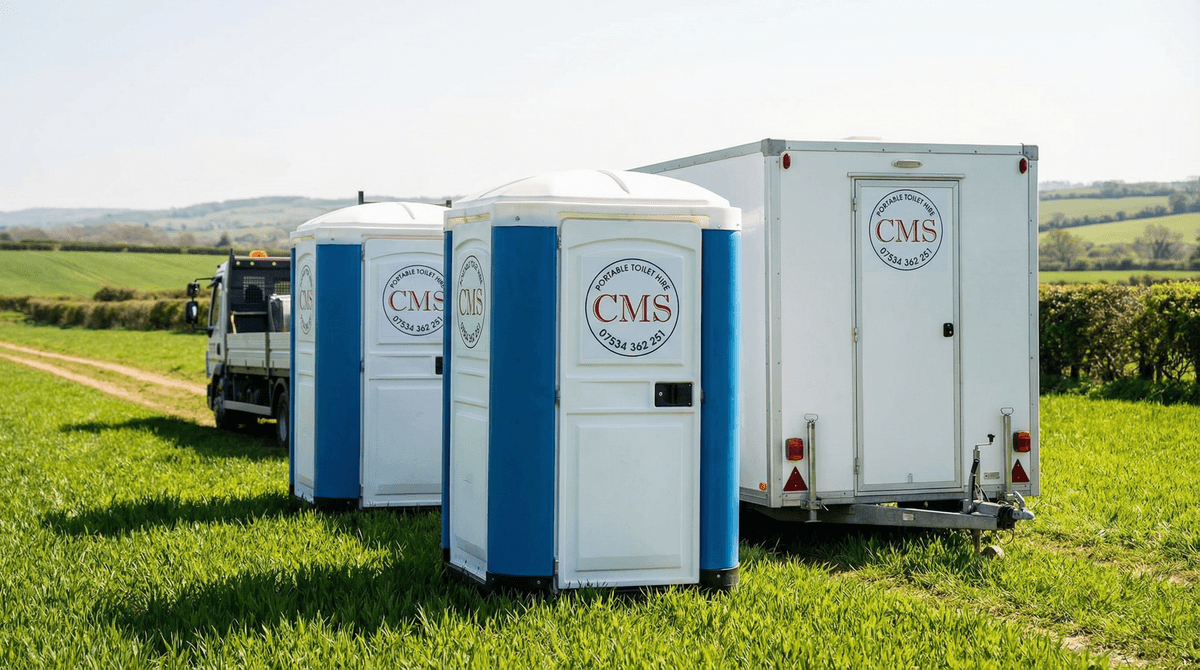
Vandalism to portable toilets is not rare. It happens on construction sites, at public events, on allotments, and in car parks. The damage ranges from minor graffiti to complete destruction — kicked-in panels, torn-off doors, overturned units, and deliberate contamination. It is frustrating, costly, and occasionally dangerous.
This guide explains what to do when it happens, how to minimise your liability, and how to reduce the risk of it happening again.
Immediate Steps
1. Secure the Area
If the unit is damaged to the point of being unsafe — panels cracked with sharp edges, the unit tipped over, or hazardous waste spilled — cordon off the area immediately. Do not let anyone use a damaged unit. Use barrier tape or cones to prevent access.
2. Document the Damage
Before you touch anything, photograph the damage thoroughly:
- Wide shots showing the unit in context
- Close-up shots of specific damage (broken panels, graffiti, internal damage)
- Photos of the surrounding area (footprints, discarded tools, other evidence)
- Note the date and time you discovered the damage
This documentation is essential for your hire company, your insurer, and the police.
3. Report to the Police
Report the vandalism to the police. For most portable toilet vandalism, this will be a non-emergency report (call 101 or report online). You will receive a crime reference number, which you need for insurance claims and for reporting to the hire company.
If the vandalism is part of a wider incident (break-in, theft, assault), call 999.
4. Contact Your Hire Company
Call the hire company as soon as practical. They need to know:
- What has happened
- The extent of the damage
- Whether the unit is usable or needs replacement
- Whether there is a health or safety risk (spilled waste, sharp edges)
Most providers can arrange a same-day or next-day response:
- A replacement unit delivered
- The damaged unit collected
- An assessment of the damage for billing purposes
5. Check Other Units
If you have multiple units on site, check them all. Vandals often target more than one unit.
6. Check CCTV
If you have CCTV coverage of the area, review the footage. Provide any relevant footage to the police with the crime reference number.
Who Pays for the Damage?
This is the question that causes the most friction between hirers and hire companies. The answer depends on the hire agreement.
The Hire Agreement
Most hire agreements include a clause making the hirer responsible for damage to the units while they are on your site, beyond normal wear and tear. This typically covers:
- Vandalism
- Theft
- Fire damage
- Misuse
Read your hire agreement carefully. The liability clause tells you exactly where you stand.
Typical Costs
Repair or replacement costs for vandalised portable toilets:
| Damage | Typical Cost |
|--------|-------------|
| Graffiti removal | £30–£80 |
| Broken door lock | £40–£80 |
| Cracked or kicked-in panel | £80–£200 |
| Door replacement | £100–£250 |
| Internal damage (broken flush, sanitiser dispenser) | £50–£150 |
| Complete unit replacement | £500–£1,500 |
| Contamination clean-up | £100–£300 |
Damage Waivers
Some hire companies offer a damage waiver at the time of booking. This is an optional additional charge (typically £20 to £50) that covers you against accidental or malicious damage during the hire period. If your site is in a high-risk area or your event attracts a rowdy crowd, a damage waiver is worth considering.
Insurance
If you have event insurance, public liability insurance, or site insurance, check whether vandalism to hired equipment is covered. Many policies do cover this, subject to the excess.
Construction site insurance (contractor's all-risks policies) often covers damage to hired-in plant and equipment, which may include portable toilets. Check the policy wording or ask your broker.
Preventing Vandalism
Prevention is always cheaper than repair. Consider these measures:
Positioning
- Visible locations. Units in visible, well-trafficked areas are less likely to be targeted than those hidden behind buildings or in dark corners.
- Near buildings or occupied areas. Proximity to people deters casual vandals.
- Away from public access points. On construction sites, position units inside the hoarding or secure perimeter.
Lighting
- Well-lit areas deter vandalism. Solar-powered security lights are effective and inexpensive.
- Motion-activated lights are particularly effective — the sudden illumination startles vandals.
Locking
- External padlock. Many portable toilets can be fitted with an external hasp for a padlock. Lock the unit when the site is unoccupied (overnight, weekends).
- Combination locks are practical for sites where multiple people need access without carrying a key.
- Keyed alike locks. If you have multiple units, keyed-alike padlocks allow one key to open all of them.
CCTV
- Visible CCTV cameras deter opportunistic vandalism.
- Even dummy cameras with a visible deterrent effect can reduce incidents.
- For high-value or high-risk sites, monitored CCTV with an alarm response provides the strongest protection.
Signage
- "24-hour CCTV in operation" signs are a deterrent, whether or not CCTV is actually installed.
- "This site is regularly monitored" signs also help.
Fencing and Barriers
- On construction sites, ensuring the site perimeter is secure prevents most vandalism.
- At public events, stewards or security presence near the toilet area deters antisocial behaviour.
Community Engagement
- On allotment sites or community facilities, engage with local residents and community policing teams. Neighbourhood watch schemes and community reporting make a measurable difference.
Recurring Vandalism
If the same site is targeted repeatedly:
Escalate with the Police
Multiple incidents at the same location may warrant increased police attention. Provide all crime reference numbers and any CCTV footage to your local PCSO or neighbourhood policing team. Ask about targeted patrols.
Consider Anti-Vandal Units
Steel-clad anti-vandal portable toilets are available. These are significantly more resistant to damage — steel doors, reinforced panels, and heavy-duty locks. They cost more to hire but withstand far more abuse than standard polyethylene units.
Change the Position
If a specific location on your site is targeted, reposition the units. Sometimes moving them to a more visible or better-lit location is sufficient to stop the problem.
Review Site Security
If vandalism to portable toilets is a symptom of wider site security issues (break-ins, theft, criminal damage to other equipment), address the security problem holistically. Better fencing, CCTV, lighting, and alarm systems protect everything on site — not just the toilets.
Event-Specific Vandalism
Events with alcohol, late-night operation, or younger demographics carry higher vandalism risk. Specific measures:
- Steward the toilet area. A visible steward presence deters most problems.
- Close facilities when the event ends. Lock units promptly at the end of the event to prevent post-event damage.
- Remove units promptly. If the event ends on Saturday night, arrange collection for Sunday morning. Units left unattended after an event are vulnerable.
- Budget for damage. Accept that some damage is inevitable at certain types of event and build it into the budget. This is not defeatism — it is realistic planning.
Summary
Vandalism to portable toilets is annoying, costly, and common enough that every hirer should plan for it. Document the damage, report it, contact your hire company, and check your insurance. Prevent future incidents with lighting, locking, positioning, and — where the risk justifies it — anti-vandal units or CCTV. The cost of prevention is almost always less than the cost of repair.