
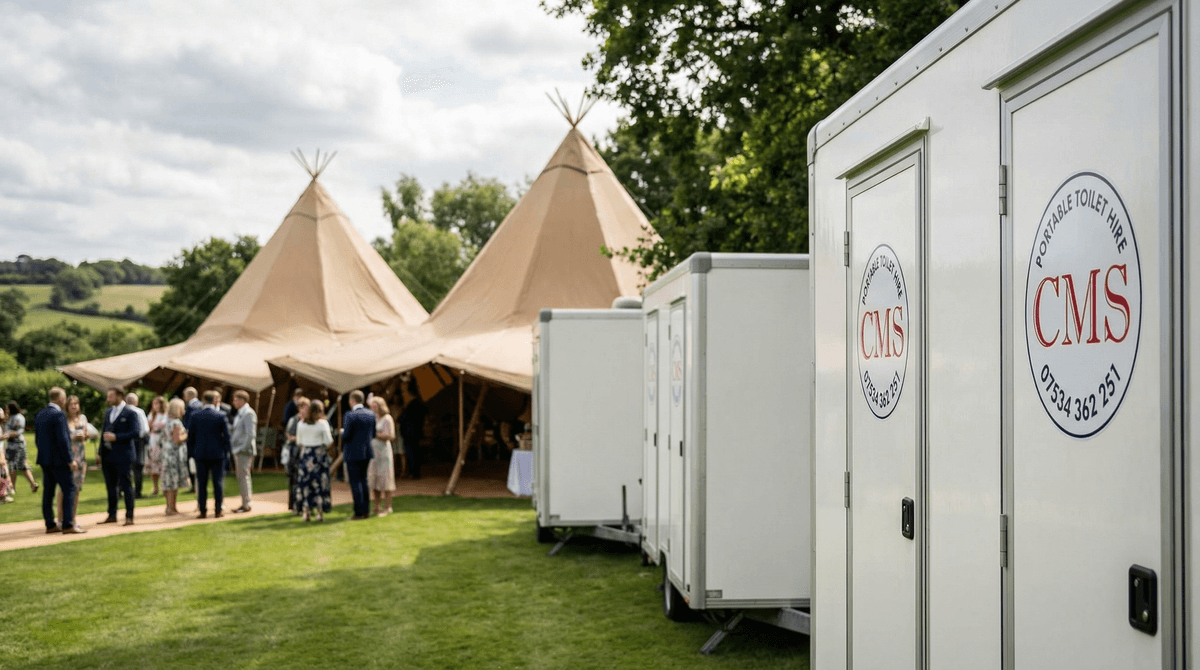
The toilet area at an outdoor event is one of those things guests only notice when it goes wrong. A well-equipped toilet area fades into the background — guests use it without complaint and return to the event. A poorly equipped one generates queues, frustration, and the kind of reviews that organisers dread.
Beyond the toilets themselves, there are items that turn a functional toilet area into a genuinely good one. Here are the ten essentials that experienced event organisers never overlook.
---
1. Adequate Lighting
Why It Matters
Once the sun goes down, an unlit toilet area becomes a safety hazard and a deeply unpleasant experience for guests. People trip, miss the path, and avoid using the facilities altogether — which creates its own problems.
What You Need
- Pathway lighting from the main event area to the toilet block — solar stake lights, festoon lights, or low-level LED strips
- Individual unit lighting — most modern portable toilets have internal lighting, but check this at the time of booking
- Area lighting — a freestanding LED floodlight or two positioned to illuminate the general toilet area without creating glare
Battery-powered and solar options are available for events without mains power. Avoid relying solely on torches or phone lights — they are not adequate for managing foot traffic safely.
---
2. Hand Washing Stations
Why It Matters
Hand hygiene is not negotiable at any event. Hand sanitiser dispensers inside the units are a start, but a proper hand-washing station is the standard your guests expect — and that food safety regulations may require.
What You Need
- A portable hand-wash station with a foot pump or battery-powered tap
- Warm water (heated units are available for winter events)
- Liquid soap in a refillable dispenser
- Paper towels — hand dryers are impractical outdoors
Position the hand-wash station immediately outside the toilet units, so guests use it as they exit. Keep it stocked throughout the event.
---
3. Signage and Wayfinding
Why It Matters
Guests should never have to ask where the toilets are. Clear signage reduces queues, prevents guests wandering into restricted areas, and ensures accessible facilities are easy to find.
What You Need
- Directional signs from the main event area, the entrance, the bar, and any other key locations
- A clear sign at the toilet area itself, indicating the number of units and the location of the accessible unit
- Signs for hand washing, baby changing, and any gender-specific facilities
- Reflective or illuminated signs for evening events
Keep wording simple and direct. An arrow and the word "Toilets" is more effective than a paragraph of instructions.
---
4. Ground Protection
Why It Matters
Foot traffic around a toilet area is heavy and concentrated. On grass, this means mud — and mud means slipping, complaints, and damage to the venue's grounds that the organiser may be liable for.
What You Need
- Trackway or ground mats on the approach path and immediately in front of each unit
- Matting inside the units if the floor surface is smooth and potentially slippery
- Rubber-backed entrance mats at each unit door to catch mud before it enters
For winter events or after rain, consider full trackway from the event area to the toilets. The cost is modest compared to the cost of a guest injury or a venue damage claim.
---
5. A Mirror
Why It Matters
It sounds trivial, but mirrors are one of the most frequently mentioned items in post-event feedback. Guests — particularly at weddings, corporate dinners, and formal events — want to check their appearance. Most standard portable toilets do not include one.
What You Need
- A shatterproof mirror inside each unit, or at minimum on the hand-wash station
- For luxury toilet trailers, full-length mirrors are standard and expected
- An additional mirror at the hand-wash station for events with a higher dress code
---
6. Sanitary Waste Bins
Why It Matters
Every toilet unit used by women must have a sanitary waste bin. This is a legal requirement under the Workplace (Health, Safety and Welfare) Regulations 1992 and a basic expectation at any event.
What You Need
- A lidded sanitary waste bin inside every unit that may be used by women
- Bins should be lined and emptied regularly — at least once during a full-day event, more often at large events
- Spare bin liners kept on site
Your hire provider should include sanitary bins as standard. If they do not, ask — or find a provider who does.
---
7. Baby Changing Facilities
Why It Matters
If your event welcomes families, baby changing is essential. Parents without a proper changing area will improvise — and the results are neither hygienic nor dignified.
What You Need
- A fold-down baby changing shelf in at least one unit — ideally the accessible unit, which has more space
- A supply of nappy bags
- Signage indicating which unit has changing facilities
For larger family events, a dedicated baby changing unit or a screened changing area with a table is a worthwhile investment.
---
8. Spare Supplies
Why It Matters
Running out of toilet paper, soap, or paper towels during an event is entirely preventable but happens with depressing regularity. It is the single fastest way to generate complaints.
What You Need
- A locked storage box near the toilet area containing:
- Spare toilet rolls (at least two per unit for a full-day event)
- Spare liquid soap
- Spare paper towels
- Spare bin liners
- A basic cleaning kit (spray cleaner, disposable gloves, cloths)
- A designated person responsible for checking and restocking during the event
---
9. Queuing Management
Why It Matters
Queues at event toilets are the number one complaint at outdoor events. While the primary solution is providing enough units, the layout and management of the queue also makes a significant difference.
What You Need
- A single queue feeding multiple units — this is consistently faster and fairer than individual queues per unit
- Barrier tape or lightweight posts to define the queue area and prevent crowding
- A clear sightline from the queue to the units so guests can see when a unit becomes free
- A steward at peak times (interval, changeover, after meals) to manage flow and direct guests to available units
---
10. Emergency and First Aid Access
Why It Matters
The toilet area should be accessible to first aid and emergency responders at all times. Guests may feel unwell, slip, or require assistance — and the response must not be delayed by poor layout or blocked access routes.
What You Need
- A clear access route wide enough for a wheelchair or stretcher
- The toilet area location clearly marked on the event site plan and communicated to first aid teams
- Emergency lighting (even if the event is during daylight — weather can reduce visibility quickly)
- A means of communication (radio, phone) for the toilet area steward to contact event control
---
Putting It All Together
The toilet area at your event does not need to be luxurious — it needs to be well planned, well equipped, and well maintained throughout the day. These ten items cover the essentials:
- Adequate lighting
- Hand-washing stations
- Signage and wayfinding
- Ground protection
- Mirrors
- Sanitary waste bins
- Baby changing facilities
- Spare supplies
- Queuing management
- Emergency access
Get these right, and your toilet area will do its job without generating a single complaint. Get them wrong, and the toilets will be the most talked-about part of the day — for all the wrong reasons.