Portable toilets are one of those event essentials that only get attention when something goes wrong. The irony is that most problems are entirely preventable — they come down to the same handful of planning errors made by organisers at every level, from village fêtes to major festivals.
Here are the ten most common mistakes, and how to avoid every one of them.
---
1. Not Ordering Enough Units
This is the single most frequent error. Organisers underestimate attendance, forget to account for peak times, or simply try to save money by ordering fewer units than they need.
The Consequence
Long queues, frustrated guests, and — at worst — people finding their own solutions behind hedges and in car parks.
How to Avoid It
Use the Purple Guide ratios as your starting point:
- Female guests: 1 toilet per 100 people
- Male guests: 1 toilet per 500 plus 1 urinal per 150
- Adjust upwards for events with heavy food and drink consumption, all-day durations, or limited nearby facilities
If in doubt, order one or two more units than you think you need. The marginal cost of an extra unit is trivial compared to the damage caused by inadequate provision.
---
2. Poor Placement
Putting toilets in the wrong place creates two problems: guests cannot find them, or guests can find them all too easily — by smell.
The Consequence
Complaints about odour, accessibility issues, and underused units in remote locations while guests queue for the ones nearer the action.
How to Avoid It
- Place units within easy walking distance of the main event area — two to three minutes maximum
- Position them downwind of the event area and any food service
- Ensure the path to the toilets is clearly signed and accessible
- Avoid placing units too close to neighbours, residential areas, or water features
- On large sites, use multiple toilet clusters rather than one central block
---
3. Forgetting Accessible Units
Accessible toilet provision is a legal requirement under the Equality Act 2010 for public events. It is also a basic courtesy. Yet it is one of the most commonly overlooked items in event planning.
The Consequence
Legal liability, exclusion of disabled guests, and reputational damage.
How to Avoid It
- Include at least one accessible unit in every order
- Place it on firm, level ground with a clear, unobstructed approach
- Ensure it is clearly signed with the International Symbol of Access
- Do not use the accessible unit as storage — this happens more often than you would believe
---
4. Skipping the Servicing Plan
Ordering toilets for a single-day event? Servicing seems unnecessary. But for any event lasting more than a few hours with more than 100 guests, servicing during the event is essential.
The Consequence
Units that are full, dirty, and out of supplies halfway through the day.
How to Avoid It
- For events lasting 6+ hours, arrange a mid-event service or have a member of staff checking and restocking units
- For multi-day events, daily professional servicing is non-negotiable
- Keep a supply of toilet paper, soap, and cleaning materials on site for top-ups between services
---
5. Ignoring Ground Conditions
The British weather is not a secret. Yet organisers regularly fail to account for rain, soft ground, and the effect of hundreds of people walking to and from the toilet area.
The Consequence
Mud, slipping, damaged ground, and units that become difficult or impossible to access.
How to Avoid It
- Lay trackway or ground mats on the approach path and around the units
- Choose a well-drained area on higher ground where possible
- Have additional matting available in case conditions deteriorate
- Check the forecast in the days before the event and adjust your ground protection plan accordingly
---
6. Late Booking
The event season in the UK runs from May to September, and portable toilet hire companies have finite stock. Leaving your booking until the last few weeks means you may not get the units you want — or any units at all.
The Consequence
Compromised provision, higher costs, and the stress of scrambling for an alternative supplier.
How to Avoid It
- Book at least 6-8 weeks in advance for weddings and corporate events
- Book 3-6 months ahead for large public events and festivals
- Confirm your order and delivery arrangements at least two weeks before the event
---
7. Choosing the Wrong Type of Unit
A standard chemical toilet at a black-tie wedding. A luxury trailer at a muddy charity run. Mismatching the unit to the event creates a poor experience and wastes money.
The Consequence
Guests feel the facilities are inappropriate — either uncomfortably basic or absurdly over-specified for the occasion.
How to Avoid It
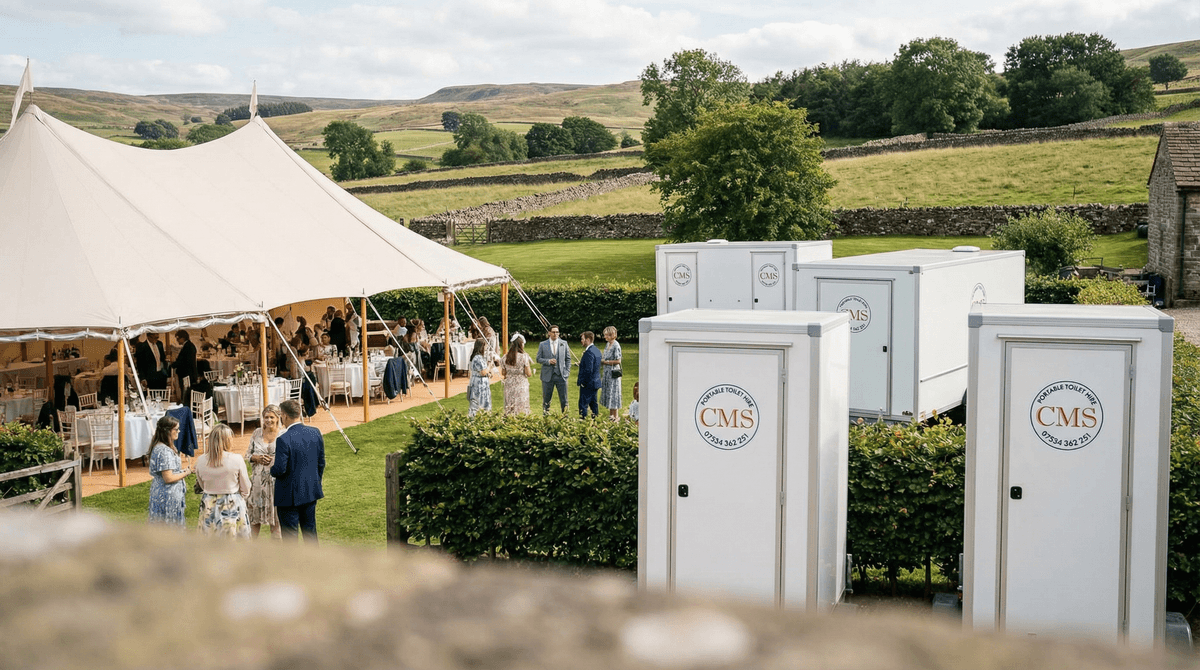
- Weddings and formal events: Luxury toilet trailers with flushing toilets, mirrors, hand wash basins, and interior lighting
- Festivals and outdoor shows: Robust standard units with hand sanitiser, supplemented by urinal blocks for speed
- Corporate events: Clean, well-maintained standard units or mid-range units depending on the formality
- Charity runs and sporting events: Standard units positioned near start/finish and at key points along the route
---
8. No Lighting
An afternoon garden party does not need toilet lighting. But any event that extends past sunset does — and sunset arrives earlier than most people expect, particularly in spring and autumn.
The Consequence
Safety hazards, guests avoiding the toilet area, and a generally poor impression.
How to Avoid It
- Check whether the units have internal lighting (most modern units do, but verify)
- Provide external pathway lighting from the event area to the toilets
- Use battery-powered or solar options if mains power is not available
---
9. Failing to Communicate with the Hire Company
Organisers order units online or over the phone, provide a delivery address, and assume the rest will take care of itself. It rarely does.
The Consequence
Units delivered to the wrong location, at the wrong time, or in the wrong configuration. Access problems. Servicing missed.
How to Avoid It
- Provide a detailed site map showing exactly where units should be placed
- Confirm access routes, gate codes, and any restrictions on delivery times
- Discuss servicing schedules, emergency contact numbers, and the plan for collection
- Walk the site with the hire company if possible, particularly for complex or unusual venues
---
10. No Contingency Plan
What happens if a unit is damaged, a queue builds beyond acceptable levels, or the weather makes the toilet area inaccessible?
The Consequence
Problems that could have been managed with a simple backup plan become full-blown crises.
How to Avoid It
- Have a contact number for your hire company in case you need an emergency unit delivered during the event
- Keep basic cleaning and repair supplies on site
- Identify a backup location for additional units if the primary area becomes waterlogged
- Brief your event team on the contingency plan so they can act quickly
---
Summary
Every one of these mistakes is avoidable. They require planning, not money — and the time invested in getting the toilet provision right is repaid many times over in guest satisfaction and smooth event management.
The common thread is this: treat portable toilet hire as a core part of your event planning, not an afterthought. Order enough, order early, place them well, service them properly, and have a plan for when things do not go as expected.
Do that, and the toilets will be the one part of your event that nobody talks about — which is exactly how it should be.