
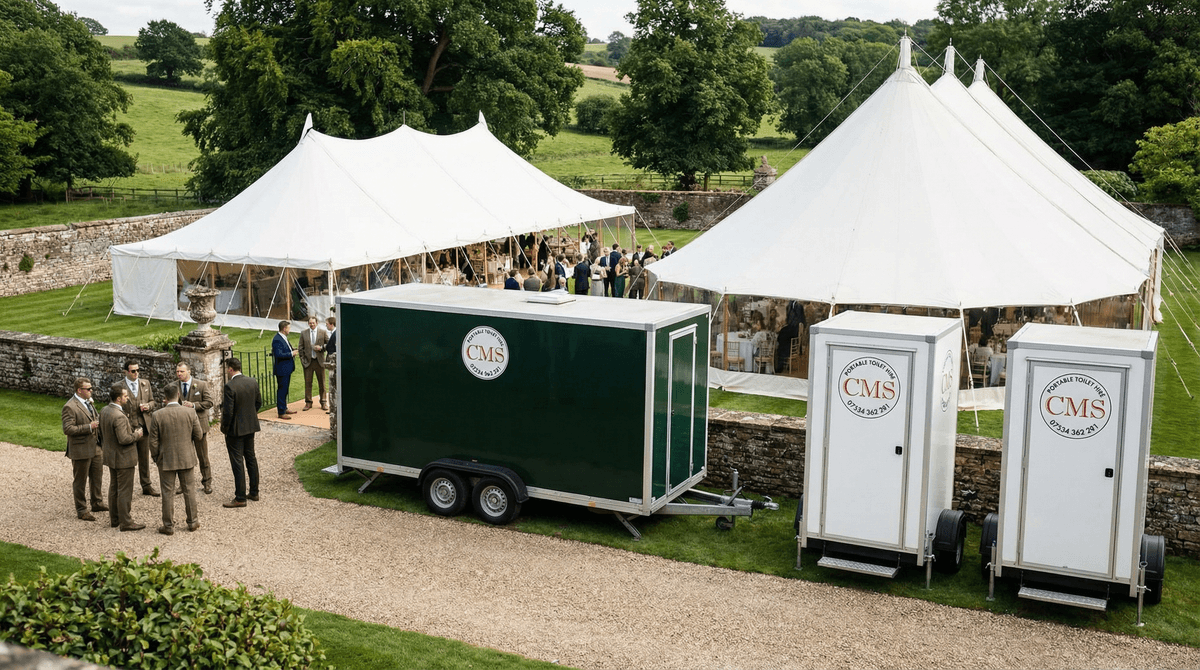
Queues at portable toilets are the number one complaint at outdoor events. They frustrate guests, cause them to miss performances or activities, and — if the queue gets long enough — lead to people finding alternatives that create hygiene and reputational problems for the organiser.
The good news is that queues are manageable. Here are ten proven methods for keeping them short, fast-moving, and under control.
---
1. Provide Enough Units from the Start
This is the foundation. No amount of clever queue management will compensate for insufficient toilet numbers.
The Numbers
Use the Purple Guide ratios as your baseline:
- Female attendees: 1 toilet per 100 people
- Male attendees: 1 toilet per 500 plus 1 urinal per 150
- Increase provision by 15-20% for events with heavy alcohol consumption
- Increase further for all-day events where guests cannot leave and return
The Common Mistake
Organisers frequently underestimate female toilet requirements. Women take approximately twice as long as men per visit, and the ratio of toilets should reflect this. If anything, err on the side of more female provision.
---
2. Add Urinal Blocks
Urinals process male visitors significantly faster than individual toilet cubicles. A six-position urinal block can handle the same throughput as three or four individual units — and it takes up less space.
Where They Work Best
- Music festivals and concerts
- Sporting events
- Beer festivals and food events
- Any event with a predominantly male or mixed audience
Where They Are Less Suitable
- Formal events and weddings
- Family events where privacy is a priority
---
3. Use a Single Queue System
Research consistently shows that a single queue feeding multiple service points is faster and fairer than individual queues per unit.
Why It Works
- Eliminates the frustration of choosing the "wrong" queue
- Automatically distributes users to the next available unit
- Reduces average wait time by preventing idle units while guests queue for busy ones
How to Implement It
- Set up barrier tape or lightweight posts to create a single queue line leading to the row of units
- Position a volunteer or steward at the front to direct people to the next free unit
- Ensure guests can see the units from the queue so they know when one becomes available
---
4. Position Toilets in Multiple Locations
One large toilet block in the centre of the event creates a single bottleneck. Multiple smaller clusters spread the load and reduce walking times, which means fewer people queuing at any one time.
The Approach
- Place toilet clusters near each main activity area (stage, food area, bar, entrance)
- Each cluster should include a mix of standard units, urinals (if appropriate), and at least one accessible unit
- Mark all locations on the event map and ensure signage points to the nearest facilities, not just the main block
---
5. Manage Peak Times
Toilet demand is not constant. It spikes during intervals, between acts, after meals, and at the end of the event. If you know when peaks will occur, you can manage them.
Tactics for Peak Times
- Deploy additional stewards to the toilet area during known peak periods
- Open any reserve units you have held back
- Make announcements encouraging guests to use facilities before the rush (e.g. "The headline act starts in 30 minutes — now is a good time to visit the toilets")
- Stagger meal service if possible, so not everyone finishes eating at the same time
---
6. Improve Signage
Guests who cannot find the toilets will eventually join the longest visible queue, even if a shorter one exists nearby. Clear, frequent signage directs traffic to underused facilities and reduces pressure on the most visible units.
What Good Signage Looks Like
- Directional signs at every major junction and pathway intersection
- Signs at eye level, not head height or ground level
- Illuminated or reflective signs for evening events
- Include distance or walking time ("Toilets — 1 minute walk") to help guests judge which location is closest
---
7. Keep Units Clean and Stocked
Dirty or poorly stocked units increase per-visit time. Guests spend longer looking for supplies, trying alternative units, or — in extreme cases — leaving and rejoining the queue for a different unit.
The Standard
- Check and clean units every hour during peak periods
- Restock toilet paper, soap, and hand sanitiser proactively, before they run out
- Remove any litter or debris from around the units
- Report and address blockages or malfunctions immediately
A dedicated toilet attendant is a worthwhile investment for events over 500 guests.
---
8. Separate the Hand-Washing Area
If guests are washing their hands inside the toilet unit, each visit takes longer. An external hand-washing station allows the next person to enter the unit while the previous user washes their hands outside.
How to Set It Up
- Position portable hand-wash stations at the exit of the toilet row, not inside individual units
- Ensure hot water, soap, and paper towels are available
- Provide enough hand-wash positions to handle the throughput — at least one per three to four toilet units
---
9. Use Queue Monitoring
At larger events, real-time monitoring of queue lengths allows you to redirect guests to quieter locations or deploy additional resources before queues become unacceptable.
Low-Tech Options
- A steward stationed at each toilet cluster who reports queue length by radio
- A roaming steward who checks all clusters and directs overflow to quieter areas
Higher-Tech Options
- Queue counting sensors at each cluster linked to a central control room
- Dynamic signage that updates to show wait times or availability
- An event app with a live toilet map showing estimated wait times at each location
---
10. Brief Your Team
None of the above works if your event staff do not understand the plan. Queue management, cleaning schedules, signage, and contingency procedures must be communicated to everyone involved in managing the toilet area.
Key Briefing Points
- The location of all toilet clusters and the expected peak times
- Who is responsible for cleaning and restocking
- How to manage the single-queue system
- The emergency contact number for the hire company
- What to do if a unit breaks down or becomes unusable
- Where reserve supplies are kept
---
Bonus: Design the Queue Experience
If queues are unavoidable at peak times, make the wait tolerable:
- Provide shade or shelter over the queue area
- Play music near the toilet area (it reduces perceived wait time)
- Position the queue where guests can still see or hear the event
- Keep the queue area clean, dry, and free from trip hazards
- Post estimated wait times if possible
---
Summary
Reducing queues at event portable toilets comes down to three principles:
- Supply: Enough units, the right mix of types, in multiple locations
- Flow: Single queues, separate hand-washing, good signage, and proactive peak management
- Maintenance: Clean, stocked, and monitored throughout the event
Get all three right, and your queue times will be measured in seconds rather than minutes. Your guests will spend their time enjoying the event — which is, after all, the entire point.