
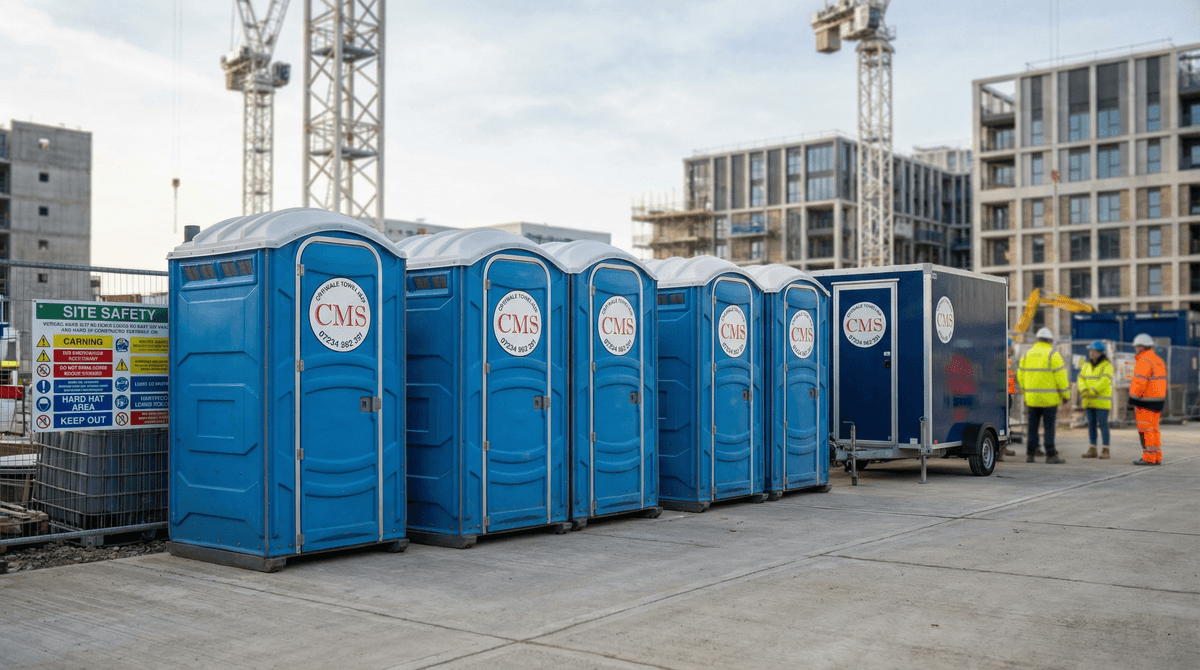
The Construction (Design and Management) Regulations 2015 replaced CDM 2007 and fundamentally changed how welfare provision works on UK construction sites. If you are a principal contractor, client, or site manager, the welfare requirements in Schedule 2 of CDM 2015 are your responsibility — and HSE inspectors check them regularly.
This guide cuts through the jargon and sets out exactly what the regulations require, what adequate provision looks like on the ground, and where most sites fall short.
---
Who Is Responsible for Welfare Facilities?
Under CDM 2015, the chain of responsibility is clear:
- The client must ensure that welfare facilities are provided from the start of any construction work
- The principal contractor must plan, manage, and monitor welfare provision throughout the project
- Contractors must ensure their workers have access to suitable facilities
This is a significant shift from CDM 2007. The client now has a direct, non-delegable duty. You cannot simply pass the responsibility down the chain and hope it is dealt with.
Domestic Clients
For domestic projects (work on a private home), the responsibility typically falls to the contractor or, where one is appointed, the principal contractor. However, the practical requirements remain the same.
---
What Schedule 2 Actually Requires
Schedule 2 of CDM 2015 sets out the minimum welfare facilities that must be provided on every construction site. Here is what it covers:
Sanitary Conveniences (Toilets)
The regulations require:
- A sufficient number of suitable and accessible toilets
- Toilets that are adequately ventilated and lit
- Toilets that are kept in a clean and orderly condition
- Separate facilities for men and women, unless each toilet is in a separate room with a lockable door
The word "sufficient" is deliberately vague. HSE guidance (HSG150) provides more detail:
- 1-7 workers: 1 toilet and 1 wash station
- 8-20 workers: 2 toilets and 2 wash stations
- 21-100 workers: 1 toilet and 1 wash station per 25 workers (or part thereof)
- Over 100 workers: 1 toilet and 1 wash station per 35 workers (or part thereof)
These are minimums. Peak times, shift patterns, and the layout of the site may require more.
Washing Facilities
The regulations require:
- Washing facilities with hot and cold (or warm) running water
- Soap or other suitable cleansing agents
- Towels or other suitable means of drying
- Washing facilities in the immediate vicinity of every toilet
- Showers where the work is particularly dirty or involves exposure to hazardous substances
Drinking Water
- An adequate supply of wholesome drinking water
- Drinking water must be clearly marked where there is a risk of confusion with non-drinking water
- Cups or other drinking vessels must be provided, unless the water is supplied via a drinking fountain
Changing Rooms and Lockers
- Suitable and sufficient changing rooms where workers need to wear special clothing and cannot be expected to change elsewhere
- Secure lockers for storing personal clothing not worn during working hours and for special clothing not taken home
Rest Facilities
- Suitable and sufficient rest facilities at readily accessible places
- Rest rooms or rest areas must include seating with back support
- Facilities for preparing and eating meals, including a means of boiling water
- Rest areas must be kept at an appropriate temperature
---
Common Failings HSE Inspectors Find
Having worked with construction firms across the North West and Midlands, we see the same issues flagged repeatedly:
Insufficient Numbers
The most common failing. As subcontractors arrive and workforce numbers grow, toilet provision does not keep pace. What was adequate for a team of 10 is hopelessly inadequate for a team of 40.
Poor Maintenance
Toilets that are not cleaned regularly, have no toilet paper, or have broken locks. HSE does not accept "it was fine on Monday" as a defence on Thursday.
No Hot Water for Washing
Cold water taps without soap are not compliant. The regulations specifically require hot and cold (or warm) running water and cleansing agents.
Inaccessible Locations
Welfare facilities located too far from the working area, or behind obstacles that discourage use. Facilities should be within a reasonable walking distance — HSE guidance suggests no more than a few minutes' walk.
No Provision from Day One
The client must ensure facilities are available before any construction work begins. Arriving on site to start groundworks with no toilets is a breach from the first hour.
Ignoring Accessibility
If any worker on site has a disability, accessible facilities must be provided. Even where no disabled workers are currently present, the site should be able to accommodate them.
---
Portable Toilets vs Fixed Welfare Units
For most construction sites, the choice comes down to:
- Chemical portable toilets — suitable for short-duration projects, small teams, and sites without mains connections
- Mains-connected portable toilets — preferable where water and drainage connections are available
- Welfare units — combined facilities offering toilets, washing, changing, and rest areas in a single cabin
Which Is Right for Your Site?
Consider the following:
- Duration of the project: Longer projects generally warrant welfare units rather than standalone portable toilets
- Number of workers: Larger teams need more facilities and benefit from the efficiency of welfare units
- Site access: Confined sites may not have room for a welfare unit; portable toilets offer more flexible placement
- Mains connections: Sites with water and drainage can use mains-connected units, which are easier to maintain
- Nature of the work: Dirty or hazardous work requires showers, which are typically only available in welfare units
---
Planning Your Welfare Provision
Before the Project Starts
- Assess the maximum number of workers likely to be on site at any one time
- Determine whether mains connections are available or feasible
- Identify suitable locations for welfare facilities — level ground, accessible, close to the main working area
- Order facilities in good time to ensure they are on site before work begins
During the Project
- Review provision regularly as workforce numbers change
- Schedule servicing at appropriate intervals — weekly at minimum for chemical toilets, more often on busy sites
- Carry out daily checks on cleanliness, consumables, and functionality
- Keep records of servicing and maintenance
Wrapping Up
- Maintain facilities until the last day of construction work
- Arrange timely collection to avoid unnecessary hire costs
- Do not remove facilities while workers are still on site, even during the final stages of snagging
---
The Cost of Getting It Wrong
HSE enforcement action for welfare failures is not theoretical. In recent years, inspectors have issued improvement notices and fee-for-intervention charges for welfare failings on construction sites. The costs include:
- Fee for intervention at £163 per hour (2024 rate) for the time HSE spends dealing with the breach
- Improvement notices requiring immediate action, with potential follow-up inspections
- Prohibition notices halting work entirely in serious cases
- Prosecution for repeated or wilful failures, with unlimited fines
Beyond enforcement, poor welfare provision damages morale, increases staff turnover, and signals to clients and subcontractors that the project is not being managed professionally.
---
Practical Checklist
Use this checklist to verify your site's compliance:
- Toilets provided in sufficient numbers for the current workforce
- Toilets clean, supplied, ventilated, and lockable
- Washing facilities with hot and cold water, soap, and drying
- Drinking water clearly marked and accessible
- Changing facilities and lockers where needed
- Rest area with seating, heating, and meal preparation facilities
- Facilities accessible to all workers, including those with disabilities
- Servicing schedule in place and being followed
- Daily checks being carried out and documented
- Facilities in place from day one through to project completion
Getting welfare provision right is not complicated. It requires planning, the right equipment, and a willingness to adjust as the project evolves. The regulations exist to protect workers — and meeting them is both a legal obligation and a mark of a well-run site.