
Why Fire Safety and Welfare Provision Intersect
Fire safety on construction sites is governed by the Regulatory Reform (Fire Safety) Order 2005 (RRFSO), which applies to most workplaces and common areas. On construction sites, the RRFSO is supplemented by HSE guidance, most notably HSG168 "Fire Safety in Construction," which provides detailed practical guidance on managing fire risks during construction work.
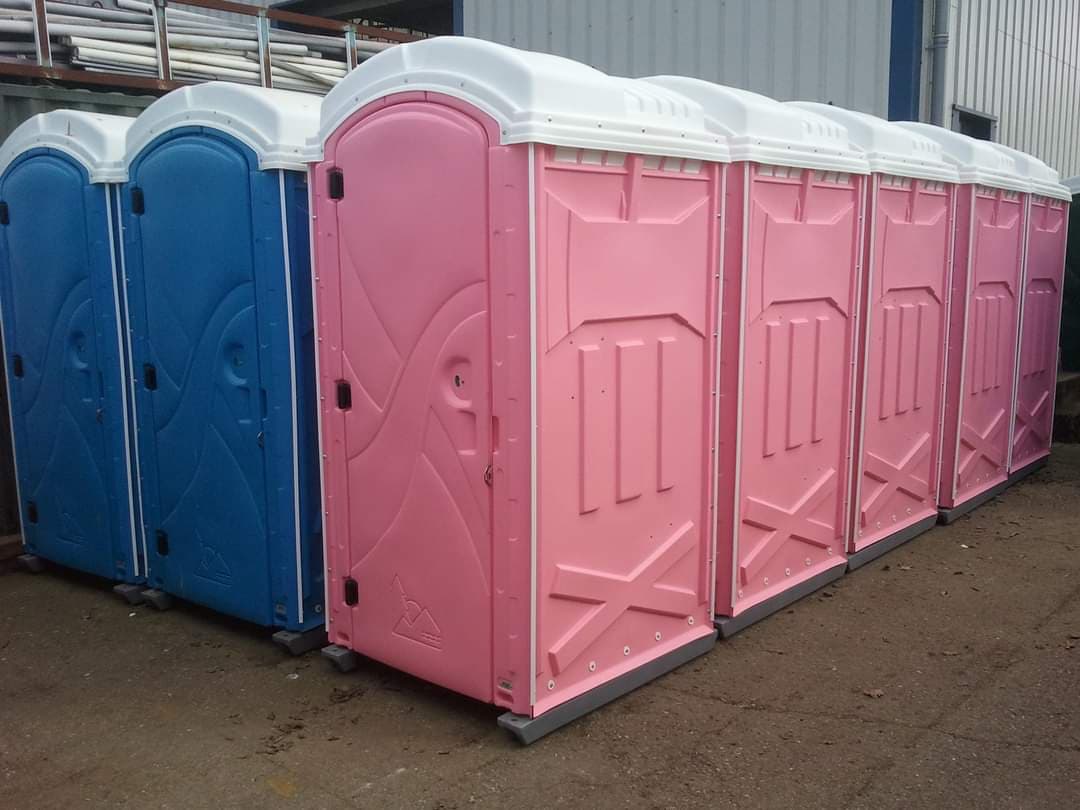
Portable toilet units — particularly standard chemical units with plastic bodies — are combustible. Their placement on site must be considered as part of the site's fire risk assessment, which the RRFSO requires the responsible person (typically the principal contractor) to conduct and maintain.
Flammability of Portable Toilet Materials
Most standard portable toilet units are constructed primarily from high-density polyethylene (HDPE) or similar thermoplastics. These materials will burn if exposed to sufficient heat or direct flame. In a fire scenario on a construction site, a poorly placed welfare unit can become a source of secondary ignition, complicating evacuation, impeding escape routes, or contributing to fire spread.
The chemical contents of the toilet tank — typically a formaldehyde-free biocide solution and human waste — present a lower direct fire risk than the plastic body, but the vapours from certain chemical formulations can be irritating and will add to the toxic smoke load in an enclosed fire scenario.
Placement Principles Under HSG168
HSG168 does not specify a minimum distance between welfare units and other structures in numerical terms for all circumstances, but it sets out clear principles:
- Welfare units should not be placed so that they obstruct escape routes or emergency access
- They should not be sited immediately adjacent to stores of flammable materials, including fuel, LPG, timber stacks, or cladding materials
- They should not be placed against site hoarding or adjacent to scaffolding in a way that would allow a fire to spread vertically
- Where possible, welfare units should be sited with clear separation from the main building under construction
Practical guidance from fire safety professionals working in construction generally recommends a separation distance of at least 3 metres from flammable materials and escape routes, though greater separation is preferable and should be the default where site layout permits.
The Fire Risk Assessment
Under the RRFSO, the responsible person must conduct a suitable and sufficient fire risk assessment. This assessment must:
- Identify fire hazards on site, including combustible materials and ignition sources
- Evaluate the risk to workers, visitors, and others who may be affected
- Identify measures to reduce or eliminate those risks
- Record the significant findings
- Review and update the assessment when circumstances change
Welfare unit placement should appear in this assessment. A site where have been positioned without any consideration of fire risk is likely to have an inadequate fire risk assessment, which is itself a breach of the RRFSO.
LPG and Heating in Welfare Units
Welfare units fitted with heating — particularly those using liquefied petroleum gas (LPG) — introduce additional fire and explosion risks. LPG is heavier than air, and any leak in a confined can accumulate to a dangerous concentration.
Requirements for LPG-heated units include:
- Units must be properly ventilated
- LPG cylinders must be stored outside the unit, in an upright position, and in a ventilated cage
- Cylinders should not be stored near ignition sources or in confined spaces
- Gas appliances within units must be appropriate for the installation and regularly maintained
- The Dangerous Substances and Explosive Atmospheres Regulations 2002 (DSEAR) may be relevant where significant LPG quantities are stored
HSE guidance on LPG on construction sites should be consulted when specifying welfare units that include gas heating.
Emergency Access and Escape Routes
Welfare units, because they are used regularly by all workers on site, are often placed in high-footfall locations. This makes it tempting to site them near site entrances or in positions that are subsequently obstructed by deliveries, plant movements, or construction progress.
Site managers should:
- Mark welfare unit positions on the site layout plan
- Ensure positions are reviewed as the site develops and construction activity changes
- Confirm that welfare units do not block designated escape routes or emergency vehicle access at any point in the project
- Brief workers on evacuation procedures from welfare areas
Practical Recommendations
- Include welfare unit placement in your initial fire risk assessment and review it at key project milestones
- Brief site induction materials should reference welfare facility locations and the fire evacuation procedure from those areas
- Confirm with your welfare hire company that units meet minimum fire resistance standards where these are specified in your risk assessment
- Do not site units under or immediately adjacent to scaffolding where falling materials or fire spread through the scaffold could trap occupants
- Review placement whenever site conditions change materially — new material deliveries, changes to the escape route plan, or significant increases in workforce numbers all warrant a reassessment
Fire safety on construction sites is a subject with fatal consequences when it goes wrong. Portable toilet placement is not the most dramatic element of that picture, but it is a real one, and the law expects it to be addressed properly.