
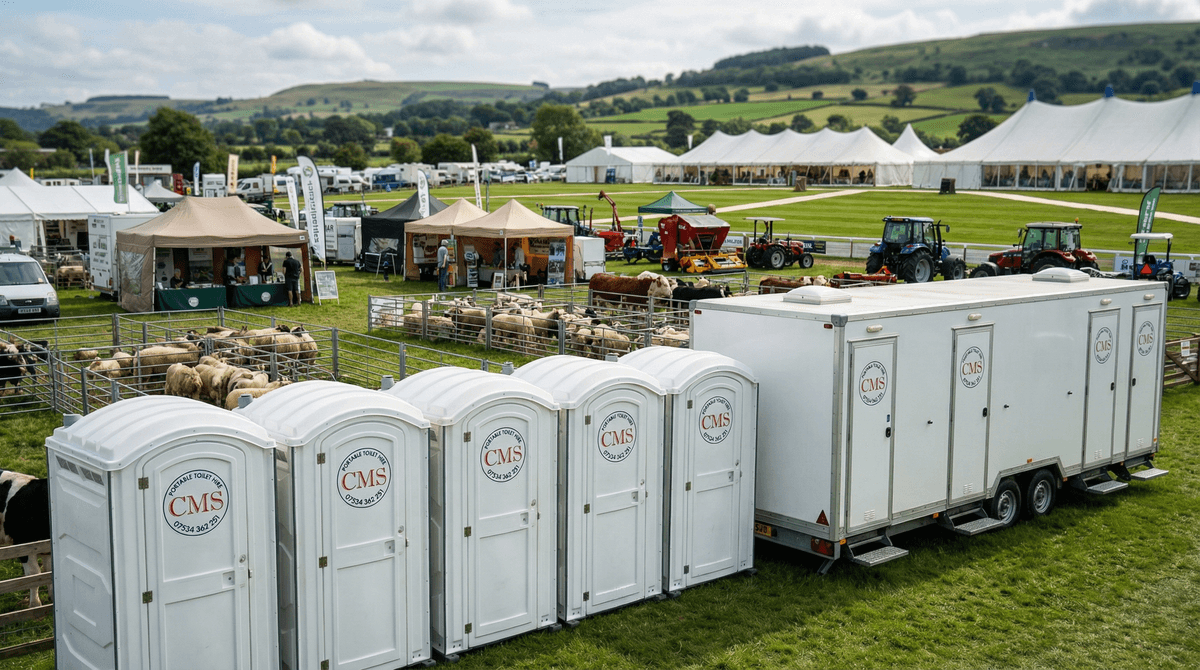
Dog shows, agricultural events with livestock, equestrian competitions, and country fairs present a unique set of challenges for toilet provision. The combination of animals, outdoor settings, and all-day attendance means the facilities need to be robust, well-positioned, and maintained to a higher standard than at most other events.
Here is what organisers of dog shows and animal events need to know.
---
Why Animal Events Are Different
Hygiene Is Paramount
Where animals are present, hygiene standards must be higher. Visitors handle animals, walk through areas with animal waste, and then need to wash their hands thoroughly — not just sanitise. Hand-washing facilities with hot water and soap are essential, not optional.
All-Day Duration
Dog shows and animal events typically run from early morning to late afternoon — 8-10 hours is common. This extended duration increases the total number of toilet visits per person significantly compared to a shorter event.
Mixed Demographics
These events attract a wide range of visitors: exhibitors who arrive early and stay all day, families with young children, older visitors, and people with disabilities. The toilet provision needs to serve all of these groups.
Rural Locations
Dog shows and animal events are often held in fields, showgrounds, and rural venues with no permanent toilet facilities and limited infrastructure (no mains water, no mains power, no drainage).
Muddy Conditions
Fields used for animal events get churned up quickly, particularly around popular areas. The toilet zone is high-traffic and can become muddy and slippery without ground protection.
---
How Many Units?
Attendance Estimates
Dog shows range from small breed club events (50-200 people) to major championship shows (5,000-20,000 visitors plus exhibitors). Calculate your provision based on the peak concurrent attendance — the maximum number of people on site at any one time.
Ratios
- Female visitors: 1 toilet per 100 attendees
- Male visitors: 1 toilet per 500 plus 1 urinal per 150
- Accessible units: At least 1 per toilet cluster
- Exhibitor provision: Separate provision for exhibitors/competitors if numbers are significant
Adjustment Factors
- Add 10-15% for all-day events (more visits per person)
- Add provision for food and drink areas if applicable
- Consider separate provision near the main ring, trade stands, and car park
---
Hand Washing: The Critical Requirement
At any event involving animals, hand washing is not just a courtesy — it is a public health necessity. Visitors may handle animals, touch shared surfaces, and then eat or drink. The risk of zoonotic infection (diseases transmitted from animals to humans) is real.
What Is Required
- Portable hand-wash stations at every toilet cluster, with:
- Hot and cold (or warm) running water
- Liquid soap in dispensers
- Paper towels (not air dryers — they are impractical outdoors)
- Additional hand-wash stations at the exits of animal handling areas, near food concessions, and in the exhibitor area
- Signage reminding visitors to wash their hands after touching animals and before eating
Hand sanitiser is useful as a supplement but is not a substitute for hand washing with soap and water — particularly at events where visitors may have contact with animal faeces, saliva, or other biological material.
---
Placement
Separation from Animal Areas
- Position toilet units away from animal exercise areas, show rings, and livestock pens
- Maintain a buffer zone between the toilet area and any area where food is prepared or served
- Ensure the approach path does not cross animal holding or exercise areas
Multiple Locations
For larger shows, provide toilet clusters at:
- The main spectator area near the show ring
- The exhibitor/competitor area
- Near the trade stands and food concessions
- Near the car park entrance
Ground Protection
- Lay trackway or heavy-duty matting on all approach paths and around units
- Use matting at the entrance to each unit to reduce mud being tracked inside
- Check ground conditions throughout the day and add matting as needed
---
Exhibitor and Competitor Provision
Exhibitors at dog shows arrive early (often before 7am) and stay until the show closes. They need toilet facilities from the moment they arrive, not from the time the gates open to the public.
Considerations
- Provide separate toilets in the exhibitor area, available from setup time
- These units will receive heavy use — schedule servicing accordingly
- Include hand-washing facilities adjacent to exhibitor toilets
- Consider the needs of exhibitors with assistance dogs — accessible units may be needed in the exhibitor area
---
Family Provision
Dog shows are popular family events. Plan for:
- Baby changing facilities — a fold-down shelf in at least one unit per cluster
- Family-friendly accessible units large enough for a parent with a pushchair or young child
- Clear signage directing families to appropriate facilities
- Hand-washing stations at a height accessible to children
---
Accessible Provision
The Equality Act 2010 requires accessible toilet provision at public events. For dog shows and animal events:
- Include at least 1 accessible unit per toilet cluster
- Place on the firmest, most level ground available
- Ensure the approach path is accessible — no steps, steep gradients, or loose surfaces
- Remember that some visitors may have assistance dogs — the accessible unit should accommodate this
---
Servicing
Frequency
- Small events (under 500 attendees): Pre-event service; check units at midday
- Medium events (500-2,000): Pre-event service plus one mid-day service
- Large events (2,000+): Pre-event service plus servicing every 4-6 hours during the event
- Multi-day shows: Daily professional servicing plus volunteer checks during the day
Hand-Wash Station Servicing
Hand-wash stations at animal events run through water and soap faster than at standard events. Check and replenish:
- Water tanks (or ensure mains connection is flowing)
- Soap dispensers
- Paper towel supplies
A volunteer or staff member assigned to this task for the duration of the event prevents the stations from running dry at the worst possible moment.
---
Waste Management
All portable toilet waste must be disposed of legally — collected by a registered waste carrier and taken to a permitted facility. At animal events, there is an additional consideration: ensure that toilet waste is collected and removed separately from animal waste, which may be subject to different disposal requirements depending on the type of animals involved.
---
Weather Contingency
Dog shows in the UK take place year-round, including in challenging weather conditions.
Rain
- Additional trackway and matting
- Drainage channels to direct surface water away from the toilet area
- Extra cleaning during the event to manage mud tracked into units
Heat
- More frequent servicing to manage odour
- Additional drinking water provision for visitors
- Shade over hand-wash stations if possible
Wind
- Secure all lightweight units against wind — standard portable toilets can be toppled in strong gusts
- Use ground anchors or sandbags
- Position units in the lee of buildings, hedges, or vehicles where possible
---
Checklist
- Attendance estimated — exhibitors, spectators, and trade stand staff
- Toilet numbers calculated with adjustment for all-day duration
- Hand-wash stations provided at every toilet cluster AND near animal areas and food concessions
- Accessible units included at every cluster
- Baby changing provision included
- Ground protection in place — trackway, matting, entrance mats
- Lighting arranged for late-afternoon and evening use
- Servicing schedule confirmed — pre-event, mid-event, and (for multi-day shows) daily
- Signage in place — directional, hand washing reminders, accessible unit
- Spare supplies on site — toilet paper, soap, paper towels, bin liners
- Weather contingency plan in place
- Waste disposal arrangements confirmed with the hire provider
Animal events demand higher hygiene standards and more thoughtful planning than many other types of outdoor event. The investment in proper hand-washing provision, well-maintained toilet facilities, and robust ground protection pays for itself in visitor safety and satisfaction.