
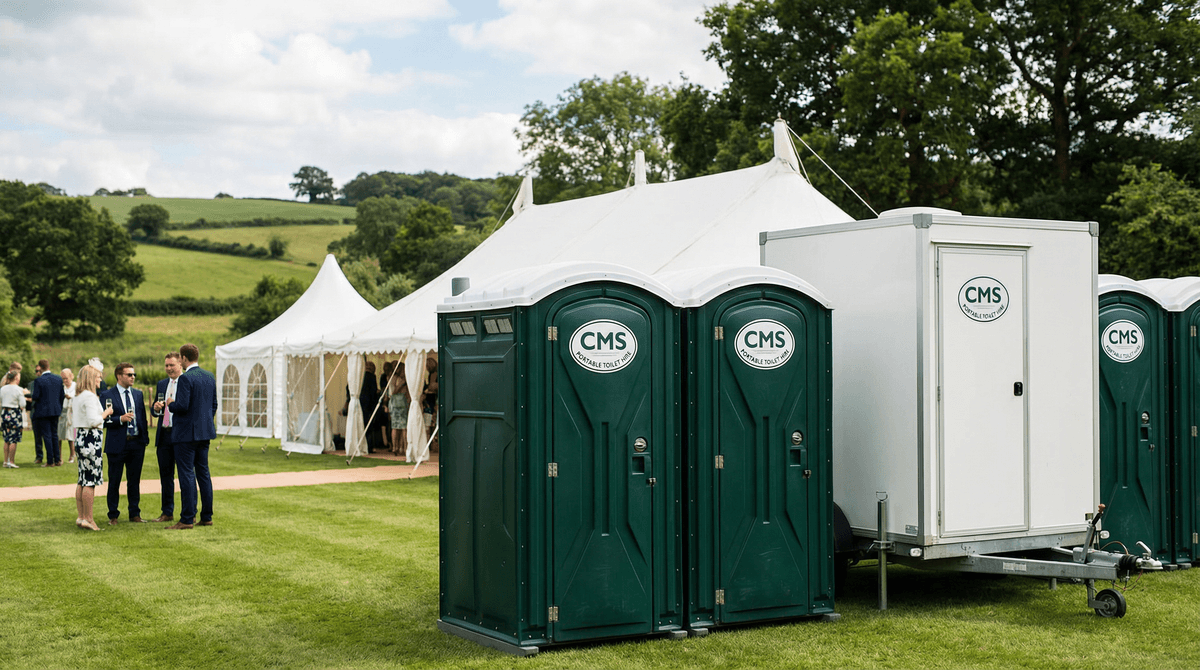
Motorsport events and track days generate intense, concentrated demand for toilet facilities. Circuits and off-road venues may have some permanent provision, but it is rarely enough for race-day crowds — and paddock teams, marshals, and officials need their own dedicated facilities.
Here is what event organisers and circuit operators need to know.
---
Who Needs Facilities?
Spectators
The largest group by number. Spectators at motorsport events tend to be predominantly male, which affects the unit mix. However, the sport is broadening its audience, and female provision should not be underestimated.
Paddock Teams
Drivers, mechanics, team managers, and support staff spend long days in the paddock. They need facilities that are close, clean, and available from early morning (scrutineering and practice often start at 7-8am).
Marshals and Officials
Track marshals, race officials, timekeepers, and medical staff are stationed at fixed positions around the circuit. They cannot easily leave their post to walk to a distant toilet block. Provision near marshal posts or at convenient points around the circuit is essential.
Media and VIP Guests
Hospitality suites and media centres may need dedicated facilities or at minimum clearly allocated access to higher-standard units.
---
How Many Units?
Spectator Provision
Use the Purple Guide ratios, adjusted for the typical gender split:
- Male spectators (typically 65-75% of attendance): 1 toilet per 500 plus 1 urinal per 150
- Female spectators (25-35%): 1 toilet per 100
- Accessible units: At least 1 per toilet cluster
Urinal Blocks
Urinal blocks are particularly effective at motorsport events due to the male-dominated audience. A 6-position can replace three or four individual cubicles in terms of throughput.
Paddock and Team Provision
- 1 toilet per 15-20 paddock team members
- Place near the paddock area but away from fuel storage and vehicle preparation zones
Marshal Provision
- 1 toilet per 10-15 marshals
- Position at 2-3 locations around the circuit, accessible from marshal posts
---
Placement
Spectator Areas
- Place toilet clusters near each grandstand, spectator banking, and general admission viewing area
- Position them at the edges of spectator zones, with clear signage from the viewing areas
- Include hand-wash stations at every cluster
- Consider the flow of spectators between sessions — during intervals, the queue will spike
Paddock
- Place units at the edge of the paddock, accessible to teams without crossing live vehicle routes
- Keep units away from fuel, oil, and chemical storage areas
- Ensure servicing vehicles can access without entering the live paddock area
Circuit Perimeter
- Position units near marshal assembly points or at key access points around the circuit
- These units will receive lower usage but are essential for staff welfare
- Service access may be more difficult — ensure the servicing route is planned in advance
---
Timing and Demand Patterns
Practice and Qualifying Days
Lower spectator numbers but full paddock and marshal attendance. Provision should still be adequate — a circuit with 50 marshals and 200 team members needs proper facilities even before the crowds arrive.
Race Day
Peak demand. Spectator attendance is at maximum. Toilet demand spikes:
- Before the start of the main race
- During mid-race safety car periods (when spectators take the opportunity)
- Immediately after the race finishes
Multi-Day Events
For events spanning a weekend or longer (e.g. British Touring Car Championship rounds, Le Mans-style endurance races), daily servicing is essential. Units should be serviced early each morning before the gates open.
---
Safety Considerations
Motorsport venues present specific safety challenges for toilet provision:
Noise
Circuits are noisy environments. Announcements about race starts, safety car deployments, and session endings may not be audible from the toilet area. Consider visual displays or signage warning that sessions are underway.
Vehicle Movement
Service vehicles accessing the toilet area must not cross live paddock lanes, pit lanes, or spectator walkways without appropriate traffic management. Plan servicing for off-track periods.
Fire
Motorsport venues carry heightened fire risk due to fuel, oil, and tyres. Position toilet units away from any fuel storage, refuelling areas, or tyre compounds. Keep fire extinguishers at each toilet cluster.
Medical Access
Ensure that medical teams can access the toilet area quickly. Mark the location on the medical plan and ensure access routes are kept clear.
---
Ground Conditions
Many circuits have hardstanding or tarmac areas suitable for toilet placement. However:
- Overflow car parks and spectator areas on grass can deteriorate rapidly in wet weather
- Lay trackway on approach paths where ground conditions are variable
- Drain water away from the toilet area — standing water near units is a slip hazard and a hygiene concern
---
Off-Road and Rally Events
Off-road motorsport events (rallycross, trials, rally stages) present additional challenges:
Remote Locations
Stages may be on farmland, forestry, or private estates with no infrastructure. All provision must be self-contained — chemical portable toilets with no mains connections.
Access
Delivery and servicing vehicles may struggle with unmade tracks, gates, and soft ground. Confirm access routes before the event and have a contingency plan.
Spectator Spread
Rally spectators spread out along the stage. Toilet provision should focus on the spectator parking areas and viewing points rather than trying to cover the entire stage length.
---
Servicing
Pre-Event
All units must be fully serviced and stocked before the gates open on each day of the event.
During the Event
- For single-day events: a mid-day service if attendance exceeds 2,000
- For multi-day events: daily professional servicing plus spot checks during the day
- Station a volunteer at the busiest toilet clusters during peak sessions
Post-Event
Allow units to remain accessible for 1-2 hours after the final session, as spectators and teams take time to leave. Arrange collection for the morning after the event.
---
VIP and Hospitality
For events with VIP or corporate hospitality packages, the toilet provision should match the hospitality standard:
- Luxury toilet trailers near the hospitality suite or corporate village
- Separate from the general spectator provision
- Higher servicing frequency — check and restock between each session
- Interior touches that match the hospitality experience (fresh towels, hand cream, flowers)
---
Checklist
- Attendance estimated — spectators, paddock teams, marshals, media, VIP
- Toilet numbers calculated with appropriate ratios and gender split
- Urinal blocks included for male-heavy spectator areas
- Clusters positioned near grandstands, paddock, and marshal assembly points
- Accessible units included at every spectator cluster
- Hand-wash stations at every cluster
- Servicing schedule confirmed — daily for multi-day events, mid-day for large single-day events
- Safety considerations addressed — fire, vehicle movement, noise, medical access
- Ground protection in place where needed
- VIP/hospitality provision arranged separately
- Signage in place — directional, accessible, hand washing
- Emergency contact number for the hire provider available to event control
- Collection timing confirmed
Motorsport events demand toilet provision that matches the pace and precision of the sport itself. Plan thoroughly, provide generously, and maintain rigorously — and the facilities will support the event rather than detract from it.