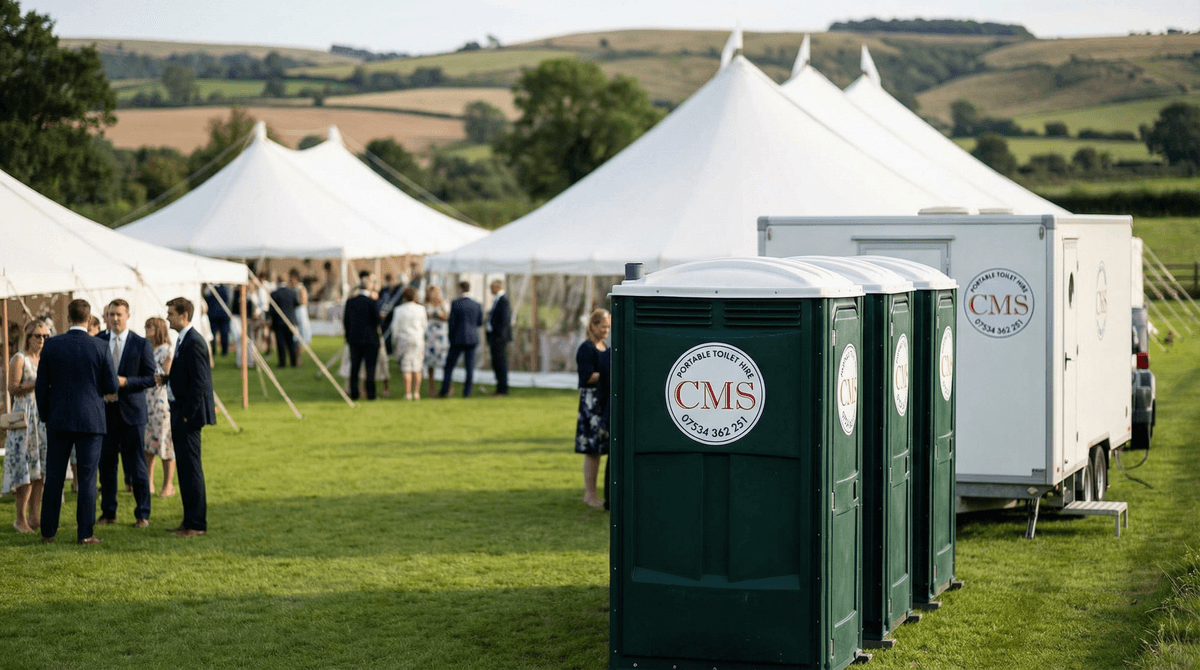
Village fêtes, community galas, church fairs, and neighbourhood celebrations are the heart of British social life. They happen on village greens, recreation grounds, school fields, and church halls — and most of these venues have either no permanent toilet facilities or a single, aging toilet block that was not designed for 500 visitors.
Here is a practical guide to getting the toilet provision right for community events.
---
Do You Need Portable Toilets?
When Permanent Facilities Are Not Enough
Most community event venues have some permanent toilets:
- A village hall with two cubicles
- A pavilion with one toilet and a washbasin
- A church with a single accessible toilet
For a small event (under 100 people), these may suffice. But once attendance climbs above 100, or the event includes a bar, or the permanent facilities are a 5-minute walk from the main activity, portable toilets become essential.
The Test
If any of the following apply, hire portable toilets:
- Expected attendance exceeds 100
- The event lasts more than 3 hours
- Alcohol is served
- The permanent facilities are more than a 2-minute walk from the event area
- The permanent facilities have fewer than 1 toilet per 50 expected attendees
---
How Many Units?
Budget-Friendly Ratios
Community events operate on tight budgets. Here are practical minimums:
- Up to 200 attendees: 2-3 standard portable toilets plus 1 accessible unit
- 200-500 attendees: 4-6 standard toilets plus 1-2 urinal blocks plus 1 accessible unit
- 500-1,000 attendees: 6-10 standard toilets plus 2-3 urinal blocks plus 2 accessible units
These ratios assume the event lasts 4-6 hours. Longer events or events with a licensed bar should increase provision by 15-20%.
Supplementing with Permanent Facilities
If the venue has permanent toilets, include them in your count — but do not rely on them entirely. Direct visitors to both permanent and portable facilities to spread the load.
---
What Type of Unit?
Standard Portable Toilets
The right choice for most community events. They are affordable, easy to deliver, and require no mains connections.
- Cost: typically £60-100 per unit for a weekend hire
- Self-contained — no power or water needed
- Delivered fully serviced and ready to use
Urinal Blocks
Effective at reducing queue times and cost-effective. A 4- or 6-position urinal block processes male visitors quickly and takes up less space than the equivalent number of individual units.
Accessible Units
At least one accessible unit is required at any public event under the Equality Act 2010. These larger units include grab rails, wheelchair turning space, and a wide door.
Luxury Toilet Trailers
Generally not necessary for village fêtes and community events, unless the event includes a formal dinner, a premium ticket area, or a significant fundraising function.
---
Funding the Hire
Community events often run on shoestring budgets. Options for funding toilet hire include:
- Including the cost in the event budget from the outset
- Seeking sponsorship from a local business ("Toilet facilities kindly provided by [sponsor]")
- Applying for a community grant — many parish councils and community foundations will fund infrastructure costs for local events
- Adding a small amount to ticket prices to cover welfare facilities
The cost of portable toilet hire for a village fête is typically £200-500. Set against the overall event budget and the consequences of not providing facilities, this is a sound investment.
---
Placement
Accessibility
- Place units on firm, level ground within a 2-minute walk of the main event area
- Ensure the approach path is suitable for wheelchairs, pushchairs, and elderly visitors
- Do not position units at the far end of a muddy field
Discretion
- Use a hedge, fence, or temporary screen to separate the toilet area from the main event
- Position downwind of the food stalls and seating areas
Ground Protection
Village greens and recreation grounds are community assets. Protect the ground:
- Lay boards or matting under and around units
- Protect the approach path with matting, particularly on grass
- Remove all equipment and matting after the event and check for any ground damage
---
Servicing
For a single-day community event, the units should be fully serviced on delivery. No mid-event servicing is usually needed for events under 500 attendees lasting less than 6 hours.
However:
- Assign a volunteer to check the units every hour
- Keep a supply of spare toilet paper, hand sanitiser, and bin liners near the toilet area
- Brief the volunteer on who to call if there is a problem
For multi-day events (e.g. a weekend fête), arrange daily servicing with the hire provider.
---
Hand Washing
Hand-washing facilities are important at any event, and essential at events with food stalls:
- Provide a portable hand-wash station with running water, soap, and paper towels at the toilet area
- Ensure separate hand-washing facilities for food handlers (a legal requirement under food hygiene regulations)
If budget is very tight, a table with a water container, pump dispenser of soap, and paper towels is an acceptable minimum — but a proper hand-wash station is preferable.
---
Accessible Provision
The Equality Act 2010 requires that public events make reasonable adjustments for disabled people. Providing at least one accessible portable toilet is almost always a reasonable adjustment.
Positioning
- On the most level, firm ground available
- Near the main entrance or central event area
- With a clear, unobstructed approach path
- Clearly signed with the International Symbol of Access
Beyond the Minimum
Consider the wider accessibility of the toilet area:
- Is the path suitable for a wheelchair?
- Is there a lip or step at the unit entrance?
- Is the lighting adequate for someone with visual impairment?
---
Family Provision
Village fêtes are family events. Plan for:
- Baby changing facilities in at least one unit (the accessible unit typically has the most space)
- A supply of nappy bags
- Hand-washing facilities accessible to children (a lower hand-wash station or a step-stool)
---
Communication
Before the Event
Include toilet provision information in publicity materials:
- Location on the event map
- Confirmation that accessible facilities are available
- Encouragement to use the portable toilets rather than relying on village hall facilities
On the Day
- Directional signs from the entrance, main activity areas, and food stalls
- A welcome sign at the toilet area
- A volunteer presence to assist if needed
---
After the Event
- Ensure units remain available until the last visitors and volunteers have left
- Arrange collection for the morning after the event
- Remove any matting, signage, and ground protection
- Inspect the ground for damage and arrange repair if needed
- Thank your hire provider — a good working relationship benefits future events
---
Checklist
- Expected attendance estimated
- Number and type of units confirmed
- Accessible unit included
- Hire booked at least 4-6 weeks in advance
- Placement location chosen — firm, level, discreet, accessible
- Ground protection planned
- Hand-washing facilities arranged
- Food handler hand-washing arranged separately
- Signage prepared — directional, accessible, hand washing
- Volunteer assigned to monitor during the event
- Spare supplies purchased — toilet paper, soap, paper towels, bin liners
- Delivery and collection times confirmed
- Budget allocated or funding secured
Village fêtes and community events bring people together. Proper toilet provision ensures that the experience is comfortable for everyone — from the youngest visitor to the oldest — and that the event runs smoothly from start to finish.