
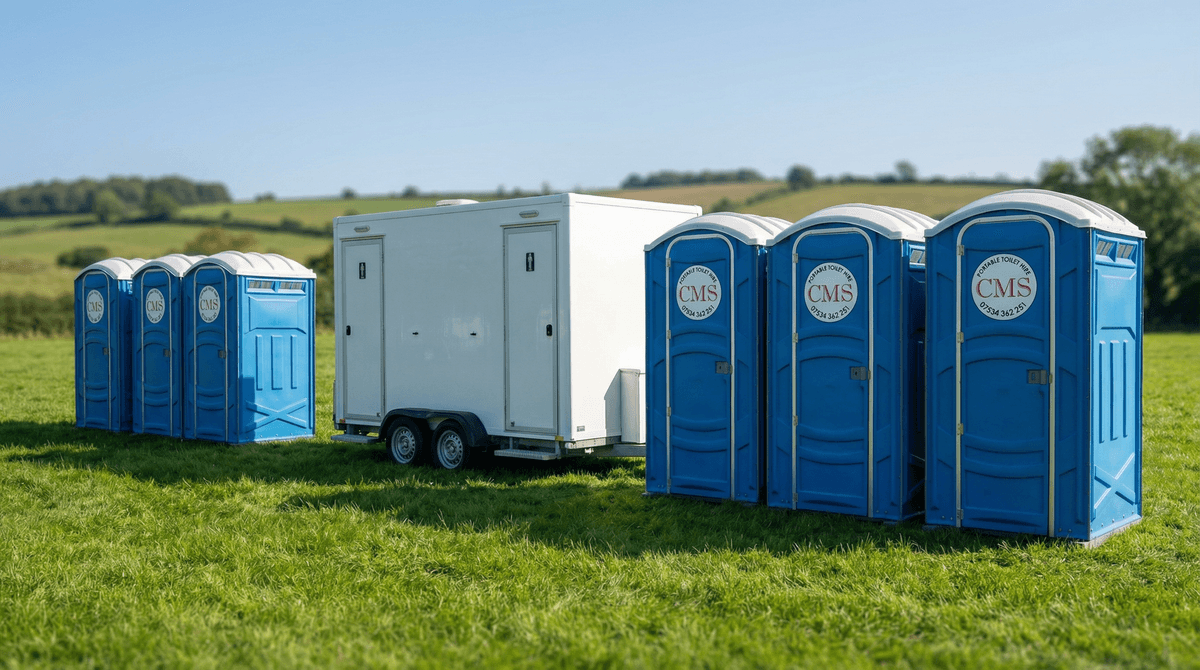
Sanitation is the unglamorous backbone of every successful outdoor event. When it works, nobody notices. When it fails, it is the only thing anyone talks about. Poor sanitation generates complaints, damages your reputation, creates health risks, and can result in enforcement action from the local authority or the HSE.
This guide walks through the entire sanitation planning process, from initial calculations through to post-event review.
Step 1: Understand Your Event
Before you calculate anything, define the key parameters:
- Expected attendance. Be realistic, not optimistic. Base this on ticket sales, historical data, or comparable events.
- Duration. A 4-hour afternoon event is fundamentally different from a 3-day festival.
- Alcohol. Events serving alcohol see 30% to 50% higher toilet usage.
- Food. Food festivals and events with substantial catering generate higher usage.
- Demographics. Family events with young children need more facilities per head. Events with a predominantly male crowd benefit from urinal provision.
- Camping. Overnight camping increases the total usage period from a few hours to the full 24-hour cycle.
- VIP or premium areas. These require separate, higher-standard facilities.
Step 2: Calculate the Number of Toilets
Standard Formula
The baseline calculation for a daytime event without alcohol:
- 1 portable toilet per 100 attendees for events up to 6 hours
- 1 portable toilet per 75 attendees for events over 6 hours
Adjustments
- Alcohol served: Increase by 30% to 50%. Use 1 unit per 50 to 75 attendees.
- All-day events (8+ hours): Increase by 25%.
- Multi-day events with camping: Use 1 unit per 40 to 60 campers.
- Hot weather: Add 20% to 30%.
- High proportion of families: Add 15% to 20%.
Example
A music festival expecting 2,000 attendees over 2 days with camping and alcohol:
- Base: 2,000 / 60 = 33 units (using 1 per 60 for multi-day with alcohol)
- Adjustment for camping: Add 20% = 40 units
- Total standard units: approximately 40
Accessible Units
At least 1 accessible unit per welfare zone. For a site with 2 welfare zones, that is a minimum of 2 accessible units. For larger events (1,000+), provide 1 accessible unit per 75 disabled attendees or fraction thereof.
Urinal Blocks
For events over 200 attendees with a significant male crowd:
- 1 urinal bay per 50 male attendees at events with alcohol
- A 6-bay urinal block handles the equivalent throughput of approximately 15 toilet cubicles
- Position separately from the main toilet queue
Step 3: Choose the Right Types of Unit
Standard Chemical Toilets
The default for general public use. No mains connections required. Suitable for outdoor events, construction, and domestic use.
Luxury Toilet Trailers
For weddings, corporate events, VIP areas, and any occasion where the standard of facilities matters. Require 240V power supply or generator.
Accessible Units
Larger units with grab rails, wider doors, and low thresholds. A legal requirement under the Equality Act 2010 for any public event.
Urinal Blocks
High-throughput male provision. Cost-effective and dramatically reduce queuing.
Welfare Units
Combined toilet, sink, kitchen, and rest area. For staff and crew at larger events.
Shower Trailers
For multi-day events with camping. Require water supply, power, and drainage.
Step 4: Plan the Site Layout
Welfare Zones
Create designated welfare zones rather than scattering individual units. Each zone should include:
- Portable toilets (standard and accessible)
- Urinal blocks (if applicable)
- Hand-wash stations
- Signage and lighting
- Litter bins
Distribution
No attendee should be more than a 3-minute walk from a toilet. For sites with multiple areas (main stage, second stage, camping, VIP), provide toilets at each area.
Positioning Rules
- Level, firm ground. Concrete, compacted gravel, or prepared hard standing.
- At least 20 metres from food preparation areas.
- At least 10 metres from watercourses.
- Away from stages and amplified sound (to avoid noise interference during servicing).
- Accessible by servicing vehicles at all times — do not let event infrastructure block the route.
- Lit from dusk until close.
- Screened from the main event area where practical, using fencing, hedging, or decorative barriers.
VIP and Premium Areas
Provide separate, higher-specification facilities:
- Luxury toilet trailers rather than standard units
- Lower user ratios (1 unit per 30 to 50 VIP attendees)
- Attendant-serviced where budget allows
- Separate entrance with clear signage
Step 5: Arrange Servicing
Pre-Event
All units should be delivered clean, stocked, and fully functional. Check every unit on delivery — door lock, flush, consumables, cleanliness.
During the Event
- Single-day events (under 8 hours): Pre-event preparation is usually sufficient. Assign a volunteer to monitor stock levels.
- Single-day events (over 8 hours): Arrange mid-event servicing. This is typically a rapid clean, restock, and spot-empty of heavily used units.
- Multi-day events: Daily servicing as a minimum. Morning servicing before attendees are active is standard. Twice-daily for high-traffic units.
Post-Event
Collection typically occurs the day after the event or the morning after. Clear the area around units before collection to allow vehicle access.
Step 6: Staffing and Monitoring
Assign Responsibility
One named person should be responsible for sanitation throughout the event. This person:
- Monitors the facilities regularly (at least hourly during busy periods)
- Restocks toilet roll and hand sanitiser
- Reports blockages, damage, or unusable units to the provider
- Manages the toilet area (signage, lighting, litter)
- Coordinates with the servicing team
Volunteers or Stewards
For larger events, assign stewards to each welfare zone. Their role is to monitor, restock, and report — not to clean or service the units.
Emergency Contacts
Keep the hire company's emergency contact number to hand. If a unit is vandalised, blocked, or damaged beyond simple repair, you need a rapid response.
Step 7: Regulatory Compliance
Equality Act 2010
Accessible facilities are mandatory for public events. This is not guidance — it is law. Failure to provide accessible toilets exposes you to legal action and reputational damage.
Health and Safety at Work Act 1974
If you employ anyone at the event (including temporary staff, contractors, and volunteers in some circumstances), you have a duty to provide adequate welfare facilities.
Environmental Regulations
Waste from portable toilets is controlled waste. The hire company must hold a waste carrier licence. Waste must be disposed of at a licensed facility. You should not need to manage this — the hire company handles it — but confirm that they hold the licence.
Local Authority Requirements
Many local authorities specify minimum sanitation standards as a condition of event licensing. Check with your local authority's events team or licensing department before finalising your plan.
Food Safety
If your event involves food service, the Environmental Health department may inspect sanitation provision. Ensure toilets are positioned away from food areas and that hand-washing facilities are available.
Step 8: Budget
Typical Costs
| Item | Cost Range |
|------|-----------|
| Standard toilet (weekend event) | £80–£150 |
| Accessible unit (weekend event) | £120–£200 |
| Luxury toilet trailer (weekend) | £400–£800 |
| Urinal block (weekend) | £100–£200 |
| Shower trailer (weekly) | £400–£1,000 |
| Delivery and collection | £50–£150 per trip |
| Daily servicing | £30–£50 per unit |
| Generator (weekly) | £150–£300 |
Budget Rule of Thumb
For a standard outdoor event, sanitation typically represents 3% to 8% of the total event budget. This is not an area to economise on. The cost of adequate provision is modest; the cost of inadequate provision — in complaints, reputation damage, and potential enforcement action — is not.
Step 9: Post-Event Review
After every event, review the sanitation provision:
- Were there enough units?
- Were they in the right positions?
- Were there complaints? What about?
- Did the servicing schedule work?
- Were there any incidents (vandalism, blockages, damage)?
- What would you change next time?
Document the answers and feed them into planning for your next event. Sanitation planning improves with experience and data.
Summary
Event sanitation planning is not complicated, but it does require methodical attention to detail. Calculate your numbers based on realistic attendance, choose the right types of unit, plan the layout carefully, arrange adequate servicing, assign monitoring responsibility, and comply with the regulations. Do these things and sanitation becomes one of the smoothest — and least noticed — elements of your event. Which is exactly how it should be.