
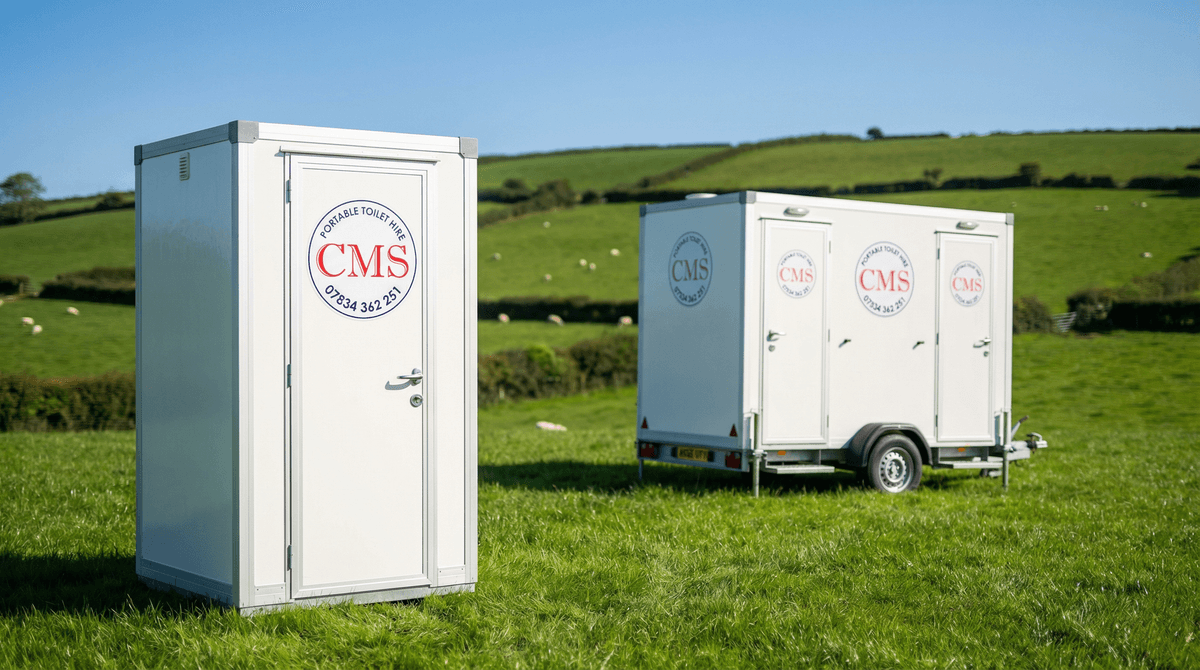
How a Portable Toilet Actually Works — From Delivery to Collection
Portable toilets are one of those products that most people use without ever wondering what is going on behind the scenes. You step in, use the facility, step out, and carry on with your day. But the engineering and chemistry that make this possible are genuinely clever — and understanding them helps you make better decisions about hire, positioning, and maintenance.
The Basic Principle
A portable toilet is a self-contained sanitation unit. It does not connect to mains water, mains drainage, or electricity. Everything it needs to function — the waste holding tank, the chemical treatment, the ventilation system, and the consumables — is contained within the unit itself.
This self-containment is the key feature. It means a portable toilet can be placed virtually anywhere: a field, a car park, a garden, a rooftop, a forest clearing. The only requirements are firm, level ground and vehicle access for delivery and servicing.
The Components
The cabin
The outer structure is made from rotationally moulded polyethylene — a tough, UV-resistant, lightweight plastic. Modern cabins are designed as a single seamless shell, which eliminates joints and weak points. The cabin provides weather protection, privacy, and structural integrity.
Key design features include:
- Translucent roof panels that admit natural light without transparent windows
- Low-level and high-level vents for passive airflow
- A door with an internal lock and an external occupied/vacant indicator
- Non-slip flooring for safety in wet conditions
- Smooth, non-porous interior surfaces for easy cleaning
The toilet bowl and seat
The toilet bowl is integrated into the cabin structure. It connects directly to the waste holding tank below. The seat is a standard size, positioned at a comfortable height, and made from durable plastic that can be cleaned effectively.
Some units have a simple flap or valve between the bowl and the tank. This reduces the visual exposure to the tank contents and helps contain odour. Higher-specification units include a flush mechanism — either a hand-operated pump that draws liquid from the tank to rinse the bowl, or a freshwater flush from a separate clean water tank.
The waste holding tank
The holding tank sits beneath the toilet bowl and collects all waste. Tank capacities vary by unit size, but a standard single portable toilet typically has a tank capacity of 200 to 300 litres. This is sufficient for approximately 200 uses before the tank needs emptying.
The tank is sealed to prevent leakage and to contain odour. It is accessible from outside the unit for servicing — the service technician opens an external hatch or valve to empty the tank without entering the cabin.
The chemical treatment
The blue liquid you see in a portable toilet is a chemical solution designed to:
- Control odour by suppressing the bacterial activity that produces gas
- Break down waste to keep it in a manageable liquid state
- Mask the visual appearance of waste in the tank — the blue colour is a deliberate design choice
- Provide a degree of sanitisation to reduce pathogen levels
Modern chemical treatments are formaldehyde-free and biodegradable. They use quaternary ammonium compounds, surfactants, and enzymatic agents. The chemical is added to the tank at the beginning of the hire period and replenished at each service visit.
The effectiveness of the chemical depends on concentration (the ratio of chemical to waste), temperature (higher temperatures reduce effectiveness), and time (the chemical degrades over days). This is why regular servicing — replenishing the chemical charge — is essential.
The ventilation system
Odour control depends on ventilation as much as chemistry. The ventilation system works on a simple principle: air enters the cabin through low-level vents, rises through the cabin as it warms, and exits through a roof-mounted vent pipe. This creates a gentle upward airflow that draws odour-laden air away from the user and out through the top of the unit.
In the waste tank, the same principle applies. The vent pipe creates negative pressure in the tank, pulling gas upward and out rather than allowing it to seep into the cabin through the bowl.
Some modern units enhance this passive ventilation with solar-powered fans that create active airflow. The difference is noticeable — particularly in warm, still conditions where passive ventilation alone may be insufficient.
The Lifecycle of a Hire
Preparation
Before a portable toilet leaves our depot, it goes through a preparation process:
1. Exterior wash: The cabin is pressure-washed and inspected for damage
2. Interior clean: All surfaces are cleaned with antibacterial solution
3. Component check: The lock, vent, door, and flush mechanism (if fitted) are tested
4. Consumable stocking: Toilet paper and hand sanitiser are loaded
5. Chemical charge: The waste tank receives a measured dose of fresh chemical
The unit that arrives at your site is clean, stocked, and ready to use.
Delivery
The unit is transported on a flatbed truck or trailer. At the delivery site, it is lifted or rolled into position. Positioning considerations include:
- Firm, level ground
- Accessible to users
- Vehicle access for servicing
- Away from food preparation areas
- Downwind of the main activity area (where possible)
- Sheltered from direct sun in summer (to reduce interior temperature)
In use
During the hire period, the unit is used by your workers, guests, or event attendees. The chemical treatment maintains hygienic conditions in the tank. The ventilation system controls odour. The consumables are gradually depleted.
Servicing
For hires longer than one week, the unit requires regular servicing — typically weekly for construction sites. A service visit involves:
1. Emptying the waste tank: The technician connects a vacuum hose to the tank outlet and extracts all waste into the service vehicle's holding tank
2. Interior cleaning: All surfaces — seat, bowl, walls, floor, door handle — are cleaned with antibacterial solution
3. Restocking: Toilet paper and hand sanitiser are replenished
4. Chemical recharge: A fresh dose of chemical is added to the now-empty waste tank
5. Component check: The lock, vent, and flush are checked and any minor repairs carried out
6. Recording: The service visit is logged electronically, creating an auditable record
The waste collected is transported to a licensed waste treatment facility for processing. This is a legal requirement — portable toilet waste is classified as controlled waste under UK environmental law.
Collection
At the end of the hire period, the unit is collected. It is returned to the depot, where it receives a thorough clean and inspection before being prepared for its next hire.
Why This Matters to You
Understanding how a portable toilet works helps you:
- Position it properly: Knowing about ventilation means positioning the unit where airflow is not blocked
- Set realistic expectations: Understanding chemical capacity helps you calculate how many units you need
- Evaluate hire companies: Knowing what a proper service visit involves helps you assess whether your hire company is doing the job properly
- Prevent problems: Understanding what should not go into the waste tank helps you brief users and avoid blockages
A portable toilet is a simple, effective piece of engineering. When it is properly maintained by a competent hire company, it works reliably and hygienically. When it is neglected, the problems are predictable and preventable.
The technology is not the variable. The quality of service is.