Caravan parks and camping sites face a perennial sanitation challenge. Permanent toilet blocks are expensive to build and maintain, and during peak season they are rarely sufficient for the number of guests on site. Portable toilet hire fills the gap — quickly, affordably, and without the need for planning permission or major groundwork.
This guide covers how to use portable toilets effectively on caravan and camping sites, from choosing the right units to positioning them sensibly.
When Do Caravan and Camping Sites Need Extra Facilities?
Peak Season Overflow
Most permanent toilet blocks are designed for average occupancy, not peak capacity. During school holidays, bank holiday weekends, and the summer months, occupancy can double or treble. Portable units absorb the extra demand without putting impossible pressure on existing facilities.
Temporary and Pop-Up Sites
Some landowners open fields for camping during specific events — music festivals, agricultural shows, or local sporting fixtures. These sites have no permanent facilities at all and rely entirely on portable sanitation.
Renovation or Repair
When existing toilet blocks are being refurbished, repaired, or deep-cleaned, portable units provide continuity. Closing the site or asking guests to drive to the nearest pub is not a viable option.
Glamping and Premium Pitches
Premium glamping pitches — bell tents, shepherd's huts, safari tents — often need their own dedicated facilities. Guests paying a premium for a glamping experience do not want to share a basic toilet block with the rest of the site.
What Types of Unit Are Available?
Standard Chemical Toilets
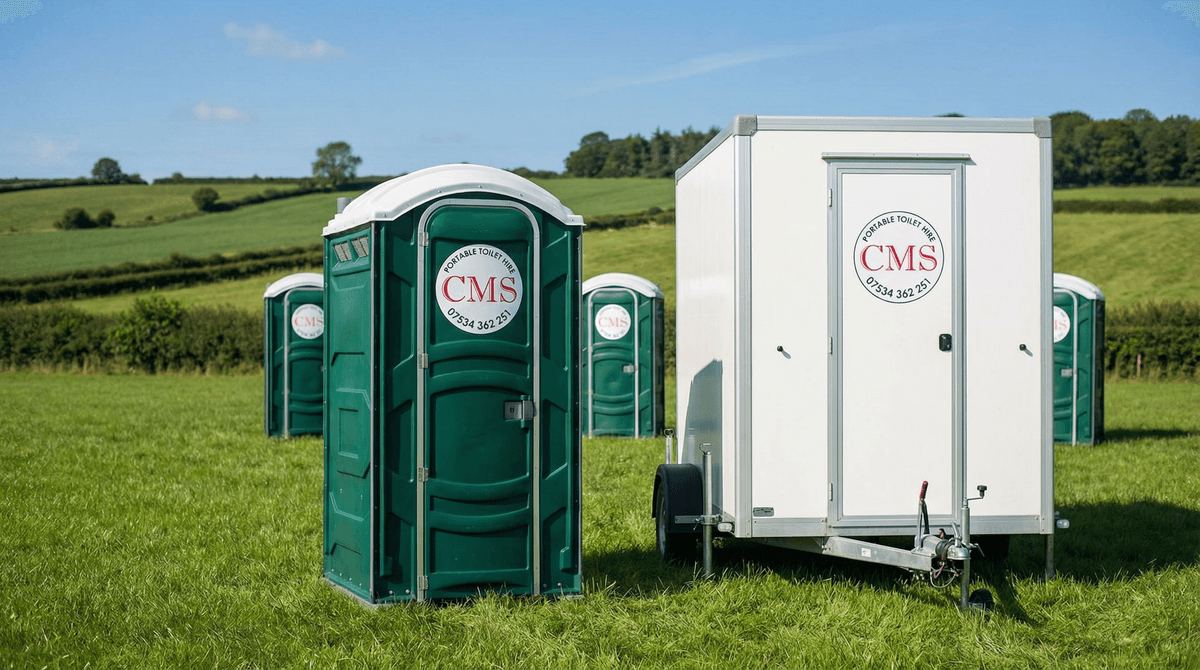
The workhorse of the portable sanitation industry. A self-contained unit with a chemical flush, lockable door, hand sanitiser, and ventilation. No mains connections required.
Best for: Overflow capacity during peak season, temporary camping fields, and back-of-site provision where convenience matters more than aesthetics.
Cost: £40 to £60 per week on a seasonal hire, including weekly servicing.
Accessible Units
Larger units with grab rails, a wider door, and a low threshold for wheelchair access. The Equality Act 2010 requires accessible facilities on any site offering services to the public.
Best for: Any site that accepts bookings from the public. One accessible unit per cluster of standard units is the minimum.
Luxury Toilet Trailers
Trailer-mounted units with flushing toilets, running water, mirrors, lighting, and sometimes climate control. These require a 240V mains connection or a generator.
Best for: Glamping sites, premium pitches, and any site where the standard of facilities is a selling point. A luxury trailer near the glamping area justifies higher pitch fees.
Cost: £300 to £600 per week depending on the specification and number of cubicles.
Shower Trailers
Not a toilet, but worth mentioning. If your permanent shower block is under pressure during peak season, a portable shower trailer can take the strain. These require both power and a water supply.
Welfare Units
Combined toilet, hand-wash, and kitchen facilities in a single unit. More commonly used on construction sites, but useful for staff welfare on larger camping sites.
How Many Units Do You Need?
The calculation depends on the number of additional pitches you are accommodating beyond your permanent facilities' capacity.
Rule of Thumb
- Standard camping pitches: 1 portable toilet per 15 to 20 pitches
- Caravan pitches (some caravans have onboard toilets): 1 portable toilet per 25 to 30 pitches
- Festival camping (no onboard facilities): 1 portable toilet per 10 to 15 pitches
These numbers assume weekly servicing. If usage is particularly heavy (large families, hot weather, events with alcohol), increase provision or increase the servicing frequency.
Accessible Provision
At least 1 accessible unit per cluster of 4 to 6 standard units.
Positioning
Spread Units Across the Site
Do not cluster all portable toilets in one location. Distribute them so that no pitch is more than a 2-minute walk from a facility. This reduces queues and improves the guest experience.
Level, Firm Ground
Place units on concrete, compacted gravel, or hard-packed earth. Avoid soft grass that will become muddy in wet weather. Portable toilets are heavy when serviced and can sink into soft ground.
Away from Pitches but Not Too Far
Nobody wants a portable toilet next to their tent or caravan. Position them at the edge of pitch clusters, screened by hedging or fencing where possible, but within easy walking distance.
Accessible Routes
Ensure the path from pitches to the portable toilets is level and free from trip hazards. At night, lighting along the path is essential for safety.
Servicing Access
The servicing vehicle needs to reach each unit. Do not position units in locations that become inaccessible when the site is full of tents, cars, and awnings. A clear vehicle route to each unit must be maintained at all times.
Servicing
Frequency
- Low season (site half full or less): Weekly servicing is sufficient.
- Peak season (site at or near capacity): Twice-weekly servicing may be needed, particularly for standard chemical toilets in hot weather.
- Event weekends (festivals, bank holidays): Daily servicing for high-traffic units.
What Servicing Includes
A standard service visit includes:
- Emptying the waste tank
- Cleaning and disinfecting the interior
- Restocking toilet roll, hand sanitiser, and deodoriser
- Checking the door lock, hinges, and ventilation
- Reporting any damage
Emergency Call-Outs
If a unit becomes blocked, damaged, or unusable between scheduled services, your provider should offer an emergency call-out. Confirm this is available and understand the associated costs before you need it.
Managing Guest Expectations
Signage
Clear signs directing guests to the nearest facilities reduce complaints and prevent people wandering the site looking for a toilet. Use weatherproof signs and check them regularly.
Communication at Booking
Tell guests about the facilities at the point of booking. If portable toilets supplement a permanent block, mention this. If a glamping pitch has a dedicated luxury trailer, highlight it as a feature.
Cleanliness Standards
Between professional service visits, conduct daily visual checks. A quick wipe-down, restocking of toilet roll, and litter pick around the units takes minutes and prevents negative reviews.
Cost Management
Seasonal Hire Rates
Long-term hires (3 months or more) attract lower weekly rates than short-term event hires. Negotiate a seasonal rate covering the full peak period — typically April to September.
Scale Discounts
Hiring multiple units from the same provider usually reduces the per-unit cost. Get a single quote for all the units you need rather than hiring them individually.
Off-Season Storage
Some providers offer reduced-rate or free storage for units that remain on site but are not being serviced over winter. This avoids repeated delivery and collection charges.
Summary
Portable toilet hire is one of the simplest and most cost-effective ways to improve a caravan or camping site. The right units, positioned thoughtfully and serviced regularly, enhance the guest experience, protect your reviews, and increase the capacity of your site without any permanent construction. Plan ahead for peak season, communicate with your guests, and choose a provider who understands the specific needs of outdoor hospitality.