
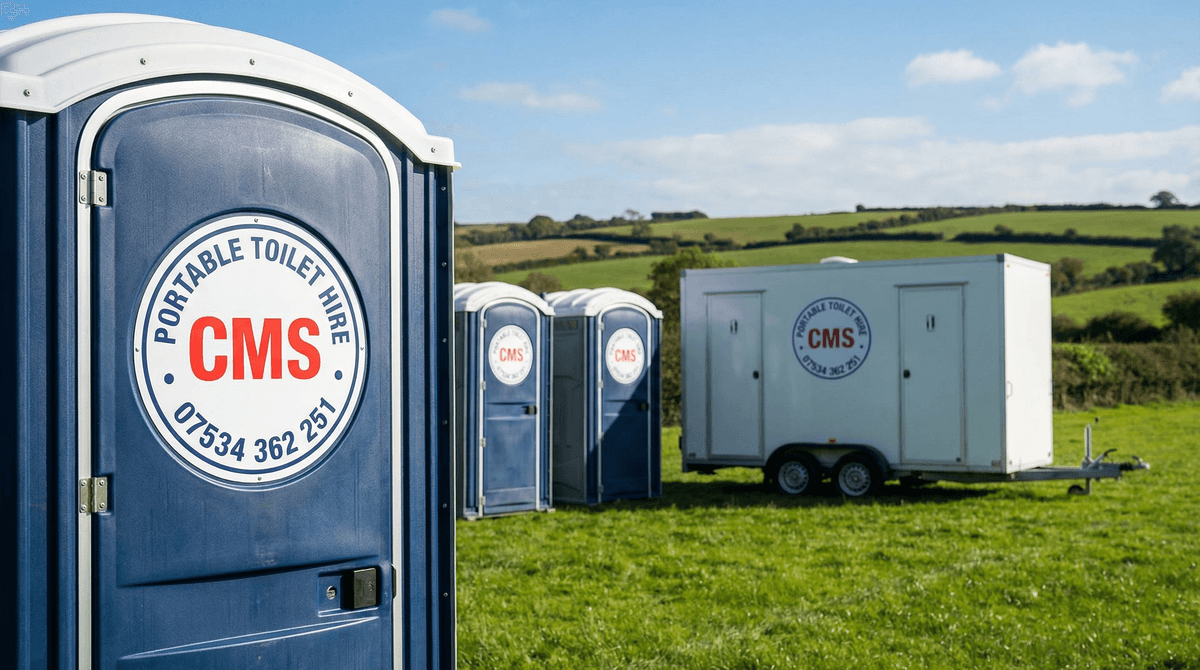
Not every site has road access, mains water, or a power supply. Construction projects in rural areas, forestry operations, archaeological digs, film shoots in the countryside, and outdoor events on private land often take place in locations where conventional sanitation is impossible. Portable toilets are designed for exactly these situations — self-contained, independent of mains services, and deliverable to almost anywhere a vehicle can reach.
This guide covers the practical challenges of providing portable sanitation in remote and off-grid settings, and how to solve them.
What Makes a Location "Remote"?
For portable toilet hire purposes, a remote location is any site that presents one or more of the following challenges:
- No mains water supply. The nearest water connection is kilometres away.
- No mains electricity. No power supply for luxury trailers or welfare units without a generator.
- No mains drainage. No sewer connection — which is why you need portable toilets in the first place.
- Difficult vehicle access. Single-track roads, farm tracks, forestry roads, unmade surfaces, steep gradients, or weight-restricted bridges.
- Significant distance from the provider's depot. Delivery costs increase with distance, and emergency call-outs take longer.
Many sites tick several of these boxes simultaneously. A forestry clearance operation deep in the Welsh borders, for example, may have no water, no power, a single-track access road, and be 40 miles from the nearest hire depot.
Which Units Work in Remote Locations?
Standard Chemical Toilets
The obvious choice. No water, no power, no drainage required. A self-contained unit with a chemical flush, hand sanitiser, and ventilation. This is the unit that was designed for exactly this type of deployment.
Advantages for remote sites:
- Completely self-contained
- Lightweight enough for manual repositioning on site
- Serviced by a single vehicle on a regular schedule
- Works in all weather conditions with appropriate preparation
Recirculating (Mains-Free) Toilets
A step up from the standard chemical toilet. These units use a recirculating flush system that provides a more conventional flushing experience without any water connection. They hold more waste than standard units and need less frequent servicing.
Accessible Units
Available in the same chemical toilet format, requiring no mains connections. Slightly heavier and larger, which may affect positioning on sites with very limited space.
Welfare Units (With Generator)
If your remote site has a workforce that needs hot water, a kitchen area, and seating — and you can get a generator to the site — a welfare unit is the most comprehensive solution. The generator provides power for lighting, hot water, and heating.
Delivery Challenges and Solutions
Access Assessment
Before booking, assess the delivery route honestly. The hire company will ask, and inaccurate information wastes everyone's time.
Key questions:
- Can a flatbed lorry (typically 7.5 to 18 tonnes) reach the site?
- Are there width restrictions, low bridges, or weight-limited structures on the route?
- What is the surface condition? Tarmac, gravel, compacted earth, or mud?
- Are there gates, and are they wide enough for a delivery vehicle?
- Is there turning space at the site?
Alternative Delivery Methods
If a standard delivery vehicle cannot reach the site, options include:
- Smaller vehicles. Some providers have 3.5-tonne vehicles that can navigate narrower roads and lighter bridges. The trade-off is fewer units per delivery.
- Tractor and trailer. On agricultural land, a tractor can tow units to positions that a lorry cannot reach.
- Helicopter delivery. For genuinely inaccessible sites (mountain construction, remote islands), helicopter delivery is possible but expensive. This is rare and typically reserved for infrastructure projects with substantial budgets.
- Manual positioning. Standard portable toilets weigh approximately 75kg empty. With two or three people, they can be carried short distances from the delivery point to the final position.
Seasonal Access
Remote access routes change with the seasons. A farm track that is solid in summer may be impassable in winter. Plan your hire around access conditions, or arrange ground reinforcement (temporary trackway, stone, or hardcore) along the delivery route.
Servicing Remote Sites
Servicing is the ongoing logistical challenge. Delivery happens once; servicing happens weekly or more often.
Servicing Frequency
- Light use (1 to 5 people): Fortnightly servicing may be sufficient.
- Standard use (5 to 15 people): Weekly servicing.
- Heavy use (15+ people or intensive daily use): Twice-weekly servicing.
Servicing Access
The servicing vehicle needs to reach the unit with a vacuum tanker or service vehicle. If the site is only accessible by 4x4 or tractor, discuss this with your provider. Some companies have specialist off-road servicing vehicles for exactly this purpose.
Servicing Costs
Remote sites incur higher servicing costs due to travel time and fuel. Expect to pay a premium over standard urban or suburban servicing rates. Discuss this upfront and get it included in your written quote.
Cold Weather at Remote Sites
Remote locations are often exposed and subject to more extreme weather than urban areas. In winter, this creates specific challenges:
- Freezing. Chemical toilet fluid can freeze in sustained sub-zero temperatures. Providers add antifreeze to the flush system during winter, but in extreme cold (below -10°C), additional precautions may be needed.
- Wind. Exposed hilltops and open fields are subject to high winds. Anchor units to the ground or position them against a wall, hedge, or other windbreak.
- Snow. Heavy snowfall can block access routes and cover units. Clear snow from around the unit and maintain access for servicing vehicles.
- Reduced daylight. Remote sites without power have no lighting. Battery-powered or solar lanterns inside and outside the unit are essential during winter months.
Security
Remote sites are more vulnerable to theft and vandalism. Portable toilets are not high-value targets, but damage and misuse do occur.
- External padlocks. Units fitted with an external hasp can be padlocked when the site is unoccupied.
- Positioning. Place units out of sight from public roads where possible.
- Signage. "CCTV in operation" signs act as a deterrent even where no CCTV exists.
Environmental Considerations
Remote locations often have environmental sensitivities.
- Watercourses. Position portable toilets at least 10 metres from any stream, river, or drainage ditch. Chemical toilet fluid must never enter a watercourse.
- SSSIs and protected areas. If the site is within or adjacent to a Site of Special Scientific Interest, check with Natural England (or the equivalent body) for any restrictions on temporary structures.
- Ground protection. Use boards or mats under units to prevent ground damage. This is particularly important on ecologically sensitive land.
- Waste disposal. The hire company is responsible for proper disposal of waste under their waste carrier licence. Confirm they hold a valid licence.
Cost Factors for Remote Sites
Several factors increase costs for remote locations:
- Delivery distance. Charged per mile or as a flat fee based on distance bands.
- Access difficulty. Sites requiring smaller vehicles, 4x4 delivery, or manual handling attract additional charges.
- Servicing premium. Higher travel costs for regular servicing.
- Generator hire. If you need a welfare unit or luxury trailer, add generator hire and fuel costs.
- Ground protection. Trackway or boards for soft ground access.
Get a comprehensive quote that includes all these elements. Surprises on the invoice are never welcome.
Summary
Remote and off-grid locations present real logistical challenges for portable toilet provision, but they are challenges that the industry is equipped to handle. Standard chemical toilets are designed to work without any mains services. The key is honest communication with your provider about access conditions, realistic servicing schedules, and proper preparation for weather and environmental factors. Plan ahead, provide accurate site information, and choose a provider with experience in remote deployments.