
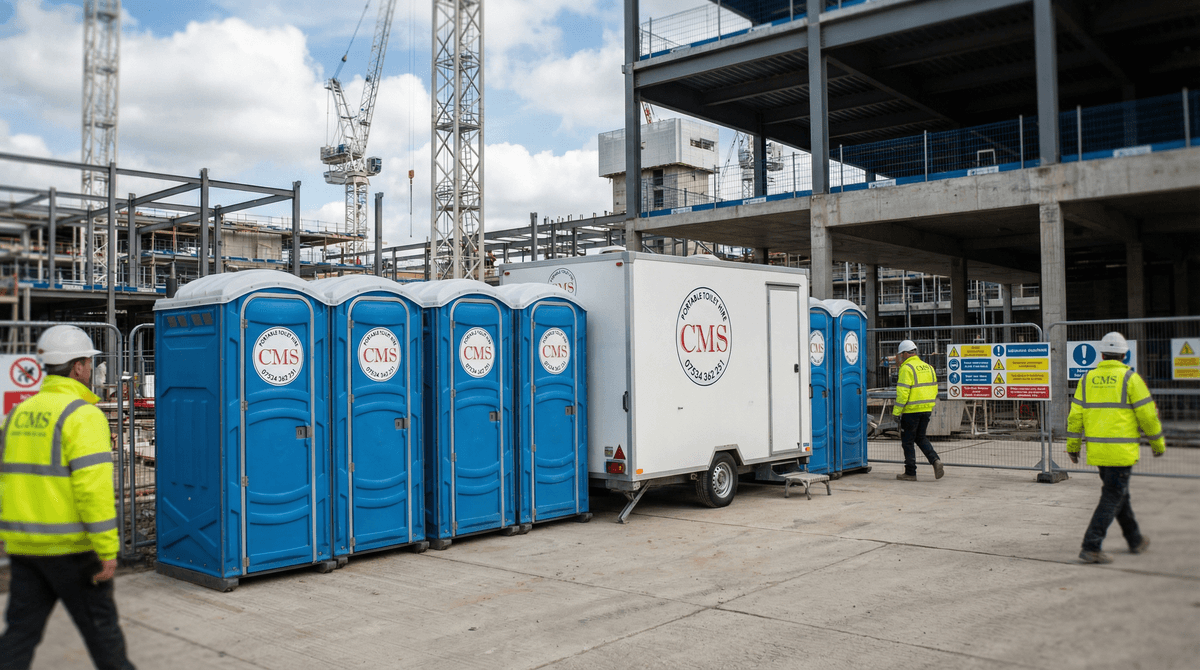
Every construction site in the UK must provide adequate welfare facilities for its workers. This is not guidance — it is law. The requirements are set out in the Construction (Design and Management) Regulations 2015, the Workplace (Health, Safety and Welfare) Regulations 1992, and supported by HSE guidance documents including HSG150.
If you are running a site without proper welfare provision, you are breaking the law from the moment the first worker arrives.
---
The Legal Framework
CDM 2015
The Construction (Design and Management) Regulations 2015 are the primary legislation governing welfare on construction sites. Schedule 2 lists the specific facilities that must be provided, and Regulation 13 places the duty on principal contractors to plan, manage, and monitor this provision.
Critically, Regulation 4 places a duty on the client to ensure welfare facilities are in place before work begins. This duty cannot be contracted away.
Workplace (Health, Safety and Welfare) Regulations 1992
These regulations apply to all workplaces, including construction sites. They cover the same ground as CDM 2015 but in broader terms, and they apply to any workplace that is not covered by more specific legislation.
HSG150: Health and Safety in Construction
HSE's guidance document HSG150 provides practical advice on meeting the legal requirements. While not law itself, it represents what HSE considers good practice — and failing to follow it will be used as evidence in any enforcement action.
---
What Facilities Must Be Provided
Toilets
The requirements are straightforward:
- A sufficient number of toilets for the workforce
- Toilets must be adequately ventilated and lit
- They must be kept clean and in good working order
- Separate facilities for men and women, or individual lockable cubicles
How many is "sufficient"?
HSE provides the following minimums based on the number of workers on site at any one time:
- 1 to 7 workers: 1 toilet
- 8 to 20 workers: 2 toilets
- 21 to 100 workers: 1 additional toilet per 25 workers
- Over 100 workers: 1 additional toilet per 35 workers
These are minimums. Busy sites, sites with limited break times, and sites where workers are spread across a large area will need more.
Washing Facilities
- Hot and cold (or warm) running water
- Soap or another suitable cleansing agent
- Towels or other means of drying
- Washing facilities adjacent to toilets and changing rooms
- Showers where the nature of the work requires them (e.g. work with hazardous substances, particularly dirty work)
Drinking Water
- A supply of wholesome drinking water readily accessible to all workers
- Clearly labelled where there is any risk of confusion with non-potable water
- Cups or a drinking fountain provided
Changing Rooms
- Required where workers must wear special clothing (PPE, overalls, etc.) and it is not reasonable for them to change elsewhere
- Must provide privacy and be separate for men and women where necessary
- Secure storage for personal clothing
Rest Facilities
- A suitable rest area with seating that has back support
- Protection from the weather
- Facilities for heating food and boiling water
- Maintained at a reasonable temperature
- Separate from any area where hazardous substances are present
---
When Must Facilities Be in Place?
From day one. There is no grace period, no "we will sort it out next week" exemption. Before any construction work begins, welfare facilities must be available and operational.
This means:
- Ordering facilities well in advance of the start date
- Ensuring delivery and setup are complete before workers arrive
- Having consumables (toilet paper, soap, drinking water) stocked from the outset
---
Types of Welfare Provision
Chemical Portable Toilets
The most common solution for short-duration projects and smaller sites. Chemical portable toilets are self-contained, require no mains connections, and can be placed almost anywhere with level ground.
Advantages:
- Quick to deploy
- No mains water or drainage required
- Relatively low cost
- Flexible placement
Limitations:
- Require regular servicing (typically weekly)
- Do not include washing facilities — these must be provided separately
- Not ideal for large workforces or long-duration projects
Mains-Connected Toilets
Where water supply and drainage are available, mains-connected portable toilets offer a more comfortable and hygienic option. They flush like domestic toilets and can be connected to site welfare systems.
Welfare Units
Self-contained cabins that combine toilets, washing facilities, changing areas, and rest rooms. Available in various sizes, from units suitable for 6-8 workers up to large units for 20 or more.
Advantages:
- Meet all welfare requirements in a single unit
- Include heating, hot water, and meal preparation facilities
- More comfortable for longer-duration projects
- Easier to manage and maintain
Limitations:
- Require crane or HIAB delivery
- Need more space than standalone portable toilets
- Higher hire cost
- May need electrical connection
Combination Approach
Many sites use a combination: a welfare unit as the primary facility, supplemented by portable toilets positioned closer to distant work areas. This ensures compliance while minimising time lost to walking.
---
Servicing and Maintenance
Providing facilities is only half the obligation. Maintaining them is equally important.
Cleaning Schedule
- Daily cleaning is the minimum acceptable standard for busy sites
- Weekly deep cleaning and servicing for chemical toilets
- Immediate attention to any breakages, blockages, or supply shortages
Consumables
- Toilet paper, soap, hand towels, and drinking water must be replenished before they run out
- A responsible person should check supplies at the start of each working day
Records
- Keep records of servicing visits, cleaning schedules, and any maintenance carried out
- These records demonstrate compliance and are valuable in any HSE investigation
---
Common Problems and How to Solve Them
Problem: Workforce Numbers Increase Mid-Project
Subcontractors arrive, the team grows, and suddenly the original provision is inadequate. The solution is to review welfare provision at every stage of the project and order additional units before they are needed, not after.
Problem: Facilities Are Too Far from the Work Area
Workers will not walk 10 minutes to use a toilet — they will find alternatives that create hygiene and environmental problems. Place facilities within a reasonable distance of every work area. On large sites, this means multiple locations.
Problem: Facilities Are Not Accessible
If a disabled worker joins the site, an accessible toilet must be available. Plan for this from the outset rather than scrambling to arrange it at short notice.
Problem: Winter Conditions
Water supplies freeze, welfare units lose heating, and conditions deteriorate rapidly. In cold weather:
- Lag exposed water pipes
- Ensure heating is working in welfare units
- Increase servicing frequency for chemical toilets (chemicals can be affected by freezing temperatures)
- Check that hand washing water is warm, not cold
---
Enforcement
HSE inspectors carry out both planned inspections and reactive visits to construction sites. Welfare provision is one of the first things they check.
Enforcement action for welfare failures includes:
- Verbal advice for minor issues that can be corrected immediately
- Improvement notices requiring action within a specified timeframe
- Prohibition notices halting work where there is a risk of serious personal injury
- Fee for intervention charging the dutyholder for HSE's time at the current hourly rate
- Prosecution for serious, repeated, or wilful failures
The message from HSE is consistent: welfare provision is a basic requirement, and there is no excuse for failing to meet it.
---
Summary Checklist
- Toilets in sufficient numbers for the workforce, clean and supplied
- Washing facilities with hot and cold water, soap, and drying
- Drinking water clearly labelled and accessible
- Changing rooms with secure storage where needed
- Rest area with heating, seating, and meal preparation facilities
- All facilities in place before work starts
- Servicing and maintenance schedule in operation
- Daily checks being carried out
- Provision reviewed as workforce numbers change
- Accessible facilities available or readily obtainable
Getting welfare right is straightforward. It takes planning, not heroics. The legal requirements are clear, the solutions are well established, and the cost of compliance is a fraction of the cost of getting it wrong.