
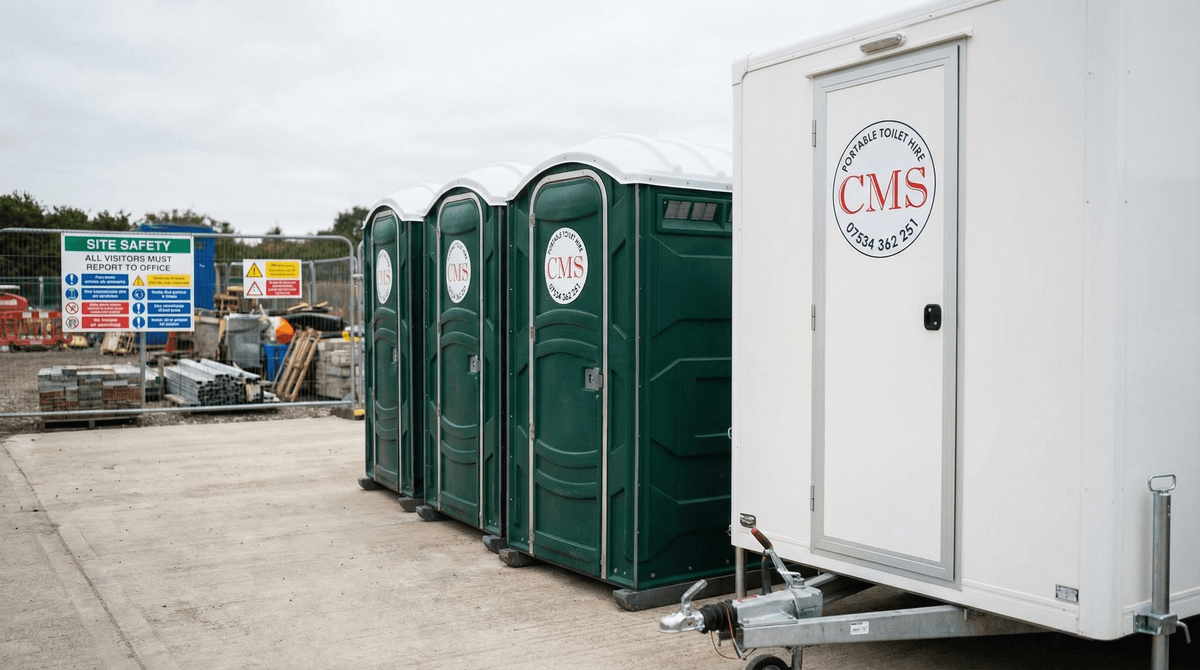
Portable toilet waste is classified as controlled waste under UK environmental law. Disposing of it incorrectly is a criminal offence that can result in prosecution, unlimited fines, and imprisonment. This is not an area where shortcuts are acceptable.
Whether you are a hire company, a site manager, or a private individual who has used a portable toilet, you need to understand what the law requires — and what happens when people get it wrong.
---
What the Law Says
The Environmental Protection Act 1990
The Environmental Protection Act 1990 (EPA) establishes the framework for waste management in England and Wales. Under Section 34, anyone who produces, carries, keeps, treats, or disposes of controlled waste has a duty of care to ensure it is managed properly and does not escape, cause pollution, or harm human health.
Portable toilet waste — the contents of the waste tank — is classified as controlled waste. It falls under the European Waste Catalogue code 20 03 04 (septic tank sludge).
The Waste (England and Wales) Regulations 2011
These regulations implement the EU Waste Framework Directive and require that waste is handled in accordance with the waste hierarchy:
- Prevention
- Preparation for re-use
- Recycling
- Other recovery
- Disposal
For portable toilet waste, the practical outcome is that it must be collected by a licensed waste carrier and disposed of at a permitted facility.
The Environmental Permitting (England and Wales) Regulations 2016
Any site that receives waste for treatment or disposal must hold an environmental permit from the Environment Agency. This includes sewage treatment works, waste transfer stations, and any other facility that accepts portable toilet waste.
Scotland and Northern Ireland
Similar legislation applies in Scotland (under SEPA regulation) and Northern Ireland (under NIEA regulation). The principles are the same: duty of care, licensed carriers, permitted facilities.
---
The Duty of Care
The duty of care under Section 34 of the EPA applies to everyone in the waste chain. If you produce portable toilet waste — even if you are not the one who physically disposes of it — you have a legal obligation to:
- Ensure the waste is transferred only to an authorised person (a registered waste carrier)
- Provide an accurate description of the waste
- Complete a waste transfer note (or, for hazardous waste, a consignment note)
- Keep the waste transfer note for at least two years
- Take reasonable steps to prevent the waste from escaping or causing harm
What This Means in Practice
If you hire portable toilets, the hire company is typically responsible for servicing and waste removal. However, you should:
- Check that your hire provider holds a waste carrier registration
- Ask where the waste is taken and confirm the receiving site holds an environmental permit
- Keep copies of waste transfer notes
- Raise concerns if you suspect waste is being disposed of illegally
---
Who Can Legally Carry Portable Toilet Waste?
Only registered waste carriers can transport controlled waste. Registration is with:
- The Environment Agency (England)
- Natural Resources Wales (Wales)
- SEPA (Scotland)
- NIEA (Northern Ireland)
You can check whether a company is registered by searching the public register on the relevant agency's website.
There are two tiers of registration:
- Upper tier: Required for anyone who regularly carries waste as part of their business. This includes portable toilet hire companies.
- Lower tier: For businesses that only carry their own waste, or waste that is not produced in the course of a business.
A reputable portable toilet hire company will hold upper tier waste carrier registration. Ask to see the registration number and verify it.
---
Where Can the Waste Go?
Portable toilet waste must be disposed of at a facility that holds an appropriate environmental permit. In practice, this means:
- Sewage treatment works — many accept portable toilet waste from registered carriers, subject to trade effluent consent
- Licensed waste transfer stations — facilities permitted to receive and bulk liquid wastes before onward transfer to treatment
- Sewerage network — in some cases, waste can be discharged into the public sewer with the consent of the water company
Facilities That Cannot Accept Portable Toilet Waste
- Domestic drains (your household toilet or garden drain)
- Roadside drains or surface water drains
- Watercourses (rivers, streams, ditches, canals)
- Agricultural land (without specific exemptions and compliance with regulatory requirements)
- Any unpermitted site
Discharging portable toilet waste into any of these locations is a criminal offence under the Environmental Protection Act and the Water Resources Act 1991.
---
Waste Transfer Notes
Every transfer of controlled waste must be documented with a waste transfer note. This note must include:
- A description of the waste
- The quantity of waste
- The container type (e.g. tanker, intermediate bulk container)
- The date and time of the transfer
- The name and address of the transferor and transferee
- The waste carrier registration number
- The name and permit number of the receiving facility
- The SIC code of the waste producer
- A declaration that the duty of care has been met
Waste transfer notes must be kept for a minimum of two years from the date of the transfer. Failure to produce a waste transfer note on request is an offence.
---
Common Illegal Disposal Methods
Despite the clarity of the law, illegal disposal of portable toilet waste remains a problem. Common methods include:
Fly-Tipping
Dumping waste in rural locations, lay-bys, or on private land. This is a criminal offence under Section 33 of the EPA, carrying penalties of up to 5 years' imprisonment and an unlimited fine.
Discharge to Surface Water
Emptying waste tanks into roadside drains, ditches, or watercourses. This contaminates water supplies, harms aquatic ecosystems, and is an offence under the Water Resources Act 1991. The Environment Agency pursues these cases aggressively.
Discharge to Domestic Drains
Emptying waste into a household toilet or drain. While this might seem harmless, it can overload domestic septic tanks, cause blockages in the sewerage network, and — where the waste comes from a commercial operation — constitutes a breach of the duty of care.
Spreading on Land
Discharging waste onto agricultural land without the appropriate regulatory exemption. While there are limited circumstances in which sewage sludge can be applied to land (under the Sludge (Use in Agriculture) Regulations 1989), these exemptions do not apply to casual dumping of portable toilet waste.
---
Penalties
The penalties for illegal disposal of portable toilet waste are severe:
- Fly-tipping (Section 33 EPA): Up to 5 years' imprisonment and/or an unlimited fine on indictment. Fixed penalty notices of up to £1,000 for smaller offences.
- Breach of duty of care (Section 34 EPA): An unlimited fine.
- Causing or knowingly permitting a water discharge (Water Resources Act 1991): Up to 2 years' imprisonment and/or an unlimited fine.
- Failure to produce waste transfer notes: A fine.
The Environment Agency has the power to seize vehicles used in fly-tipping and to recover the costs of clean-up from the offender.
---
How to Ensure Compliance
If You Hire Portable Toilets
- Use a reputable hire company with a verifiable waste carrier registration
- Ask where waste is disposed of and check the receiving facility holds a permit
- Request and retain copies of waste transfer notes
- Report any concerns about illegal disposal to the Environment Agency (or the relevant agency in your nation)
If You Operate Portable Toilets
- Maintain your waste carrier registration and ensure it remains current
- Use only permitted facilities for disposal
- Complete waste transfer notes for every collection
- Keep accurate records for a minimum of two years
- Train staff on legal requirements and the consequences of non-compliance
If You Are a Site Manager or Event Organiser
- Include waste disposal requirements in your contract with the hire company
- Verify the hire company's credentials before signing the contract
- Conduct spot checks where practicable
- Retain documentation as part of your event or site records
---
Reporting Illegal Disposal
If you witness or suspect illegal disposal of portable toilet waste, report it to:
- Environment Agency (England): Incident hotline 0800 80 70 60
- Natural Resources Wales: 0300 065 3000
- SEPA (Scotland): Pollution hotline 0800 80 70 60
- NIEA (Northern Ireland): Water pollution hotline 0800 80 70 60
Reports can also be made online through the relevant agency's website. You can report anonymously if you prefer.
---
Summary
Portable toilet waste disposal is straightforward when done properly:
- Waste must be collected by a registered waste carrier
- It must be taken to a facility with the appropriate environmental permit
- Every transfer must be documented with a waste transfer note
- Notes must be retained for at least two years
The consequences of cutting corners are severe — criminal prosecution, unlimited fines, and imprisonment. There is no good reason to take the risk.